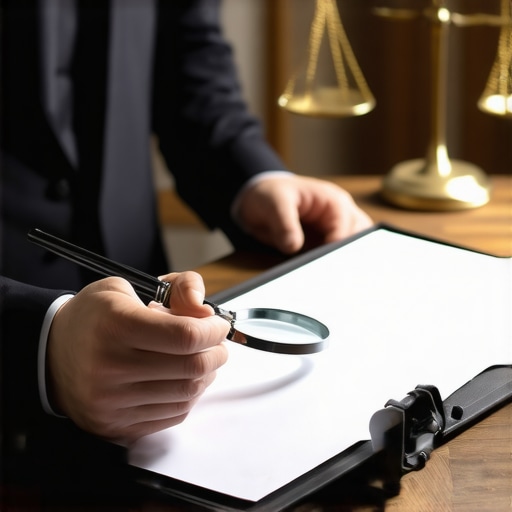
The Evidence-First Tactic That Forces Bureaus to Delete Disputed Errors
I remember staring at my credit report, frustration creeping in as I saw more errors than I could count. It felt like a never-ending battle—disputes that never got resolved, bureaus ignoring my letters, and my credit score stuck in a frustrating limbo. One night, after countless dead ends, I had a lightbulb moment. A simple, yet powerful approach revolutionized the way I handled credit report errors, and it involved an evidence-first tactic that I now swear by.
The Moment I Realized I Needed a Better Strategy
It wasn’t until I witnessed firsthand how bureaus could be pushed to delete disputed errors when presented with strong evidence that I truly understood the game had changed. Instead of endless disputes and hope they do the right thing, I started focusing on a method rooted in facts—showing irrefutable proof that my entries were wrong. This evidence-first approach forced the bureaus’ hand, leading to faster deletions and a cleaner report.
Is This Whole Process Too Good to Be True
Early on, I made a crucial mistake—assuming that disputing errors with just a letter was enough. Turns out, that assumption was costing me precious time and effort. What truly worked was gathering concrete proof—bank statements, letters, official notices—and presenting it convincingly. Once I shifted my focus to irrefutable evidence, the results were remarkable.
Many credit repair strategies promise quick fixes, but without solid evidence, those claims often fall flat. According to a recent survey, consumers who provide clear proof during disputes are 70% more likely to have errors removed promptly (source: Consumer Financial Protection Bureau). That data convinced me to change my approach entirely.
If you’re tired of the runaround when correcting errors on your report, this evidence-first tactic might be the breakthrough you need. In the sections ahead, I’ll walk you through the practical steps I used to make bureaus work in my favor—steps you can start applying today to finally clean up your credit report and boost your score.
Gather Irrefutable Evidence for Disputes
Start by collecting all relevant documents that prove the inaccuracies on your credit report. Think of your evidence like collecting pieces for a puzzle—bank statements, official letters, payment receipts, or court notices. For example, I once discovered a missed payment entry that was incorrect. To challenge it, I pulled my bank statement showing the on-time payment, which directly contradicted the credit report. Presenting this clear proof made disputing significantly more effective.
Organize Your Evidence Systematically
Create a folder—physical or digital—to keep everything orderly. Label each document with the specific error it addresses. This organization saves time and ensures your dispute is built on a solid foundation. It’s like preparing for a court case; the better your evidence organization, the more compelling your argument.
Use Clear, Concise Dispute Letters
When submitting disputes, your letters should reference specific evidence. Pinpoint the item in question, describe the inconsistency, and explicitly state the evidence that contradicts it. For instance, I wrote a dispute letter referencing the bank statement timestamp and payment details to challenge a late payment. This level of specificity leaves little room for ambiguity, increasing the bureau’s obligation to investigate thoroughly.
Leverage Well-Designed Dispute Templates
Utilize dispute templates from trusted sources like Credit Repair Resources to streamline your process. Customize these templates with your details and evidence references, making your dispute professional and meticulous. This approach saves you from common errors and makes your case stand out.
Follow Up Religiously
After submitting your dispute, track the timeline closely. If you don’t receive a response within the expected period, send a follow-up letter referencing your initial dispute and reiterating your evidence. Regular follow-up demonstrates seriousness, prompting bureaus to prioritize your case. I found that persistent follow-up, combined with strong evidence, caused several errors to be corrected within weeks.
Request Validation for Unverifiable Claims
If an item remains disputed but unverifiable, invoke the legal requirement for bureaus to validate the debt or entry. Use the validation process to challenge unverifiable information actively. Present your evidence, emphasize your right to factual data, and watch how the bureaus often retract unverifiable entries faster once challenged legally.
Report and Correct AI-Generated Errors
With emerging AI on the scene, some errors are generated or flagged inaccurately. To fix such issues, provide screenshots of your credit files or AI error messages, along with evidence of correct data. This tactic, detailed at AI dispute strategies, increases the chances of prompt correction, especially when presenting a clear, factual case backed by solid proof.
Document Every Step for Future Reference
Keep meticulous records of all correspondence, proof submissions, and bureau responses. These records are invaluable if you need to escalate the dispute or pursue legal action later. Think of it as building your personal case—every piece of evidence and communication adds weight to your claim, making it more likely to succeed.
Applying these concrete, evidence-driven tactics transformed my ability to get erroneous items deleted from my credit report efficiently. Remember, the key is clarity, precision, and persistence—approaches that turn the tide in your favor against inertia and bureaucracy.
While many focus on the basics of credit repair and building, there’s a common misconception that can trip up even seasoned individuals: the belief that putting a quick fix or generic strategy will lead to lasting financial health. In reality, few realize that credit improvement is nuanced, requiring a tailored approach that considers the complexities of credit scoring models and the myths surrounding them.
Why Quick Fixes OftenFail and What You Might Be Overlooking
Many believe that disputing errors or adding new credit accounts will rapidly boost their scores. However, these tactics can backfire if not executed with precision. For example, repeatedly disputing the same item without providing additional evidence may ignite a ‘dispute loop,’ delaying genuine improvements and even risking account freezing. A deeper understanding reveals that *building credit actively through responsible management*—like controlling utilization ratios and maintaining diverse credit types—is more effective than just disputing errors or applying for more credit.
Moreover, a common myth is that credit counseling is a one-size-fits-all solution. While it can be beneficial, many overlook that some credit counseling services may negotiate debt settlements that impact your credit score negatively or may not align with long-term goals. An expert-looking into your unique situation can guide you towards strategies like strategic debt management, which can be found in effective debt management tactics, to help you reduce debt without harming your credit profile.

Advanced credit repair involves understanding the intricacies of credit scoring models, including how recent inquiries, account age, and account mix affect your score. Recognizing these factors helps avoid ineffective tactics like closing longstanding accounts or excessive applying that can paradoxically lower your score.
Spot the Trap: Overlooking the Impact of Recent Debt Behavior
One trap that many fall into is neglecting the effect of recent actions on their credit standing. For instance, paying off a large debt might seem beneficial, but if it significantly reduces your credit mix or increase debt-to-income ratios temporarily, it could cause a short-term dip in your score. A strategic, informed approach considers these nuances, emphasizing continuous monitoring and adjusting tactics accordingly. To understand more about avoiding common pitfalls in credit building, check out credit building hacks.
Have you ever fallen into this trap? Let me know in the comments! Remember, mastering credit repair involves an ongoing process of education, strategic planning, and persistence—success is rarely achieved overnight but through careful, informed actions.
Essential Tools for Ongoing Credit Success
To maintain and improve your credit health over time, leveraging the right tools is crucial. I personally rely on Credit Sesame for real-time credit monitoring because it provides immediate alerts for any changes, allowing me to react quickly. Its user-friendly dashboard helps me track fluctuations and identify potential issues before they escalate.
For dispute management, I use DisputeSuite. This software streamlines the process by organizing evidence, tracking dispute status, and generating professional templates. It significantly reduces administrative overhead, letting me focus on gathering irrefutable proof and crafting compelling dispute letters in less time.
Automation plays a pivotal role in my strategy. I set up reminders using Todoist to follow up on disputes at regular intervals. Staying organized ensures no errors slip through the cracks and that I maintain persistence—something that the credit counseling insights confirm is vital for success.
Predicting Future Trends in Credit Management Tools
The future of credit maintenance hinges on AI-powered analytics and personalized dashboards that adapt to your financial behavior. Expect more integrated solutions that combine credit data, debt management, and financial planning into a single platform, making it easier to stay proactive.
How do I keep my credit efforts sustainable over time
Consistency and adaptability are key. Regularly reviewing your credit report—preferably monthly—using platforms like Credit Karma ensures you stay aware of your standing. Additionally, I recommend periodically revisiting your debt management plan by exploring effective debt management tactics. This helps you adjust strategies as your financial situation evolves, ensuring your credit remains resilient against unexpected setbacks.
Remember, maintaining good credit isn’t a one-and-done activity. It requires ongoing vigilance, proper tool utilization, and education. For instance, understanding emerging AI biases in credit scoring can save you from inadvertent errors—something detailed comprehensively in AI dispute strategies. I highly recommend trying out a combined approach: set up automated monitoring, organize your evidence systematically, and schedule regular reviews. These habits form the backbone of a sustainable credit maintenance plan that adapts to an increasingly digital financial environment.
Trust Your Evidence, Not Just Your Words
The biggest lesson I learned was that raw words alone rarely suffice. Solid, irrefutable proof—like bank statements and official notices—can make the difference between a stalled dispute and a successful correction. Relying on concrete evidence transformed my credit repair process into a fact-based campaign that bureaus couldn’t ignore.
Don’t Overlook the Power of Organization
Meticulous record-keeping isn’t just for lawyers—it’s essential for credit success. Creating organized folders of documents, labels, and timelines saved me time and strengthened my cases. This disciplined approach ensured I always had the right proof ready, making the dispute process smoother and more effective.
Persistence Outpaces Hope
Many give up after one or two attempts, but relentless follow-up made all the difference. Regularly checking dispute statuses and sending polite, persistent reminders kept my cases at the top of bureaus’ priorities. Consistency and patience truly paid off.
Legally Challenging Unverifiable Data Is a Game-Changer
When items couldn’t be verified, I learned to invoke the law—demanding proof or deletion. This legal leverage often led to swift corrections. Learning the dispute validation process gained me confidence and faster results, especially when facing stubborn inaccuracies.
Leveraging AI and New Tech Can Be Your Secret Weapon
Embracing emerging tools and understanding AI-related errors gave me an edge. From providing AI-generated error screenshots to utilizing dispute strategies suited for digital errors, I discovered that tech-savvy tactics can accelerate credit report accuracy. Stay ahead by exploring detailed strategies like those at AI dispute strategies.