
The Hidden Costs of Debt Consolidation Loans You Must Know
I remember sitting at my kitchen table, pen trembling slightly, ready to sign the papers for what I thought was my ticket to financial freedom. I had four credit cards, all screaming at me with 24% interest rates, and the idea of merging them into one neat, tidy loan felt like a warm hug. I thought I was being smart. I thought I was “winning” the credit game. But a few months later, the “consolidation” high wore off, and I noticed my bank account was actually draining faster than before. I had fallen for the classic trap: I looked at the monthly payment but completely ignored the structural damage I was doing to my long-term wealth. It is easy to get blinded by the promise of simplicity, but “simple” often comes with a steep price tag that lenders are more than happy to hide in the fine print.
Why a Single Monthly Payment Often Masks a Financial Disaster
When you are drowning in high-interest debt, the marketing for consolidation loans sounds like a choir of angels. They promise simplicity and a lower rate. However, my biggest mistake early on was not realizing that how you pay is just as important as how much you pay. I did not account for the origination fees—the upfront “thank you for the business” tax the lender takes right off the top. According to the Consumer Financial Protection Bureau (CFPB), these fees can sometimes eat up to 8% of your total loan value before you even see a dime. That is money you owe but never get to use to pay down your balances. If you are not careful, you might find that debt consolidation loans often lead to more debt rather than less. You end up paying interest on the money they charged you just to give you the loan. It is a double-dip that can set your progress back by months or even years. Then there are the balance transfer fees. I once thought about moving my debt to a 0% APR card, thinking I was a genius. But that 3% to 5% transfer fee is a monster that bites immediately. If you are moving $20,000, that is $1,000 gone before you even start. It is these “small” percentages that keep us in the cycle. To really get ahead, you need effective credit repair tips that focus on the foundation, not just the facade.
Is consolidation actually worth the hype or just a clever shell game?
I get the skepticism. You are wondering if you are just moving numbers from one column to another. Honestly? Sometimes you are. I remember feeling so relieved by that single payment that I felt “safe” enough to start using my old credit cards again for “emergencies.” Suddenly, I had the loan plus new balances. It was a disaster that almost ruined my credit score. Before you sign anything, you need to look at debt management secrets that actually protect your cash flow. I also missed the clause about “prepayment penalties.” I thought if I got a bonus at work, I would throw it at the loan and be done. But my lender had a “maintenance fee” that essentially made paying early just as expensive as paying on schedule. It felt like being trapped in a room where the door only opens if you pay the guard a tip. If you do not change the underlying habit of how you spend, a loan is just a temporary bandage on a deep wound. You have to stop falling for the minimum payment trap if you ever want to see a zero balance. Today, I want to pull back the curtain on the fees, the fine print, and the psychological traps that lenders hope you will not notice. We are going to find a path toward financial freedom that does not involve paying a premium for the privilege of staying in debt. Have you ever felt like a consolidation loan actually made your life more complicated instead of easier? I would love to hear your story in the comments below.
Stop the Bleeding by Talking Directly to Your Creditors
Before you even think about a new loan, you have to realize that the rates you are currently paying are not set in stone. I used to think the APR on my statement was a law of physics. It isn’t. I once spent forty-five minutes on hold with a major bank, sweating through my shirt, only to realize that the person on the other end was actually authorized to help me. By being firm but polite, I managed to negotiate my APR down with a simple phone call, dropping my rate from a suffocating 22% to a more manageable 15%. This wasn’t a “secret” trick; it was just me proving that I was a customer they wanted to keep. You can do the same. Start by asking for the retention department. They have the power to slash rates that the front-line customer service agents don’t. This is the first pillar of smart debt management practices for maintaining financial health—you fight for every percentage point because that money belongs in your pocket, not theirs.
Fix the Errors That Are Weighing You Down
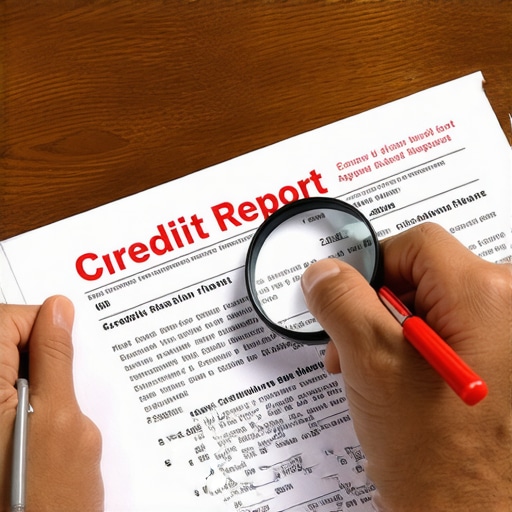
Your credit report is likely full of “zombie” data or simple clerical mistakes that make you look riskier than you are. When I first pulled mine, I found a medical bill I had paid three years prior still listed as an active collection. That one error was dragging my score down by 40 points. You need to learn how to fix the most common errors found in credit reports immediately. Don’t rely on automated software or those fix your credit fast ads that promise overnight miracles. Real progress comes from the tedious work of sending certified letters and demanding verification. These effective credit repair techniques for a fresh financial start are the only way to ensure your foundation is solid. If you don’t clean up the past, no amount of consolidation will fix the future.
Turn Your Everyday Spending Into a Credit Builder
The biggest trap of a consolidation loan is that it “frees up” your credit cards, making it tempting to spend again. Instead of cutting the cards up, you need to change your relationship with them. Treat the card like a debit card. If you don’t have the cash in your checking account right now, do not swipe. I started by only putting my Netflix subscription on my oldest card and setting it to autopay. This keeps the account active and builds a history of on-time payments without accruing interest. Learning how to use your credit card like a debit card for rewards is a mental shift that prevents the “consolidation relapse.” It turns a tool of debt into a tool of leverage. You are essentially tricking the system by showing high activity and zero balance at the end of the month.
Attack the Principal with Brutal Efficiency
Once your rates are lowered and your report is clean, you have to decide where your extra dollars go. I prefer the “Avalanche” method because it wins the math war. List your debts by interest rate, not balance. Throw every spare cent at the one with the highest APR while paying the minimum on everything else. When I did this, I felt like I was actually seeing my balance move for the first time in years. It’s about momentum. If you find yourself overwhelmed, credit counseling secrets for smarter debt management in 2025 can provide the roadmap you might be missing. It is not about how much you make; it is about how much of that income you stop giving away as interest.
I used to think that seeing a zero balance on a closed account was the ultimate victory. I was wrong. The industry loves to push the narrative that any debt is bad for your score, but the reality is far more nuanced. Most people treat their credit score as a net worth statement, when it is actually just a reliability report for lenders. This is one of the many top credit repair myths busted by experts in 2025. I once paid off a five-year auto loan early, expecting my score to jump thirty points. Instead, it plummeted. I was devastated because I didn’t understand that why your credit score drops when you pay off a loan is often due to the sudden loss of a positive trade line and a decrease in your credit mix. Lenders want to see that you can manage active debt, not just that you once had it. 
Why Does the Mix of Your Debt Matter More Than the Total Amount?
Lenders look for a healthy balance between installment loans (like mortgages) and revolving credit (like cards). If you only have one type, you are perceived as a higher risk. A common trap for advanced borrowers is focusing too much on the dollar amount and not enough on the diversity of the accounts. According to data from FICO, credit mix accounts for about 10% of your score. If you consolidate everything into one personal loan and close your cards, you might actually hurt your diversity. You have to be careful when mastering debt management proven strategies for financial freedom because what looks good on a spreadsheet doesn’t always look good to an algorithm. Also, be wary of the label; the truth about non-profit credit counselors is that some may put you on a plan that reflects as a ‘partial payment’ on your report, which can be as damaging as a late payment.
Stop Sending Those Generic Dispute Letters
The biggest ‘oops’ factor I see today is the over-reliance on automated templates. I used to think I could just spam the bureaus with ‘not mine’ letters. That is a fast track to getting your disputes flagged as frivolous. Instead, you need to understand the truth about credit repair software—it is a tool, not a magic wand. If you find a legitimate error, you need to provide specific evidence. However, if the first attempt fails, do not give up. There is a specific reason why you should dispute the same error more than once if you have new documentation or if the creditor fails to respond within the legal timeframe. You also have to watch out for credit counseling insights avoid common pitfalls in debt management like high administrative fees that aren’t disclosed upfront. Have you ever fallen into the trap of closing an old card thinking it would help your score? I would love to hear your story in the comments below.
I used to think that reaching a 750 score was the finish line, but it is actually just the start of a new, less frantic phase of the game. Once you have cleared the wreckage, the challenge shifts from repair to maintenance. If you stop paying attention, those old habits creep back in like weeds in a garden. I personally rely on a simple ‘check-in’ system that takes less than five minutes a week. This is the 5-minute habit that protects your credit score from sudden drops, and it is more effective than any paid monitoring service I have ever used. I log into my main banking app, check my current utilization across all accounts, and ensure my autopays haven’t glitched. It sounds mundane, but it prevents 90% of the disasters that send people back to credit counseling.
Your Spreadsheet Beats the Shiniest Apps Every Time
While there are dozens of flashy apps that promise to manage your money, I still use a custom-built Google Sheet. Why? Because apps often use ‘soft’ data that doesn’t reflect the harsh reality of your actual cash flow. By manually entering my transactions, I am forced to acknowledge the ‘latte factor’ or that random Amazon subscription. If you want to keep your progress, you need smart debt management practices for maintaining financial health that include a weekly review of your actual spending versus your goals. This level of intentionality is what separates people who stay out of debt from those who cycle back in every three years. If you are struggling with the transition, credit counseling insights unlock your path to better credit by providing the structure that raw apps often lack.

How do I keep my score high after the initial repair?
The secret is ‘strategic activity.’ You want your credit reports to show that you are a reliable borrower who doesn’t actually need the money. I use my oldest card for exactly one utility bill. This keeps the line active and ensures the issuer doesn’t close the account for inactivity, which would hurt my age of credit history. It is a cornerstone of effective credit repair techniques for a fresh financial start. Looking forward, I predict that credit scoring will move toward ‘UltraFICO’ or ‘Cashflow’ modeling, where lenders look at your actual bank account balances in real-time, not just your payment history. This means your savings rate will soon be just as important as your FICO score. To prepare, you should start mastering debt management proven strategies for financial freedom now by building a robust emergency fund.
Avoid the Trap of Complacency
Even when your score is great, the bureaus can still make mistakes. The National Consumer Law Center (NCLC) has frequently highlighted how the automated ‘e-OSCAR’ system can sometimes fail to properly investigate legitimate disputes, leading to ‘re-inserted’ errors. This is why you must keep a folder of your deletion letters. If an old error pops back up, you have the paper trail to demand an immediate fix. Don’t fall for top credit repair myths busted by experts in 2025 that claim once a debt is gone, it’s gone forever. You are the only one truly incentivized to protect your record. If you aren’t sure where to start with your long-term plan, credit counseling secrets for smarter debt management in 2025 can help you build a moat around your financial life. My challenge to you today: log into your primary credit card and set up a ‘Balance Alert’ for 20% of your limit. It’s the easiest way to ensure you never accidentally hurt your utilization ratio again.
The One Truth About Credit Scores I Learned Too Late
Looking back, the biggest ‘lightbulb moment’ wasn’t about a specific math formula; it was realizing that my credit score was a measure of how good I was at borrowing money, not how good I was at building wealth. When I stopped chasing the number and started focusing on smart debt management practices for maintaining financial health, the score actually took care of itself. I also learned that the ‘relief’ of consolidation is a dangerous drug; it makes you feel like the problem is solved when the work has actually just begun. Finally, don’t trust every number you see on a free app, because the truth about why your credit score varies between agencies is that each one sees a slightly different version of you.
My Minimalist Toolbox for Total Financial Control
I don’t believe in paying for a dozen subscriptions to manage your money. Instead, I stick to these pillars: first, a simple spreadsheet to track every dime, because it forces behavioral change. Second, I recommend looking into the best credit counseling agencies in the country if you feel like you are walking through a fog. A certified counselor can provide the human perspective that an algorithm lacks. Third, always have a bookmark for the Fair Credit Reporting Act guidelines. If you are starting from zero, the step-by-step guide to credit building for new borrowers is the only manual you truly need to read this year to understand how the system actually works.
Your Path to a Life Without Debt Starts Today
The journey from drowning in high-interest rates to having the leverage of a high score is not a sprint; it is a series of small, intentional choices. You don’t need a miracle or a ‘secret’ loophole from those fix your credit fast ads to see progress. You just need the discipline to keep showing up for your finances every single week. By mastering debt management proven strategies for financial freedom, you are not just fixing a report; you are reclaiming your future and your peace of mind. You have the tools and the knowledge—now it is time to take that first step toward a permanent zero balance. Have you ever found a weird error on your credit report that made no sense? Share your experience in the comments below!