How to Remove Negative Items from Your Credit Report FAST
I remember sitting in a cramped car dealership back in 2018, that ‘new car smell’ teasing my nose, only to have the salesman return with a face like he’d just swallowed a lemon. He didn’t even say a word; he just slid a piece of paper across the desk with a number circled in red: 512. I was floored. I’d been working so hard, but an old medical debt from a college ER visit I’d completely forgotten about was sitting there like a ticking time bomb, destroying my reputation. It felt like a scarlet letter. I walked out of there feeling like a failure, but that moment was my wake-up call. I realized that if I didn’t take charge of my own data, the bureaus would keep punishing me for a past I’d already outgrown.
Get Rid of Those Credit Report Stains Before They Sink You
Most people think a negative mark is a life sentence. They assume they have to sit in the ‘credit penalty box’ for seven long years while life passes them by. That is a flat-out lie. The truth is, the credit system is built on automation and bureaucracy, which means it is prone to massive mistakes. In fact, a landmark study by the Federal Trade Commission found that one in four consumers had errors on their credit reports that could affect their scores. If you don’t look for the most common credit report errors and the fixes, you are essentially leaving your financial future to chance. My first big mistake? I tried to dispute everything at once using a generic template I found online. The bureaus flagged me as ‘frivolous’ faster than I could blink. I learned the hard way that you need a surgical approach, not a shotgun blast. We are going to talk about effective credit repair tips to boost your score today by targeting the low-hanging fruit first. Have you ever looked at your report and seen a name or address that wasn’t even yours?
Can You Really Delete Legitimate Negatives That Fast?
I know what you’re thinking: ‘But I actually missed that payment, so it has to stay, right?’ Not necessarily. The law requires that every single item on your report be 100% accurate, timely, and verifiable. If a collection agency can’t produce the original contract with your signature within 30 days, they legally have to remove it. I’ve seen people use how to remove fraudulent accounts fast without a lawyer techniques to clear up identity mix-ups, and the same logic applies to old debts. Even if you’ve already settled a debt, you should look into how to remove a paid collection from your credit report permanently because a paid collection still hurts your score almost as much as an unpaid one. Today, I’m going to show you how to stop being a victim of the bureaus and start being the architect of your own score.The first thing you need to realize is that a credit report is not a holy text; it’s a rough draft that’s full of typos. To fix it, you have to stop playing defense and start playing offense. Think of yourself as a digital forensic investigator. You aren’t just looking for big mistakes; you’re looking for the tiny inconsistencies that prove the record is unreliable.
Audit Your Data Like a Private Investigator
You cannot fix what you cannot see. Most people use a free app to check their score once a month and think they’re informed. That’s like looking at the weather on the news instead of stepping outside. You need the raw data.
Don’t Trust One Bureau to Do the Others’ Jobs
Equifax, Experian, and TransUnion are competitors, not partners. They don’t share information unless they have to. This is why the reason you should check your credit report at all three bureaus is so critical. One might show a collection that the others don’t, or one might have your name misspelled, which could be linking you to someone else’s bad habits. When I started my journey, I found that my old student loan was marked as ‘in default’ on TransUnion but ‘current’ on the others. That one discrepancy was dragging my aggregate score down by 40 points for no reason.
Make the Collectors Do the Heavy Lifting
Once you have your reports, it’s time to stop asking for permission and start demanding proof. This is where the law becomes your shield.
Demand Proof or Demand Deletion
Debt collectors buy old accounts for pennies on the dollar, often getting nothing more than a spreadsheet with your name and a dollar amount. They rarely have the actual contract. By using how to use the fair debt collection practices act to your advantage, you can force them to validate the debt. If they can’t provide the paperwork, they have to go away. I used to be terrified of the phone ringing until I realized I could send the letter that makes collection agencies stop calling. It shifts the power dynamic instantly. 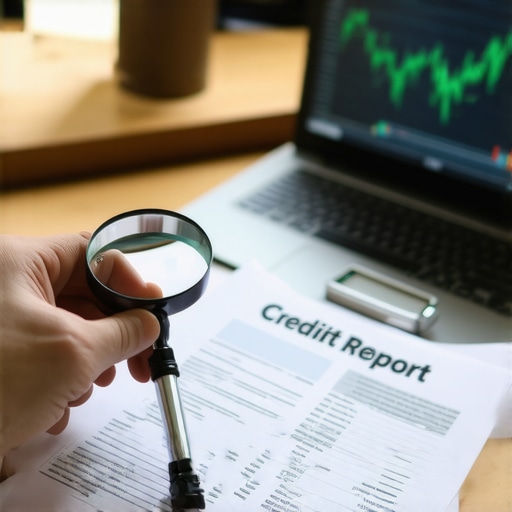
Identify the Ghost Accounts
Look for duplicates. It’s a classic bureau error where a debt is sold and both the original creditor and the new collector list it as an open balance. This makes it look like you owe twice as much as you do. Learning how to remove duplicate accounts from your credit report was the single fastest way I cleared my name.
Focus on the Math the Banks Care About Most
While the disputes are churning in the background, you need to fix the ‘utilization’ game. Think of your credit limit as a bucket. If the bucket is 90% full, the bank thinks you’re drowning and desperate for air. If the bucket is 10% full, they think you’re a financial genius.
Shrink the Utilization Bucket Fast
You don’t always need to pay off the whole balance to see a jump. Sometimes the move that jumps your score 40 points in 30 days is simply paying your bill a few days before the ‘statement closing date’ so the reported balance is lower. Understanding why your balance-to-limit ratio is the most important number you have allows you to manipulate the score in your favor without spending an extra dime. For those on a tight budget, the strategy for paying off debt while living on a fixed income focuses on micro-payments that keep these ratios in the green zone.
But here is where most people trip up—they think the goal is simply to have a ‘zero’ balance everywhere and then walk away. If you follow that logic, you might be walking straight into a trap that keeps your score suppressed for years. I’ve seen people work tirelessly to settle an old bill, only to see their score drop by 30 points the next week. Why? Because the bureau treats any ‘activity’ on an old, dormant account as a fresh update, potentially resetting the clock on how the algorithm views your delinquency. It is counterintuitive, but sometimes paying an old debt without a specific agreement is the worst thing you can do.
Why Paying Off Your Debt Might Actually Tank Your Score
The common wisdom says that a paid-off collection looks better than an unpaid one. While that’s true for your conscience, FICO’s older models—which most mortgage lenders still use—don’t care if the balance is $0 or $1,000; the mere presence of a ‘Collection’ status is the poison. This is why you need to master the tactics for getting a deletion after youve already paid. If you don’t secure a ‘pay-for-delete’ agreement in writing, you are just polishing a sinking ship. I made this mistake with a $45 utility bill from an old apartment. I paid it instantly, thinking I was being responsible. Instead, it updated the ‘last reported date’ to the current month, making a three-year-old mistake look brand new. Have you ever fallen into this trap? Let me know in the comments.
Should You Ever Settle for Less Than the Full Balance?
This is a sophisticated question that depends entirely on your end goal. If you are looking for smart debt management practices for maintaining financial health, settling can free up cash flow. However, a ‘Settled for less than full balance’ notation can be a red flag for high-end lenders. An analysis by the Consumer Financial Protection Bureau suggests that the way collections are reported often creates a ‘black box’ for consumers, leading to unexpected score drops even after payments are made. If you’re in this situation, you need to know the move to make when your debt collector sells your account to ensure the old entry is actually removed, not just duplicated.
The ‘Clean Slate’ Fallacy That Kills Your Credit Age
The biggest ‘oops’ factor I see with advanced students is the urge to close accounts once they are paid off. They want to ‘clean the slate’ and simplify their lives. Do not do this. Closing an account—especially your oldest one—is like cutting the roots off a tree and expecting it to keep growing. You are effectively shrinking your credit history and your total available credit at the same time. I’ve had clients who thought they were doing the right thing by closing a high-interest store card, only to realize why closing your oldest credit card is a massive mistake when their average age of accounts plummeted. Instead of closing it, learn how to use your credit card like a debit card for rewards to keep the account active without carrying a balance. If you’re feeling overwhelmed by the technicalities, digging into the truth about credit counseling vs debt settlement can help you decide which path preserves your score’s longevity while still handling the debt. Real credit repair isn’t just about deleting the bad; it’s about protecting the good you’ve already built.
Once you’ve cleared the hurdles of disputes and deletions, the real work begins. Maintenance is the part where most people get lazy. You fight for six months to hit a 750 score, then you stop looking at the data, assuming the battle is won. I’ve seen scores plummet 50 points overnight because of a single overlooked ‘zombie debt’ or a simple billing error. To prevent this, I’ve developed what I call the ‘Checklist Method.’ It’s the 5-minute habit that protects your credit score from sudden drops, and it involves a weekly audit of your active accounts rather than just checking a score on an app. You need to verify that your reported balances align with your actual spending, especially if you’re using how to use credit monitoring services without hurting your score to keep a pulse on your progress.
Build a Firewall Around Your Financial Reputation
I don’t leave my credit open for anyone to poke at anymore. After my identity was nearly swiped in a data breach, I realized that why you need a credit freeze right now is the most underrated security move you can make. It stops lenders from pulling your report unless you specifically ‘thaw’ it. This is your digital firewall. For those of us following the ultimate credit repair blueprint for 2025, this is non-negotiable. I also rely on manual tracking because the truth about credit repair software is that it often misses the nuance of ‘trended data’—a metric that lenders are increasingly using to see if you are paying down debt or just moving it around.
How do I keep my score high over the long haul?
The secret isn’t just paying on time; it’s managing the data flow. According to a 2023 report by the National Consumer Law Center, automated dispute systems at the big three bureaus often fail to resolve complex factual errors, which means you must remain the primary auditor of your own files. I recommend setting up micro-alerts for any balance change over $100. This level of granularity ensures that no surprise interest charges or recurring subscriptions sneak up on you. This is one of the most smart debt management practices for maintaining financial health that separates the amateurs from the pros. If you can manage your personal files this strictly, you’re finally ready for the fast way to build business credit with an EIN, which allows you to separate your personal liability from your entrepreneurial dreams.

The Future of Credit Moves Faster Than Your Mail
The landscape is shifting toward ‘UltraFICO’ and ‘FICO 10T,’ models that look at your bank account balances and how you manage cash, not just how you handle cards. I predict that within the next two years, your utility and rent payment history will be as impactful as a mortgage payment. That’s why mastering credit building-proven strategies for a strong financial future requires you to look beyond the plastic in your wallet. The system is becoming more holistic and AI-driven. If you want to stay ahead, my best advice is to set a ‘Balance Alert’ on your primary credit card today for anything over 10% of your total limit. Don’t wait for the statement to close—act the moment the alert hits your phone.
The Hardest Lesson I Learned About the Bureaucracy
If there is one thing I’ve realized after years of fighting for every single point on my score, it’s that the system isn’t designed to be fair; it’s designed to be efficient for the banks. I used to think that if I was a ‘good person’ who paid my debts, the score would naturally follow. But the reality is that your score is a data game, and sometimes you have to be the loudest person in the room to get that data corrected. I spent months sending polite requests, only to realize that avoiding common traps and top credit repair myths busted by experts in 2025 was the only way to move the needle. Don’t be afraid to challenge the same error three or four times; the law is on your side, not theirs. Another ‘lightbulb’ moment for me was realizing that I didn’t have to do it all alone. Sometimes, how to effectively use credit counseling to fix your finances can provide the structural support you need when the disputes get overwhelming.
My Go-To Resources for Fighting the Big Three
I don’t believe in secret software or magic beans, but I do believe in having a solid toolkit. First, I always recommend keeping a physical ‘Dispute Log’—a simple notebook where you staple every certified mail receipt. Second, if you’re tired of the cold treatment from national banks, I’ve found that why your local credit union beats your national bank is often because they actually look at the person behind the number when you apply for a loan. I also lean heavily on the Consumer Financial Protection Bureau (CFPB) website for staying updated on new regulations. These tools shifted me from being a victim of my report to being the person who controls the narrative.
Go Claim the Score You Deserve
The road to a 750 or 800 score isn’t a sprint; it’s a series of small, intentional choices. Every letter you mail and every balance you manage is a brick in the foundation of your future house or that car you’ve been eyeing. By utilizing effective credit repair techniques for a fresh financial start, you are telling the world that your past mistakes do not define your future potential. You have the knowledge now, and knowledge without action is just trivia. Go take that first step today and watch how quickly the doors start opening for you. Have you ever had a debt collector try to verify a debt with just a simple printout instead of the original contract? Let me know your experience in the comments below!