
Why Closing Old Accounts Destroys Your Score Instantly
I was sitting at my kitchen table with a pair of heavy-duty shears in my hand, feeling like I was finally taking control of my life. I had this old department store card—you know the one, with the neon logo and a store I hadn’t stepped foot in since 2016. I thought I was being smart. I thought I was finally ‘decluttering’ my financial life. I made the call, heard the representative say those final words, and I actually felt lighter. For about forty-eight hours. Then, I checked my credit monitoring app. My score hadn’t just dipped; it had cratered. I lost nearly 50 points overnight. It turns out, my attempt to be responsible was actually a [massive mistake](https://counselcredits.com/why-closing-your-oldest-credit-card-is-a-massive-mistake) that set my goals back by months. Today, I want to pull back the curtain on why this happens and how you can avoid the same heart-wrenching realization I had. We are going to look at why that dusty old plastic in your drawer is actually doing more heavy lifting than your newest premium card. If you are currently in the middle of trying to [repair your credit fast](https://counselcredits.com/how-to-repair-credit-fast-essential-tips-for-better-scores), this is the one ‘common sense’ move that will absolutely backfire on you. [image placeholder]
Your Oldest Accounts are the Secret Sauce of Financial Stability
When I first started my journey into the world of credit, I assumed the game was simple: pay your bills and don’t carry debt. While that’s mostly true, the bureaus aren’t just looking at what you owe right now; they are looking at how long you’ve been reliable. Think of it like a long-term friendship. A friend you’ve known for twenty years carries a lot more weight than someone you met at a coffee shop last week. In the credit world, that old account—even if it has a zero balance—is your twenty-year friend. When you close it, you aren’t just getting rid of a card; you’re effectively erasing a huge chunk of your history. I made the mistake of thinking that [closing a store card](https://counselcredits.com/why-closing-a-store-card-is-often-a-huge-mistake) was a way to show lenders I didn’t need the credit. In reality, it just made my credit profile look much younger and more volatile. According to FICO, the length of your credit history constitutes 15% of your total score, which is a massive portion to gamble with just for the sake of an empty wallet slot.
Is that dusty store card really worth the hassle?
You might be thinking that the card is useless to you, or you might be worried about identity theft or hidden fees. I get it. The fear of having open lines of credit you don’t use is a very real thing for many of us. But here is the reality: unless that card is charging you a high annual fee, it is costing you absolutely nothing to keep it in a drawer. In fact, it’s actually providing you with a higher total credit limit, which helps your utilization ratio—the second most important factor in your score. If you’re looking for [credit building hacks](https://counselcredits.com/credit-building-hacks-fast-track-your-credit-score), keeping your oldest accounts active is the easiest one in the book. Have you ever closed an account thinking you were doing the right thing, only to watch your score sink like a stone? I’d love to hear your story because, believe me, you aren’t alone in this. We’re going to dive deeper into the mechanics of credit age so you never have to feel that kitchen-table regret that I did.To stop your score from bleeding, you need to understand that credit bureaus treat your history like a professional resume. If you delete your first ten years of work experience, you look like a beginner. When I saw my score drop, I realized that my credit building hacks were incomplete because I didn’t respect the ‘anchor’ effect. Your oldest card anchors your history. If you remove it, the average age of all your accounts shifts forward in time, making you look less reliable to lenders who crave stability.
Why Your Oldest Card is the Anchor of Your Score
The math is simpler than it looks. FICO looks at the age of your oldest account, your newest account, and the average age of everything in between. When I chopped up that store card, I didn’t just lose one card; I lowered the average age of my entire profile from eight years down to four. In the eyes of a bank, I went from a seasoned veteran to a risky amateur in a single afternoon. This is why why your balance-to-limit ratio is the most important number you have often overshadows everything else—when that card closed, my total available credit vanished, causing my utilization on my remaining cards to skyrocket.
Keep the Card Alive with the Micro-Charge Strategy
The most effective way to keep an old card alive without actually using it is the ‘Micro-Charge’ strategy. Banks will eventually close your account for inactivity if you don’t swipe for six to twelve months. I learned this the hard way with a gas station card I hadn’t touched in a year. One morning, I got an email saying the account was closed, and my score took the hit. To avoid this, link a small, recurring monthly bill—like a streaming service—to that old card. Then, set up an automatic payment from your checking account to pay off the card’s balance in full every month. This creates a loop of ‘perfect’ payment history without you ever having to open your wallet. 
Swap Your High-Fee Cards Instead of Closing Them
Protecting your score doesn’t stop at keeping accounts open; you have to watch for the silent killers of credit health. This is where the 5-minute habit that protects your credit score from sudden drops comes into play. If you are currently looking for effective credit repair tips to boost your score today, realize that maintaining what you already have is much easier than trying to repair your credit fast after a mistake. If an old card has a high annual fee that you can no longer justify, don’t just close it. Call the issuer and ask for a ‘product change’ to a no-fee version of the same card. This is one of those credit counseling insights that saves your score and your wallet. Most major banks would rather keep you as a customer on a free card than lose you entirely. I did this with a premium travel card when I stopped flying; I kept my 12-year history intact and didn’t pay a cent more in fees.To stop your score from bleeding, you need to understand that credit bureaus treat your history like a professional resume. If you delete your first ten years of work experience, you look like a beginner. When I saw my score drop, I realized that my credit building hacks were incomplete because I didn’t respect the ‘anchor’ effect. Your oldest card anchors your history. If you remove it, the average age of all your accounts shifts forward in time, making you look less reliable to lenders who crave stability.
Why Your Oldest Card is the Anchor of Your Score
The math is simpler than it looks. FICO looks at the age of your oldest account, your newest account, and the average age of everything in between. When I chopped up that store card, I didn’t just lose one card; I lowered the average age of my entire profile from eight years down to four. In the eyes of a bank, I went from a seasoned veteran to a risky amateur in a single afternoon. This is why why your balance-to-limit ratio is the most important number you have often overshadows everything else—when that card closed, my total available credit vanished, causing my utilization on my remaining cards to skyrocket.
Keep the Card Alive with the Micro-Charge Strategy
The most effective way to keep an old card alive without actually using it is the ‘Micro-Charge’ strategy. Banks will eventually close your account for inactivity if you don’t swipe for six to twelve months. I learned this the hard way with a gas station card I hadn’t touched in a year. One morning, I got an email saying the account was closed, and my score took the hit. To avoid this, link a small, recurring monthly bill—like a streaming service—to that old card. Then, set up an automatic payment from your checking account to pay off the card’s balance in full every month. This creates a loop of ‘perfect’ payment history without you ever having to open your wallet.
Swap Your High-Fee Cards Instead of Closing Them
Protecting your score doesn’t stop at keeping accounts open; you have to watch for the silent killers of credit health. This is where the 5-minute habit that protects your credit score from sudden drops comes into play. If you are currently looking for effective credit repair tips to boost your score today, realize that maintaining what you already have is much easier than trying to repair your credit fast after a mistake. If an old card has a high annual fee that you can no longer justify, don’t just close it. Call the issuer and ask for a ‘product change’ to a no-fee version of the same card. This is one of those credit counseling insights that saves your score and your wallet. Most major banks would rather keep you as a customer on a free card than lose you entirely. I did this with a premium travel card when I stopped flying; I kept my 12-year history intact and didn’t pay a cent more in fees.
Why Paying Old Collections Might Backfire on You
It’s a natural instinct: you see a negative mark on your report, and you want to pay it off to make it go away immediately. But here is the contrarian truth that most ‘gurus’ won’t tell you: paying a collection account doesn’t automatically remove it from your report. In fact, if you aren’t careful, you might inadvertently ‘reset’ the clock on how long that debt can haunt you. This is where understanding the truth about the statute of limitations on debt in your state becomes your best friend. According to the Consumer Financial Protection Bureau (CFPB), a paid collection still stays on your report for seven years unless you negotiate a specific agreement beforehand. If you just send a check, you’ve settled the debt, but you haven’t necessarily healed the score. This is one of those effective credit repair techniques for a fresh financial start that requires a bit more finesse than just throwing money at the problem. I’ve seen people use their entire tax refund to pay off old collections, thinking their score would jump 100 points, only to see zero change because the damage was already done. If you want to see real movement, you need to understand how to remove a paid collection from your credit report permanently through proper validation and negotiation.
Should you settle with a collector or hire a pro?
The industry is flooded with ‘repair’ companies promising miracles, but I’m a firm believer that you are your own best advocate. Many people confuse credit repair with credit counseling, but they are worlds apart. While repair is about disputing errors, smart credit counseling how to rebuild your financial life is about fixing the habits that led to the debt in the first place. This is the nuance most people miss: you can’t out-repair a bad spending habit. The biggest ‘trap’ I see advanced borrowers fall into is the debt consolidation loan. It sounds like a dream: one low payment and no more high-interest cards. However, the hidden costs of debt consolidation loans you must know include the psychological trap of seeing ‘zero’ balances on your credit cards. Without a change in mindset, most people end up maxing those cards out again within 18 months, now with a massive consolidation loan on top of it. This is why most people fail at debt consolidation and how to avoid it.  Have you ever fallen into this trap? Let me know in the comments. We’re all learning here, and sharing those ‘oops’ moments is how we actually get ahead. If you’re looking for a path forward, check out the ultimate credit repair blueprint for 2025 to see how to avoid these common pitfalls.Now that you’ve plugged the leaks and understand the anchor effect, you need a system that ensures you aren’t constantly fighting fires. I don’t use fancy, expensive AI bots or premium subscription services to manage my money; I use a specialized ‘Credit Tech Stack’ that anyone can replicate. For me, the backbone of this isn’t even a dedicated finance app—it is a simple, color-coded spreadsheet where I track my ‘Statement Closing Dates’ rather than just the ‘Due Dates.’ Why? Because knowing why your balance-to-limit ratio is the most important number you have means you realize the date the bank reports to the bureaus is actually more important than the day the bill is technically due. If you want the best way to track your spending without using a complex app, focus on that 30-day reporting window to ensure your balances look low exactly when the bureau takes its snapshot.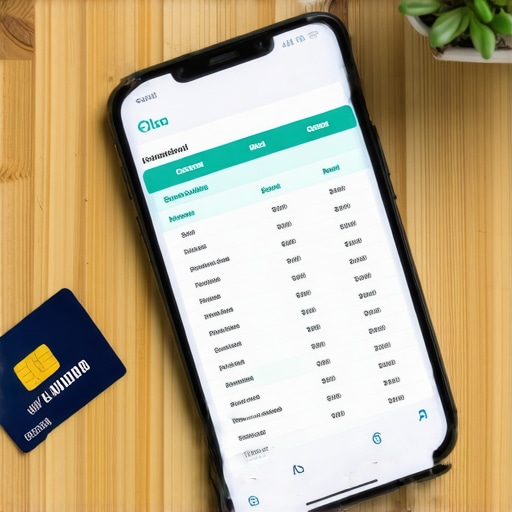
How do I maintain a peak credit score over the long haul?
Maintenance is about automation and observation, not constant effort. I have found that the 5-minute habit that protects your credit score from sudden drops involves a quick monthly audit of ‘Pending’ transactions to catch phantom subscriptions before they hit your statement. I also recommend staggering your free credit reports from the three major bureaus every four months rather than pulling them all at once. This is one of the most smart debt management practices for maintaining financial health because it provides a year-round early warning system for identity theft. According to FICO’s technical documentation regarding ‘Trended Data’ (specifically the FICO Score 10 T model), lenders are increasingly looking at your behavior over a 24-month rolling window rather than just a snapshot of today. This means if you are mastering credit building proven strategies for a strong financial future, your consistency in paying more than the minimum each month is now being tracked as a specific ‘trend’ of reliability.
The Future of Credit and Cash-Flow Underwriting
Looking ahead, the trend is moving toward ‘Permissioned Data.’ I predict that by 2026, the traditional credit score will be heavily supplemented by direct access to your bank account cash flow. Lenders want to see that you have a buffer. This is why you should start exploring how to get your landlord to report your rent to the bureaus right now. By adding non-traditional data like rent and utilities to your profile, you are insulating yourself against the volatility of traditional credit markets. I challenge you to try one specific advanced move this week: call your primary card issuer and request a ‘Product Change’ to a no-fee version of your oldest card. It is a 10-minute conversation that can save your credit age for a lifetime.
The One Shift That Finally Fixed My Financial Blind Spot
Looking back at my journey, the most painful realization wasn’t that I lacked money, but that I lacked a strategy for the long game. I used to think of my credit score as a grade on a test, something I could cram for at the last minute. In reality, it is a living, breathing history of your reliability. One of the top credit repair myths busted by experts in 2025 is the idea that you should close accounts you don’t use. I learned that silence from an old account is actually golden; it’s the sound of stability. If you want to stop the cycle of frustration, you have to stop treating your credit like a debt list and start treating it like a reputation. Every month you keep an old account open, you are effectively strengthening your financial foundation without lifting a finger.
- The ‘Good Debt’ Paradox: Being debt-free is great for your soul, but zero credit activity can actually make you a ghost to lenders.
- Age Over Perfection: A 15-year-old account with a few late payments from a decade ago can often be more valuable than a brand-new, perfect account.
- The Documentation Habit: I stopped taking the bank’s word for it and started keeping my own records, which is essential for effective credit repair techniques for a fresh financial start.
[image placeholder]
My Personal Arsenal for Staying Ahead of the Banks
I don’t believe in magic bullets, but I do believe in the right tools. To stay on top of things, I rely on a three-tier system. First, I use the official sources—you get one free report from each bureau every year, and I space them out every four months to catch errors early. Second, I’ve moved away from complex apps and back to a simple, manual tracker. This helps me master the best way to track your spending without using a complex app while staying deeply connected to where my money actually goes. Finally, I always keep a copy of the ultimate credit repair blueprint for 2025 bookmarked. It serves as my North Star when I’m faced with a confusing collection notice or an unexpected score dip. These tools aren’t just about data; they are about giving you the confidence to talk back to creditors when they make a mistake.
Take Back the Reins of Your Financial Future
Credit doesn’t have to be a mystery designed to keep you down. It is a system with rules, and once you know those rules, you can make them work for you. Whether you are trying to how to repair credit fast after a setback or you are just starting out with building credit from scratch a step-by-step guide, remember that consistency is your greatest weapon. Don’t let a single mistake define your financial life. You have the power to rebuild, protect, and grow your score into a tool that opens doors rather than closes them. If you ever feel stuck, reach out for smart credit counseling how to rebuild your financial life to get a professional perspective. Your future self will thank you for the work you’re doing today. Have you ever accidentally lowered your score by trying to do the ‘right’ thing, like closing an old card? Let me know your story in the comments below!