
How to Use Your Tax Refund to Pivot Out of Debt Fast
I remember the smell of burnt coffee and the cold, unforgiving glow of my laptop screen three years ago. I had just seen that IRS direct deposit hit—a cool $2,800. For a split second, I saw a new mountain bike. I saw a weekend getaway. Then, I looked at my credit card statement. The interest alone was eating more of my monthly income than my grocery budget. I felt trapped, like I was running on a treadmill that was slowly speeding up while I was getting tired. I made a massive mistake that year: I spent half of it on ‘fun’ and only threw the rest at my smallest debt. It did nothing. I was still stuck in the cycle. This year, I want to help you avoid that hollow feeling of a wasted windfall.
Turn Your Refund Into a Debt-Killing Machine
Most people treat their tax refund like a bonus or a gift from the government, but it is actually your hard-earned money that you overpaid throughout the year. When you have high-interest debt, that refund is the most powerful tool in your shed to break the cycle. If you are tired of the constant stress, we are going to use these funds to execute a strategic pivot. We will look into [debt management secrets](https://counselcredits.com/debt-management-secrets-tackle-debt-before-it-takes-over) that allow you to stop treading water and actually start moving toward the shore. According to data from the Federal Reserve, the average credit card interest rate has surged past 21%, which means every day you wait to pay down that balance, you are effectively giving the banks a massive tip. By using your refund now, you aren’t just paying a bill; you are buying back your future cash flow. Have you ever felt like no matter how much you pay, your balances just won’t budge?
Is using a refund for debt really as boring as it sounds?
I get it. Using a ‘big check’ to pay off a boring credit card feels like a letdown. But you know what feels better than a new gadget? The silence of a phone that isn’t ringing with debt collectors. When I finally got serious, I started applying [effective credit repair tips](https://counselcredits.com/effective-credit-repair-tips-to-boost-your-score-today) alongside my refund to not only lower my debt but also jumpstart my score. The trick is to stop looking at the refund as ‘extra’ money and start seeing it as a get-out-of-jail-free card. We are going to dive into how [credit building hacks](https://counselcredits.com/credit-building-hacks-fast-track-your-credit-score) can turn a lower debt-to-income ratio into a skyrocketing credit score almost overnight. It is time to stop falling for [the truth about credit card minimum payments](https://counselcredits.com/the-truth-about-credit-card-minimum-payments-and-your-future) and realize they are designed to keep you in debt for decades. Today, we change that narrative together.
Scrub Your Statements for Every Hidden Leak
I remember sitting on my living room floor three years ago, surrounded by printed bank statements and clutching a red highlighter like a weapon. I wasn’t just looking for subscriptions I forgot to cancel; I was hunting for the interest charges that were bleeding me dry. I discovered that one department store card was charging me $45 a month just for the privilege of carrying a balance. That was my ‘Aha!’ moment. To get started, you need [the easy way to set up a budget that you will actually stick to](https://counselcredits.com/the-easy-way-to-set-up-a-budget-that-you-will-actually-stick-to) so you know exactly where every cent of that refund needs to go before it even hits your bank account. Think of your debt like a leaky bucket—it doesn’t matter how much water (money) you pour in if the holes are still there. We are going to find the biggest holes first.
Kill the High Interest Beast First
Once you have your list, don’t just sprinkle your refund across five different cards. That is like trying to put out five house fires with a garden hose. Instead, use the Avalanche Method. This means you take the bulk of your refund and incinerate the debt with the highest interest rate first. When I did this with my $1,200 refund, I didn’t pay a little on everything. I obliterated my 26% APR credit card. Suddenly, that $45 a month in interest stayed in my pocket. You are effectively giving yourself a permanent raise by stopping those interest payments. This is one of the most [mastering debt management-proven strategies for financial freedom](https://counselcredits.com/mastering-debt-management-proven-strategies-for-financial-freedom) because it mathematically minimizes the total amount you pay over time. If you find yourself overwhelmed, looking into [credit counseling secrets for smarter debt management in 2025](https://counselcredits.com/credit-counseling-secrets-for-smarter-debt-management-in-2025) can provide the outside perspective needed to rank these debts effectively.

Repair the Damage While the Dust Settles
Paying down the balance is only half the battle; the other half is cleaning up the scars left behind on your report. While you are using your refund to lower your balances, you should simultaneously hunt for errors. Use your momentum to learn [how to remove negative items from your credit report fast](https://counselcredits.com/how-to-remove-negative-items-from-your-credit-report-fast). I once found a late payment from a utility company I had already paid off, and by using a simple dispute, my score jumped 30 points in three weeks. If you have legitimate late marks, don’t panic. You can often learn [how to remove a late payment from your credit report overnight](https://counselcredits.com/how-to-remove-a-late-payment-from-your-credit-report-overnight) by using a goodwill letter or professional dispute tactics. The goal is to make your credit report look as clean as your new balance sheet.
Force Your Utilization Ratio to Work for You
The most immediate benefit of dumping a tax refund into a credit card is the instant drop in your credit utilization ratio. This ratio is like a thermometer for your financial health. If you are maxed out, the banks think you are ‘running a fever’ and are too risky to lend to. By paying off a large chunk of debt, you instantly cool that temperature. You need to understand [why your balance to limit ratio is the most important number you have](https://counselcredits.com/why-your-balance-to-limit-ratio-is-the-most-important-number-you-have) because it accounts for 30% of your total FICO score. When I dropped my utilization from 90% to 20% using my refund, my score didn’t just crawl up; it leaped. This creates a virtuous cycle: a higher score means you can eventually [how to qualify for the best personal loan rates](https://counselcredits.com/how-to-qualify-for-the-best-personal-loan-rates) to consolidate any remaining high-interest debt into a single, low-interest payment. You aren’t just paying a bill; you are building a bridge to cheaper money in the future.
Most people think they are winning when they check their free score on a popular app and see a big green number. But here is the nuance: that app is likely showing you a VantageScore, while 90% of top lenders use FICO. I have seen people walk into a dealership thinking they had a 720, only to be told their FICO was a 660. You need to why you should ignore the vantagescore and watch your fico if you want to avoid a nasty surprise at the closing table. A report by the Consumer Financial Protection Bureau (CFPB) highlights that many consumers face systemic issues with inaccurate reporting that generic monitoring apps often overlook. You are not just managing a number; you are managing a complex financial profile.
Stop chasing the wrong credit score
The trap many people fall into is thinking all credit scores are created equal. When you use your tax refund to pay down debt, you might see your VantageScore jump immediately, while your FICO stays stagnant for a month. This lag can be frustrating, but understanding the algorithm is key to mastering credit building proven strategies for a strong financial future. Do not get discouraged if the needle doesn’t move on day one. Real credit health is about the long-term data trend, not the daily fluctuations of a marketing-heavy app. If you are not seeing the results you expect, it might be time to look into credit counseling insights-avoid common pitfalls in debt management to see what specific data points are holding you back.

Why your oldest credit card is your best friend
Then there is the ‘clean slate’ myth. You pay off that old credit card using your refund and your first instinct is to cut it up and close the account. Stop. That is one of the most common top credit repair myths busted by experts in 2025. When you close that card, you instantly shorten your credit history and reduce your total available credit. I learned the hard way why closing old accounts destroys your score instantly; my score dropped 40 points because I thought I was being ‘responsible’ by getting rid of a card I had not used in years. Keep the account open, even with a zero balance, to maintain the ‘age’ of your credit profile.
Should you ever pay a collection agency without a written guarantee?
Absolutely not. This is where most people lose their hard-earned refund money to the wind. If you just send a check to a debt buyer, they will mark it as ‘paid,’ but that negative mark often stays on your report for seven years. You need to learn how to negotiate a pay-for-delete deal with scrappy debt buyers. You want that debt gone from your history entirely, not just zeroed out. Many people fall into this trap because they think ‘paid’ is the same as ‘erased.’ Paying a collection without a deletion agreement is one of those ‘oops’ factors that can stall your progress for years. You are effectively paying for a status change that might not even boost your score significantly. Before you write that check, make sure you have a strategy in place. Have you ever fallen into this trap or paid a debt only to see your score stay the same? Let me know in the comments.
I don’t use those flashy, ad-filled apps that try to sell me a personal loan every three seconds. Instead, I rely on a personal ‘Method Stack’ to ensure my score never slides back into the 500s. First, I use a simple spreadsheet to track my ‘statement closing dates’—not just the due dates. This is the real secret to smart debt management practices for maintaining financial health. If you pay your balance three days before the statement closes, the bank reports a zero-dollar balance to the bureaus, even if you spend money the next day. I also utilize the best way to track monthly expenses without stress by setting up ‘micro-reminders’ on my calendar for the 15th of every month to audit my pending transactions. For the serious heavy lifting, I dig into the actual FICO technical specifications rather than relying on blog summaries. According to FICO’s technical documentation on the 10T model, ‘Trended Data’ is the new frontier. This means the algorithm looks at whether you are a ‘transactor’ who pays in full or a ‘revolver’ who carries a balance over a rolling 24-month window. Using your refund to pay off a card is great, but keeping it at zero for two years is what actually signals to the banks that you are a low-risk borrower.
How do I keep my score from tanking after all this work?
Maintenance is where most people fail because they stop paying attention once they hit their target number. I keep my momentum by using how to build credit using only subscription services to keep my oldest accounts active without actually spending money I don’t have. I put one $15 streaming bill on an old card, set it to autopay, and then literally hide the card in a fireproof safe. This ensures the ‘activity’ signal keeps firing on your report without the temptation to overspend. If you find yourself hitting a plateau after your refund is spent, seeking credit counseling insights-unlock your path to better credit can provide that final 10% of optimization you might be missing, such as restructuring the timing of your remaining loans.
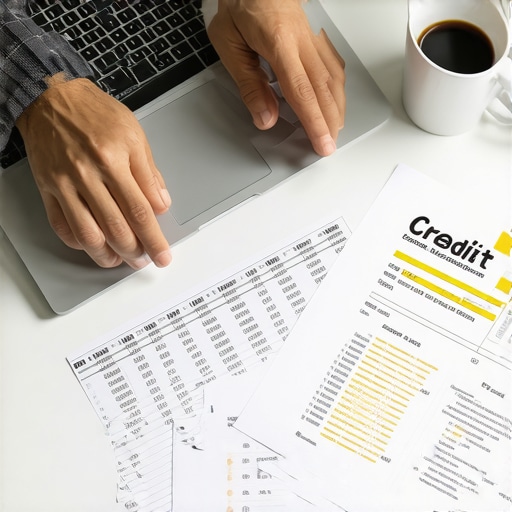
I predict that by 2027, the traditional manual dispute letter will be almost entirely replaced by AI-driven verification systems that cross-reference your data in milliseconds. This is why you need the ultimate credit repair blueprint for 2025 now—to get ahead of the curve before the bureaus make it even harder to fix human errors. We are moving toward a world where your utility and rent payments will be the primary drivers for young borrowers, so starting to learn how to build credit with utility and cell phone bills is no longer an optional ‘hack’; it is a fundamental requirement for a modern financial profile. Once your score stabilizes, it is time to scale. I never wait for the bank to offer me more credit. Every six months, I follow the steps for how to get a credit limit increase without a hard inquiry. Higher limits with the same low spending equals a lower utilization ratio, which acts as a permanent shield for your score. My big tip for you this week: Call one credit card issuer today and ask when your ‘statement closing date’ is. It is usually different from your due date. Pay your balance in full by that closing date, and watch your score leap within thirty days.
The Hardest Lessons I Learned While Fighting My Way Back From a 580 Score
Looking back at my own journey, the most painful realization was that I was often my own worst enemy because I lacked the right information. First, I learned that ‘busy work’ is not progress; sending random dispute letters without understanding the law is a waste of stamps. By focusing on [how to avoid the most common credit repair mistakes](https://counselcredits.com/how-to-avoid-the-most-common-credit-repair-mistakes), I stopped spinning my wheels. Second, I realized that my tax refund was a weapon, but only if I aimed it at the right target. I used to think paying off small, low-interest debts felt good, but it was the high-interest predators that were actually keeping me poor. Finally, I discovered that even if you feel like you are at rock bottom, there is always [the only way to fix your credit when you have no money](https://counselcredits.com/the-only-way-to-fix-your-credit-when-you-have-no-money) which involves focusing on the accuracy of your data rather than just the balances.
The Toolbelt That Finally Fixed My Finances
I didn’t do this alone; I used a specific set of resources that I still recommend to anyone who will listen. My first stop is always AnnualCreditReport.com because it is the only government-mandated site for truly free reports from all three bureaus without the marketing fluff. For the strategy side, I lean on The CFPB Complaint Database; if a creditor is ignoring your legal rights, this is the ‘big stick’ that forces them to the table. I also suggest The 50/30/20 Budgeting Rule as a foundational framework, especially when you are [building credit from scratch in 2025](https://counselcredits.com/building-credit-from-scratch-what-you-need-to-know-in-2025). These tools aren’t just suggestions; they are the infrastructure of a stable financial life. They help you move from reactive panic to proactive planning.
#IMAGE_PLACEHOLDER_E#
Your Financial Reboot Starts With This Single Refund
You have a unique opportunity right now to turn a one-time check into a lifetime of lower interest rates and financial peace. Don’t let the temptation of a quick purchase steal the compound growth of a high credit score. Whether you are using these [debt management tips for financial challenges](https://counselcredits.com/debt-management-tips-to-navigate-financial-challenges-successfully) to tackle an old collection or just to pay down a maxed-out card, remember that every dollar you apply today is a gift to your future self. You are more than a three-digit number, but that number controls the quality of your housing, your car, and even your stress levels. It is time to take control of your debt management and start the next chapter of your story. Have you already decided which specific debt you are going to target first with your refund check?