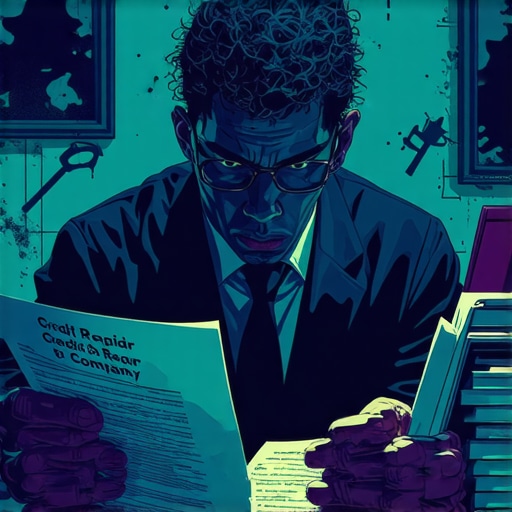
How to Remove a Paid Collection from Your Credit History
I remember sitting at my kitchen table three years ago, staring at a ‘Paid in Full’ letter like it was a golden ticket. I had finally scraped together $450 to settle an old utility bill that had been haunting my credit report. I was proud. I thought the moment I hit ‘send’ on that payment, my credit score would rocket upward. Instead, I logged in the next week to find my score had actually dropped by five points. I felt like I had been punched in the gut. I did the ‘right’ thing, yet the system was still punishing me. It was a visceral realization: paying a debt and cleaning your history are two completely different games.
Today, I want to show you how to stop playing by the debt collector’s rules and start using the ones that actually favor you. We aren’t just talking about settling balances; we are talking about total erasure. Most people don’t realize that a ‘paid’ collection is often just as damaging as an unpaid one because the negative mark stays on your record for seven years regardless of the balance. I made the mistake of paying first and asking questions later, but you don’t have to. We are going to dive into [effective credit repair techniques for a fresh financial start](https://counselcredits.com/effective-credit-repair-techniques-for-a-fresh-financial-start) that focus on getting that data deleted entirely.
A Paid Status Usually Won’t Help Your FICO Score
Most of us grew up believing that if you owe money, you pay it, and the problem goes away. In the world of credit algorithms, that logic is flawed. Older scoring models—the ones most mortgage lenders still use—don’t give you extra points just because a collection balance is zero. The damage is in the fact that the collection occurred at all. It is a scar that refuses to fade. According to the Consumer Financial Protection Bureau, credit reporting errors are rampant, and often, the only way to see a real score increase is to ensure the account is removed, not just updated.
I spent months hitting dead ends before I discovered [the tactics for getting a deletion after youve already paid](https://counselcredits.com/the-tactics-for-getting-a-deletion-after-youve-already-paid). It turns out, I was using the wrong leverage. If you are currently staring at a collection notice, stop. Don’t reach for your wallet yet. You need a strategy that involves [how to remove a paid collection from your credit report permanently](https://counselcredits.com/how-to-remove-a-paid-collection-from-your-credit-report-permanently) through goodwill letters or credit bureau disputes. Have you ever felt the frustration of paying off a debt only to see your credit score stay stubbornly low? I’d love to hear your story in the comments.
Can you really force a deletion if they already have your money?
It is the number one question I get. People think that once the collector has the cash, you lose all your power. That is a myth I used to believe too. In reality, you still have rights under the Fair Credit Reporting Act. Even if the debt is paid, the information reported must be 100% accurate, complete, and verifiable. If it isn’t, it has to go. This is a core part of [the ultimate credit repair blueprint for 2025](https://counselcredits.com/the-ultimate-credit-repair-blueprint-for-2025). We aren’t asking for favors; we are demanding accuracy. If the collector can’t prove every detail of that old account, they can’t keep it on your report. I’ve seen people use [credit counseling secrets for smarter debt management](https://counselcredits.com/credit-counseling-secrets-for-smarter-debt-management-in-2025) to navigate these waters, and the results are life-changing.
Make them prove you owe every single cent
You have to treat a debt collector like a librarian who lost your book—if they can’t find the original checkout slip, they can’t legally charge you the late fee. The first thing I always do is send a debt validation letter. I remember a specific instance with a $85 medical bill that appeared on my report out of nowhere. It was a clerical error from a lab I never actually visited. Instead of arguing on the phone and getting nowhere, I sent a certified letter demanding proof of the debt. Three weeks later, I got a letter back saying they couldn’t verify the account and were removing it from all three bureaus. If I had just paid it to ‘make it go away,’ that mistake would have sat on my report for seven years, dragging down my score. This is one of the most effective credit repair tips to boost your score today because it forces the collector to do the heavy lifting or step aside.
The Pay for Delete secret weapon
Before you send a single dime to a collector, you need a written agreement that they will delete the account entirely from your credit file upon payment. This is what we call a ‘Pay for Delete’ strategy. Collectors will often tell you over the phone that they aren’t ‘allowed’ to do this or that it is against their policy, but that is almost always a bluff. They own the data they report, and they have the absolute power to stop reporting it. If you are struggling with how to remove negative items from your credit report fast, this is your golden ticket. I once negotiated a $1,200 credit card debt down to $400 with a guaranteed deletion. I stood my ground and didn’t pay until I had that promise in a physical letter on their company letterhead. It felt like winning a high-stakes poker hand. Knowing why you should not fear debt collectors and how to beat them changes the dynamic from you being the victim to you being the person in control of the transaction.
Clean up the mess after you have already paid
If you have already paid the debt and are now realizing it didn’t help your score, don’t panic. You still have options to fix the damage. You can start by looking for even the smallest inaccuracies in how the account is being reported. Are the dates consistent? Is the balance history perfect? Even a minor typo in the account number is a valid reason to challenge the entry. Learning how to fix the most common errors found in credit reports is essential because the credit bureaus are legally required to investigate and remove items they cannot verify as 100% accurate. Sometimes you can find the move that gets late payments off your report in 30 days just by being meticulous with your documentation. If it is an older bill, it is also worth checking the truth about the statute of limitations on debt in your state. If the debt is past that date, they have even less leverage over you. For those dealing with specific service providers, you should follow a dedicated guide on how to deal with a negative remark from a utility company to ensure you aren’t being penalized for a service that was canceled or transferred years ago. The goal is a clean slate, not just a zero balance.Let’s dig deeper into the mechanics of why your credit score might behave like a moody teenager. One of the most frustrating myths in the financial world is that paying off a loan in full is an instant win for your score. In reality, I have seen dozens of people watch their numbers plummet thirty points the moment they clear their final car payment. This happens because the FICO algorithm values a ‘mix’ of open, active accounts. When you close that loan, you lose that active data stream. This paradox is one of the biggest top credit repair myths busted by experts in 2025. According to data from FICO, about 10% of your score depends on your credit mix, and losing an installment account can leave your profile looking ‘thin’ to the scoring software.
Why your score tanks right after you pay off a loan
It feels like a betrayal. You’ve been responsible, you’ve saved, and you’ve finally eliminated a monthly bill, only to be penalized. The trap here is that the algorithm rewards the management of debt, not necessarily the absence of it. If you are struggling with this, understanding why your credit score drops when you pay off a loan can help you time your financial moves better—like waiting until after a mortgage approval to settle smaller debts. Have you ever fallen into this trap? Let me know in the comments.
Does your credit mix actually matter as much as they say?
For the advanced reader, the answer is a resounding yes, but with a twist. It isn’t just about having different types of accounts; it is about the ‘utilization’ within those accounts. Most people focus on their total credit limit, but the algorithm is often looking at each individual card. If you have one card maxed out and three others at zero, your score will suffer more than if you had that same debt spread evenly. This is why your balance to limit ratio is the most important number you have. Even if your total utilization is low, that one ‘maxed’ card signals high risk to lenders.
The double debt trap most people ignore
Many people try to fix their credit by taking out a consolidation loan, but without a change in habit, this often leads to ‘double debt.’ They pay off the cards with the loan, but then they see those zero balances and start spending again. Within six months, they have the loan and the credit card debt. To avoid this, you should look into credit counseling insights to avoid common pitfalls in debt management. Professional guidance can help you see the behavioral triggers that lead to this cycle. If you are ready to move fast, utilizing credit building hacks to fast-track your credit score can provide the momentum you need without the risks of traditional consolidation. Remember, the goal is a sustainable financial lifestyle, not just a temporary bump in the numbers.
Maintenance isn’t about checking your score every hour—that is a recipe for anxiety and leads to ‘score obsession,’ which actually hinders your progress. I personally moved away from flashy, notification-heavy apps and back to a manual method because I found that most software lags behind real-time credit bureau changes. By utilizing the checklist method for passing a loan application audit, I keep a physical paper trail of every dispute and payment. This level of organization is exactly what helped me jump my score when I was stuck in the mid-600s. It might feel old school, but having a binder with your certified mail receipts is much more powerful than a screenshot on your phone when a lender asks for proof of a settled debt.
Why I stopped relying on fancy apps
Apps are great for general trends, but they often use VantageScore models, which can be wildly different from the FICO scores lenders actually use. I have seen people walk into a car dealership thinking they have a 720, only to find out their FICO is a 640. That is why I recommend focusing on credit counseling secrets for smarter debt management in 2025 that prioritize data accuracy over aesthetic graphs. If you want to stay protected, you need the 5-minute habit that protects your credit score from sudden drops: a weekly log of your statement closing dates. Paying your balance just two days before that date is the most effective way to keep your reported utilization low without spending an extra dime.
How can I keep my score stable for years?
Sustainability is the name of the game. Once you have used how to repair credit fast: essential tips for better scores to clear the initial hurdles, you must transition into smart debt management practices for maintaining financial health. This means setting up ‘guardrails’ for your spending. For me, that meant setting an alert on every credit card for any transaction over $1.00. It sounds annoying, but it is the ultimate defense against fraud and accidental overspending. As we look toward the future, credit scoring is shifting toward AI-driven models that analyze ‘trended data’—meaning they don’t just see your current balance, but whether you are progressively paying it down or slowly racking it up over time. According to the Consumer Financial Protection Bureau’s 2023 report on the credit reporting system, nearly 25% of consumers have found errors on their reports that could have been caught with simple, consistent monitoring. This is why effective credit repair techniques for a fresh financial start are never a ‘one and done’ deal; they are a lifestyle change. I challenge you to pick one card this week and set its alert threshold to $1.00. You will be shocked at how much more aware you become of your financial footprint.
My Biggest Lightbulb Moments After Years in the Credit Trenches
The single most important lesson I learned was that silence is a debt collector’s greatest weapon. They count on you being too overwhelmed or embarrassed to pick up the phone or send a letter. When I finally started speaking up and demanding proof, the power dynamic shifted instantly. It is about realizing that you aren’t just a number to these agencies; you are a consumer with specific legal protections that they hope you never read. Another huge realization was that intensity doesn’t beat consistency. Spending ten hours one weekend trying to fix everything leads to burnout. However, spending twenty minutes every Friday morning reviewing your accounts is how you actually see effective credit repair techniques for a fresh financial start take root. Lastly, I had to stop taking it personally when my score dipped after a major payoff. It is a quirk of the system, not a reflection of my character. By applying credit counseling insights to avoid common pitfalls in debt management, I learned to look at the long-game trends rather than the daily fluctuations.
The Three Tools I Never Make a Move Without
If you want to move beyond basic tips, you need a solid foundation. First, I always recommend a physical binder for your records. I use the checklist method for passing a loan application audit to keep every certified mail receipt and correspondence in one place. Digital apps are great, but a physical paper trail is undeniable in court or during a high-stakes dispute. Second, I’ve found that why your local credit union beats your national bank is often because they offer more personalized credit-building products, like credit-builder loans, which are essential for thickening a thin file. Third, keep a copy of the Fair Credit Reporting Act (FCRA) bookmarked. Knowing your rights is the ultimate shield against aggressive collection tactics. I trust these methods because they rely on law and organization rather than luck or expensive software.
Claiming the Clean Slate You Deserve
The journey to a high credit score is rarely a straight line, but the destination is worth every bit of effort. Imagine the feeling of walking into a dealership or a mortgage office and knowing—without a doubt—that your application will be approved at the best possible rate. That peace of mind is what we are really building here. You have the tools, the strategies, and the roadmap to implement effective credit repair techniques for a fresh financial start. Don’t let a few past mistakes define your financial future for the next decade. Take that first small step today, whether it is sending a validation letter or just organizing your statements. Which specific debt or negative mark on your report is giving you the most stress right now? Let me know in the comments below and let’s figure out a strategy to tackle it.