
How to Talk to Your Spouse About Debt Without Starting a Fight
I remember sitting at our cracked oak kitchen table, palms slick with sweat, staring at a stack of envelopes I’d been hiding in the back of the junk drawer. I had a secret, and it was $4,500 deep in high-interest debt. My husband thought we were saving for a down payment; I knew we were barely treading water. When I finally spoke up, the air in the room felt like it had been sucked out. It wasn’t the money that nearly broke us—it was the silence. Early on, I made the classic mistake of thinking I could boost my score on my own without him noticing, but financial secrets have a way of rotting a relationship from the inside out.
Your Marriage is More Than Your Balance Sheet
The reason we’re talking about this right now is that debt isn’t just a math problem; it’s an emotional weight that affects how you sleep, how you parent, and how you dream. If you’re feeling suffocated, you aren’t alone. According to the American Psychological Association, money remains one of the top sources of conflict for couples, often leading to deep-seated resentment if left unaddressed. Today, I want to give you the exact framework I used to stop hiding and start healing, ensuring you can tackle debt before it takes over your life. We are going to turn that ‘ticking time bomb’ feeling into a shared mission.
Will this conversation just make things worse?
It’s the fear that keeps most people silent. You worry that being honest will trigger a blowout fight or, worse, a loss of trust that you can never get back. But here is the truth: the fight you have today is much better than the divorce you might face three years from now because of ‘financial infidelity.’ You have to realize that your credit score is not a reflection of your wealth or your worth as a partner. It’s just data. Have you ever felt like you were keeping a financial secret just to keep the peace? Drop a comment or reach out—I’ve been there, and I know how heavy that burden feels.
Stop the Blame Game Before It Starts
When you finally sit down, the goal isn’t to find a scapegoat; it’s to find a solution. I used to think paying your debt via credit counseling was a sign of failure, but I’ve learned it’s actually a sign of maturity. We need to look at the ‘why’ behind the spending. Was it a job loss? Medical bills? Or maybe just a lack of a plan? By focusing on the ‘why’ together, you stop being adversaries and start being teammates. This shift is what allowed us to finally breathe again and look at our future without flinching.
Put Every Receipt and Statement on the Table
Once the air is cleared, you need to look at the numbers without blinking. It’s like turning on the lights in a room you thought was haunted—the shadows look a lot smaller when you can actually see the corners. When we started this process, we sat down with two different colored highlighters: yellow for ‘urgent’ (high interest) and blue for ‘quick wins’ (small balances). Seeing it all on paper was terrifying, but it was also the first time I felt in control. You have to realize that the best strategy for eliminating high-interest credit card balances depends entirely on your psychological stamina. Some people need the cold math of the ‘Avalanche’ method, while others—like us—needed the immediate momentum of the ‘Snowball’ because why your smallest debt balance deserves your immediate focus is about more than just interest rates; it’s about the hit of dopamine you get from seeing a zero balance. 
Look for the Ghosts in Your Credit Report
You’d be surprised how many ‘debts’ on your report might not even belong to you. When we audited our records, I found a medical bill from a city I’d never lived in. Learning effective credit repair techniques for a fresh financial start starts with a fine-tooth comb. We used the checklist method for passing a loan application audit even though we weren’t applying for a new loan; we just wanted to see what the banks saw. We found three errors that were suppressing our scores by nearly 50 points combined. If you aren’t looking at the line items, you’re essentially throwing money at mistakes.
Slash the Interest Rates That Are Eating You Alive
High interest is the rust that destroys your financial engine. If you’re paying 24% or higher, you aren’t just paying back what you borrowed; you’re funding the bank’s next skyscraper. I remember feeling paralyzed by the math until I realized I could negotiate. Many people don’t realize that credit counseling secrets for smarter debt management in 2025 often involve professional intervention to lower these rates, but you can also take the first swing yourself.
Try the 5-Minute Call That Changes Everything
Before you get discouraged, pick up the phone. The first time I called my card issuer, my heart was hammering. I told them I was looking at balance transfer options because my current rate was too high. That one 5-minute check-in call that could cut your APR by 5% actually worked, and it saved us $140 a month in interest alone. That’s money that went directly toward the principal the very next month. If the direct approach fails, look for the move that jumps your score 40 points in 30 days, which often involves strategically lowering your credit utilization ratio. This isn’t about magic; it’s about shifting the levers of the credit system in your favor through consistent, calculated actions.
Most people think that once they’ve called the creditors and started the snowball, the hard part is over. But there is a massive nuance that often leads to a ‘plateau’ where your score just stops moving. One of the top credit repair myths busted by experts in 2025 is the idea that a zero balance on a closed account is better than a small balance on an open one. In my journey, I almost closed my oldest department store card because I was ashamed of the history behind it. That would have been a disaster.
Stop trying to erase your history
You have to realize that why you should keep your oldest account open is about preserving the ‘age’ of your credit file. If you kill the history, you kill the score. According to FICO, the length of credit history accounts for 15% of your total score. Have you ever closed an account thinking it would help, only to see your score tank? Let me know in the comments. This is a common ‘oops’ factor—as is paying a collection agency without a ‘pay-for-delete’ agreement. You think you’re doing the right thing, but a ‘paid collection’ can stay on your report for seven years without significantly helping your FICO 8 score. You need to know how to remove a paid collection from your credit report permanently before you send a single dime. Furthermore, why you should never pay a collection agency via debit card is a safety lesson I learned the hard way; it gives them a direct line to your remaining cash and zero leverage for you later.
Why did my score stall after that big payment?
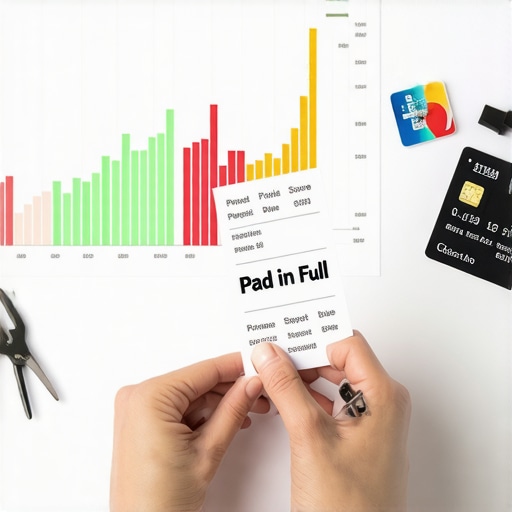
It’s infuriating. You send off a $2,000 check and expect a 50-point jump, only to see a goose egg. This often happens because of trailing interest or the specific date your bank reports to the bureaus. If you don’t understand why your credit score stalled after that big payment, you might give up right before the breakthrough. Data from the Consumer Financial Protection Bureau (CFPB) suggests that timing your payments to the ‘statement closing date’ rather than the ‘due date’ is the professional move that separates the amateurs from the experts. This subtle shift ensures the lower balance is what actually gets reported to the agencies.
Beat the algorithm with individual card limits
You also need to watch your ‘individual’ utilization. Even if your total debt is low, if one card is maxed out, you’re getting dinged. Learn why your credit utilization ratio is actually higher than you think and consider the credit limit move that fixes your utilization without spending an extra dollar. By mastering these credit counseling insights and avoiding common pitfalls in debt management, you’re not just paying bills—you’re outsmarting the algorithm designed to keep you in a lower tier. Have you ever fallen into the trap of focusing only on the total balance? Let’s talk about it below.
Scaling your success means moving from reactive repairs to proactive building. I’ve found that the biggest mistake people make is stopping the ‘war room’ meetings once their score hits 700. If you let your guard down, the old habits—the ones that led to the junk-drawer envelopes—will creep back in. To stay ahead, you need a system that doesn’t rely on your willpower because, let’s be honest, willpower is a finite resource. When it comes to the truth about credit repair software, most people look for a magic button, but the real power lies in your own automated dashboard.
Master the Tools That Keep You From Relapsing
I personally stopped using the fancy, colorful apps that promise to ‘gamify’ my savings. Instead, I moved back to a simple, manual spreadsheet combined with a very specific routine: the 5-minute habit that protects your credit score from sudden drops. Every Sunday morning, before the kids wake up, I log into my main three accounts. I’m not looking for errors anymore; I’m looking for ‘lifestyle creep.’ By physically typing the numbers into a cell, I force my brain to acknowledge where the money is going. This is the core of smart debt management practices for maintaining financial health. If you aren’t touching the data, you aren’t managing it.

How do I maintain these gains over the long haul?
Maintenance is about building a ‘moat’ around your score. John Ulzheimer, a prominent credit expert who worked for both FICO and Equifax, often emphasizes that the highest scorers aren’t just good at paying bills—they are masters of ‘credit score insurance.’ This means keeping your limits high and your balances low enough that even a large, unexpected purchase won’t spike your utilization. As you move into building credit from scratch what you need to know in 2025, you’ll realize that the strategy shifts from ‘deleting the bad’ to ‘diversifying the good.’ I now treat my credit report like a garden; I’m no longer just pulling weeds, I’m planting high-value accounts that will mature over the next decade.
The FICO 10T Shift is Coming for Your Habits
The trend in credit scoring is moving toward ‘trended data.’ Models like FICO 10T and VantageScore 4.0 don’t just look at what you owe today; they look at whether you’ve been paying down or racking up debt over the last 24 months. This means you can’t just ‘clean up’ your act for a month to get a mortgage. Consistency is the new currency. By mastering debt management proven strategies for financial freedom now, you are literally future-proofing your life against these more rigorous algorithms. I suspect that within three years, the ‘snapshot’ score will be a thing of the past, replaced entirely by these historical trend lines. This is why why most popular budgeting apps fail to change real habits—they focus on the now, while the banks are looking at your forever.
My challenge to you today: Pick your oldest credit card and set up a ‘micro-payment’ schedule. Instead of one big payment on the due date, pay $20 every single Friday. It’s a tiny psychological shift, but it ensures your balance is always trending downward in the eyes of the reporting agencies. Give it one billing cycle and watch how your score reacts to the consistency.
The Heavy Lessons That Shifted My Financial DNA
One thing I wish someone had told me early on is that your score isn’t a final grade; it’s a living pulse. When you realize that credit counseling insights unlock your path to better credit, you stop viewing it as a punishment and start seeing it as a tool. Here are the three truths that finally made it click for me:
- Forgiveness is a financial strategy: You have to forgive your past self for the mistakes you made while you were just trying to survive. Carrying guilt only makes you avoid the mailbox.
- The logic of the bank isn’t human logic: It took me years to realize that smart credit counseling how to rebuild your financial life requires thinking like an underwriter, not a shopper.
- Small wins are the only ones that last: Forget the 100-point jump overnight. The 5-point monthly climb is what actually sticks and stays.
The Survival Kit That Rebuilt My Financial Life
I didn’t do this alone, and you shouldn’t either. I relied on a few specific resources to stay sane while following the ultimate credit repair blueprint for 2025. If you are looking for where to turn next, these are my non-negotiables:
First, I recommend a simple manual ledger over a fancy app. There is something about physically writing down your balance that makes it real. Second, I suggest following credit building hacks fast-track your credit score only after you have your emergency fund in place. Finally, I swear by debt management tips to navigate financial challenges successfully from trusted non-profit sources rather than “guaranteed” fix-it-fast schemes. These tools provide the structure when your willpower is low.
Write a New Ending to Your Money Story
Taking that first step is the hardest part, but once you start mastering credit building proven strategies for a strong financial future, the fear begins to evaporate. You aren’t just fixing a number; you are reclaiming your peace of mind and the trust in your relationship. Remember, the goal isn’t just to be debt-free; it’s to be free from the anxiety that debt creates. Your future self is already thanking you for the courage you’re showing today. What is the one financial secret you’re tired of carrying? Have you ever felt like your debt was a third wheel in your marriage? Let me know in the comments below—I read every single one.