The No-Math Way to Budget Your Monthly Income
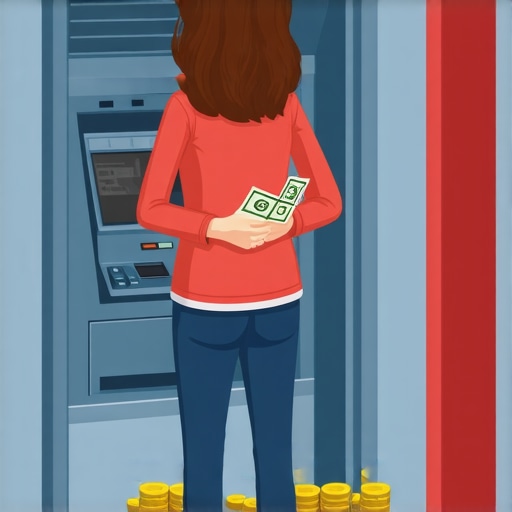
I remember sitting at my kitchen table three years ago, surrounded by crumpled receipts and a calculator that seemed to be actively mocking me. I’d spent four hours trying to figure out why I was $200 short, and honestly, I just wanted to cry. I thought being ‘good with money’ meant being a math whiz who could track every single penny in a complex color-coded app. I was dead wrong. That night, I realized the secret isn’t in the arithmetic; it’s in the architecture of your bank accounts. By trying to force myself into a rigid system of calculations, I was actually setting myself up for a total burnout that nearly ruined my financial progress. Today, I want to show you how I ditched the numbers game for a system that actually works for real people. [image placeholder]
Stop Fighting Against Your Own Brain
Most of us fail at budgeting because we treat it like a high school algebra test. But your brain doesn’t think in percentages; it thinks in ‘Can I buy this coffee?’ and ‘Is the rent paid?’ Early on, I made the massive mistake of trying to categorize every single purchase, from gum to gas, which just made me want to give up on [smart debt management practices for maintaining financial health](https://counselcredits.com/smart-debt-management-practices-for-maintaining-financial-health) entirely. If you’ve ever felt that soul-crushing weight of a spreadsheet that refuses to balance, you are not the problem—the tool is. We are going to fix that today by building a flow that runs itself. This isn’t just about spending less; it’s about finding [effective credit repair techniques for a fresh financial start](https://counselcredits.com/effective-credit-repair-techniques-for-a-fresh-financial-start) so you can stop stressing about the ‘how’ and start enjoying the ‘why.’ Have you ever abandoned a budget because the numbers just didn’t add up at the end of the month?
Is a math-free budget actually realistic?
It sounds like a gimmick, doesn’t it? But the truth is that the most successful financial plans are the ones you actually follow without a struggle. According to the American Psychological Association, financial stress is a consistent top source of anxiety for nearly 72% of adults, often stemming from the overwhelming complexity of traditional money management. By removing the ‘work’ of math, we remove the psychological barrier to entry. I used to think I needed to be a human ledger, but I learned that finding [the easy way to increase your savings without feeling the pinch](https://counselcredits.com/the-easy-way-to-increase-your-savings-without-feeling-the-pinch) is much more about behavioral triggers than it is about division or multiplication. Once you [stop falling for the minimum payment trap](https://counselcredits.com/stop-falling-for-the-minimum-payment-trap), you can refocus that energy on building a life you actually enjoy. We’re about to dive into how to set up your ‘buckets’ and automation so your money goes exactly where it needs to go while you sleep.
Split Your Income Into Three Simple Buckets
The foundation of a stress-free financial life is not a spreadsheet; it is structural separation. I used to keep all my money in one checking account, which was like trying to keep a hungry tiger in a room full of steaks and wondering why the steaks disappeared. To fix this, you need three separate accounts—I call them the ‘Buckets.’ The first is for your Fixed Costs: rent, utilities, and debt payments. The second is for your Future: savings and investments. The third is your Guilt-Free Spending. By using [credit-counseling-secrets-for-smarter-debt-management-in-2025](https://counselcredits.com/credit-counseling-secrets-for-smarter-debt-management-in-2025), you can determine exactly what those fixed costs should look like without the headache of daily tracking. When your paycheck hits, it should be automatically carved up into these three spaces before you even see the total balance. 
Why You Should Never Manually Pay Your Bills
Manual bill pay is the enemy of consistency. Every time you have to log in to a portal to click ‘pay,’ you are giving your brain a chance to talk you out of it. I remember a specific July when I decided to skip a credit card payment ‘just for one month’ because I wanted to buy a new grill. That one choice led to a late fee and a ding on my report that took months to scrub away. If I had simply automated the payment, the choice wouldn’t have existed. Automation acts as a guardrail for your willpower. To really get ahead, you should look into [the single most effective way to stop interest from eating your income](https://counselcredits.com/the-single-most-effective-way-to-stop-interest-from-eating-your-income), which usually involves setting up recurring transfers that exceed the minimum. This ensures you are attacking the principal balance without having to think about it every Friday.
The Five Minute Setup That Saves Your Credit Score
Once the buckets are in place, you need to address the ‘Credit Engine.’ If you have old mistakes dragging you down, don’t wait for a rainy day to fix them. I spent years thinking I needed a lawyer to handle my disputes, but I eventually learned some [effective credit repair tips to boost your score today](https://counselcredits.com/effective-credit-repair-tips-to-boost-your-score-today) that I could implement in a single afternoon. Start by setting your credit cards to pay the full balance automatically from your ‘Fixed Costs’ bucket. If you’re worried about overspending, you can learn [how to use your credit card like a debit card for rewards](https://counselcredits.com/how-to-use-your-credit-card-like-a-debit-card-for-rewards), which keeps your utilization low and your score high.
Let Your Bank Account Do the Heavy Lifting
I once set up a tiny $25 weekly transfer to a separate high-yield account for a medical collection I was fighting. I was so angry about the debt that I didn’t want to think about it. Six months later, I logged in and realized the debt was almost gone. I didn’t ‘feel’ that $25 leaving my account because it was automated and out of sight. This is how you win. Whether you are following a [step-by-step guide to credit building for new borrowers](https://counselcredits.com/step-by-step-guide-to-credit-building-for-new-borrowers) or trying to recover from a bankruptcy, the logic is the same: remove the human element. When you stop being the middleman for your own money, you stop being the bottleneck for your own success. This system allowed me to finally stop worrying about [the move that jumps your score 40 points in 30 days](https://counselcredits.com/the-move-that-jumps-your-score-40-points-in-30-days) because the growth became an inevitable byproduct of my bank’s settings.Now that you have your buckets flowing, we need to talk about the ‘Expert Mode’ mistakes that I see people make every single day. Most people think that once they automate their payments, the path to a 750 score is a straight line. I thought so too, until I hit a wall that no amount of automation could climb. There are nuances in the credit world that feel like total contradictions, and if you don’t know them, you’ll end up working against yourself. One of the most common [top credit repair myths busted by experts in 2025](https://counselcredits.com/top-credit-repair-myths-busted-by-experts-in-2025) is the idea that paying off a collection account will instantly skyrocket your score. In reality, under older FICO models still used by many mortgage lenders, a paid collection can be just as damaging as an unpaid one because the ‘negative event’ still exists on your timeline.
The collection agency trick that keeps you stuck
Here is the contrarian truth: sometimes, paying a debt collector without a written agreement to delete the entry is a waste of your leverage. I once watched a friend pay off a $400 medical bill thinking it would clear his record, only to see his score stay exactly where it was. He was devastated. If you want real results, you need to master [the tactics for getting a deletion after youve already paid](https://counselcredits.com/the-tactics-for-getting-a-deletion-after-youve-already-paid) or, better yet, negotiate that deletion before a dime leaves your hand. This brings me to the ‘Oops’ factor—the biggest trap you can fall into. Never, ever give a debt collector your debit card information. When you do, you’re giving a hostile party a direct key to your ‘Fixed Costs’ bucket. They can, and often will, pull more than you agreed to, or ‘accidentally’ process a payment twice, leaving you unable to pay your rent. 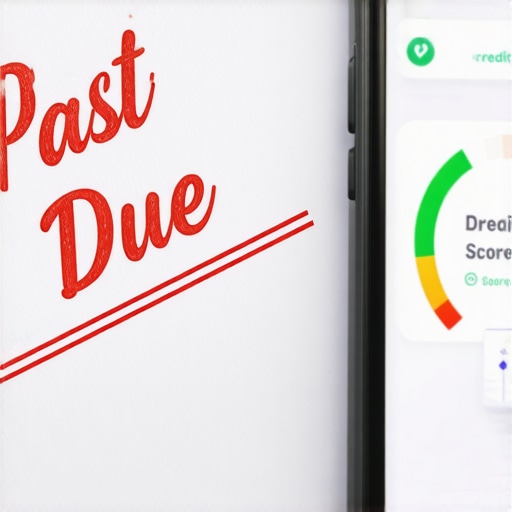
Is it possible for a ‘perfect’ payment to hurt your score?
It sounds insane, but yes. I’ve seen people save up for months to pay off a car loan early, only to see their score drop 20 points the next week. This happens because you are closing an active credit line and potentially shortening your average age of accounts. According to a study by the Consumer Financial Protection Bureau (CFPB), credit report accuracy is a massive hurdle, with roughly 34% of consumers finding at least one error on their reports that could impact their creditworthiness. This is why [the truth about why your credit score varies between agencies](https://counselcredits.com/the-truth-about-why-your-credit-score-varies-between-agencies) is so important to understand—you aren’t just managing one number; you are managing three different stories told by three different bureaus.
Stop assuming your bank balance and credit score are related
I used to feel so proud when my savings account hit a new milestone, but I was shocked to realize the bureaus didn’t care. It’s a hard pill to swallow, but [why your income doesnt matter to the credit bureaus](https://counselcredits.com/why-your-income-doesnt-matter-to-the-credit-bureaus) is one of the first things you have to accept. You can be a millionaire with a 500 score if you don’t manage the ‘utilization’ of your available lines. If you’ve recently paid off a major debt and were shocked to see your score dip, you aren’t alone. It’s a common occurrence that highlights [why your credit score drops when you pay off a loan](https://counselcredits.com/why-your-credit-score-drops-when-you-pay-off-a-loan-2). Have you ever fallen into this trap where doing the ‘right’ thing financially felt like it was being punished by the credit bureaus? Let me know in the comments, and let’s figure out how to pivot your strategy.Once you pivot your strategy away from reactive math and toward proactive systems, the game changes from ‘surviving’ to ‘scaling.’ I’ll be honest: the reason I finally broke into the 800-club wasn’t because I became a financial genius; it was because I invested five minutes a month into the right tools. I stopped relying on free apps that only show you a VantageScore—which is often a ‘feel-good’ number—and started looking at the data lenders actually use. Understanding why VantageScore might be giving you false hope is the first step in graduating to the professional level of credit management. I personally use myFICO because it gives me the mortgage and auto scores that actually determine my interest rates, not just a generic estimate.
Ditch the Spreadsheets for Real Time Monitoring
If you want to maintain your progress, you need a radar, not a rear-view mirror. I shifted my focus to the 5-minute habit that protects your credit score from sudden drops, which involves a monthly ‘health check’ of my balance-to-limit ratios. In my experience, the biggest threat to a perfect score isn’t a missed payment; it’s ‘sneaky utilization’—when you charge a large expense right before your statement closes, even if you pay it off a day later. I now use a specific tool called a ‘Balance Alert’ through my banking app. If any card goes over 10% utilization, I get a text instantly. This is a level of smart debt management practices for maintaining financial health that keeps my score steady without me having to open a single spreadsheet. 
How do I maintain my credit health without checking it daily?
The secret is in the ‘Checklist Method.’ Instead of obsessing over every 2-point fluctuation, I perform a quarterly audit. I look for the ‘Big Three’ errors: incorrect balances, outdated addresses (which can sometimes link you to a relative’s bad debt), and accounts that should have been removed after seven years. Under Section 611(a) of the Fair Credit Reporting Act (FCRA), the bureaus have a strict ‘duty of reasonable reinvestigation’ once you notify them of a dispute, which is a powerful lever you should pull whenever something looks off. I also recommend the checklist method for passing a loan application audit if you are planning to buy a home soon.
The Future of Credit is Moving Toward Open Banking
Looking ahead to 2025 and beyond, the trend is shifting toward ‘permissioned data.’ Lenders are moving away from looking strictly at your old debt and starting to look at your cash flow. This is actually great news if you’re still building credit from scratch in 2025. You can now use tools like Experian Boost or StellarFi to get credit for things like Netflix and your phone bill. I even learned how to get your landlord to report your rent to the bureaus, which added 15 points to my score almost overnight. The future belongs to those who allow their everyday bills to work as credit-building engines. If you haven’t linked your utility accounts yet, that is the single most advanced tip I can give you to scale your score with zero effort. I want you to try this today: pick one recurring bill you already pay—like your cell phone or electric bill—and use a reporting service to add it to your file. It’s the easiest win you’ll get this month. As you continue to scale, always remember to avoid common pitfalls in debt management like opening too many new accounts at once, which can dilute the ‘age’ of your credit history.
Why Being Rich Won’t Save Your FICO Score
Looking back at my journey, there were a few “aha” moments that completely shifted my perspective on how this game is played. First, I realized that my income was irrelevant to the bureaus. You can make seven figures, but if you don’t follow proven strategies for a strong financial future, your score will reflect that. Second, I learned that time is your greatest ally; you can’t rush the ‘age of accounts’ factor, which is why you should keep your oldest account open even if you don’t use it anymore. Finally, I stopped viewing credit as a grade on my character and started seeing it as a tool—much like a hammer or a drill. When you remove negative items from your credit report fast, you aren’t cheating; you’re ensuring your record is accurate under the law. I used to think I was a failure because I couldn’t balance a checkbook, but the truth is that the system was never built for checkbooks—it was built for behavior.
My Personal Financial Survival Kit
If you’re ready to move beyond the theory and into action, there are three resources I can’t recommend enough. For the absolute beginners, this credit repair blueprint is your North Star. It breaks down the jargon and gives you a clear path forward without the fluff. I also suggest bookmarking the CFPB website for official dispute forms, and checking out smart ways to rebuild your financial life if you feel like you’ve hit a wall you can’t climb alone. These tools took me from a state of constant panic to a place of total confidence. No more guessing, no more anxiety; just a clear set of instructions for a complex world. [image placeholder]
Your Path to Financial Peace Starts Tonight
Financial freedom isn’t a destination you reach after you’ve paid off every cent; it’s the peace of mind you get the moment you take control of the system. By automating your ‘Buckets’ and setting up your credit engine to run on autopilot, you are giving yourself the gift of mental space. You no longer have to be the person at the kitchen table with the calculator and the crumpled receipts. You can be the person who knows their future is secure because the architecture of their banking is sound. Start with one small step tonight, even if it’s just setting up that first automatic transfer to your savings. You’ve got this. Have you ever felt like the credit system was designed to keep you confused, or have you found a particular ‘hack’ that finally made it click for you? Let me know in the comments below!