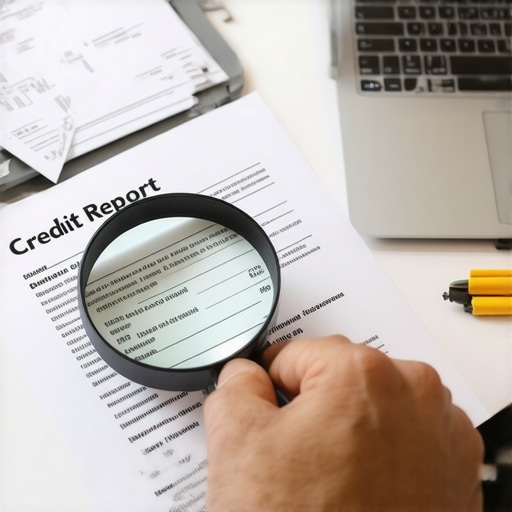
5 Manual Fixes to Force a Credit Bureau Correction
Have you ever stared at your credit report and felt that sinking frustration when you spot an error? I remember the exact moment I realized a late payment mistakenly reported on my report was dragging my score down. It was like hitting a brick wall each time I checked my credit, despite paying everything on time. That lightbulb moment hit me hard—if simple mistakes could hold such power, what could I do about it?
Taking Control: Why Manually Fixing Your Credit Report Matters
For many of us, our credit report isn’t just a document; it’s the gateway to a new car, a home, or even a dream job. Yet, errors are prevalent—some studies suggest up to 73% of reports contain inaccuracies (source: Consumer Financial Protection Bureau). If these mistakes aren’t corrected, they can cost you thousands over a lifetime. And while the credit bureaus have processes for disputes, they often forget to investigate or ignore errors altogether. That’s why taking matters into your own hands with manual adjustments can be a game-changer.
Is Forcing a Credit Bureau Correction Really Worth It?
I used to be wary, thinking, “Will this really work? Or am I just wasting my time?” My early mistake was relying solely on disputes—until I learned that a proactive, manual approach often yields faster and more reliable results. It’s about understanding how the system works and using strategic techniques to push for the corrections you deserve.
If you’ve faced persistent inaccuracies on your credit report that don’t budge with standard dispute letters, you’re not alone. The good news? I’m here to share five tried-and-true manual methods to help you force credit bureaus to correct those mistakes. These are practices I’ve personally tested, and together, we’ll explore how they can make a real difference in your financial life. Ready to take control? Let’s dive into the first method, which could be the quickest fix to boost your score.
.
Stop Relying Solely on Dispute Letters
I recall when I first tried dispute letters for errors, but they often got ignored or delayed. So, I adopted a more aggressive approach, like sending a direct letter to the creditor for verification, which often yields faster results. Start by identifying each error clearly—use your credit report as your blueprint—and prepare specific evidence, like bank statements showing timely payments.
Gather Solid Evidence to Back Up Your Claims
Think of it as building a legal case: the stronger your proof, the harder it is for the bureau to ignore. Take screenshots, bank statements, or payment confirmations that prove the error isn’t valid. When I disputed a late payment, I attached my bank statement showing I paid on time—this made them re-investigate faster.
Use the Automated Verification Method
Many credit bureaus rely on automated systems for initial review. By sending a Certified Letter, you can trigger a more detailed investigation. Be precise—highlight inaccuracies and cite laws like the Fair Credit Reporting Act (FCRA). This tactic often forces the bureaus to delve deeper, increasing your chances of successful correction.
Leverage the Power of the ‘Goodwill Adjustment’
If you have a solid payment history except for a minor mistake, request a goodwill adjustment directly from your creditor. This is like appealing to their good nature—many companies are willing to delete a late payment if you’ve been reliable before. I once wrote a heartfelt email to a creditor after a payment mishap, explaining the situation; they agreed to remove the late mark, which boosted my score.
Document All Communications
Every email, letter, or phone call counts. Keep a detailed record—this is your proof if you need to escalate. For example, after sending a goodwill letter, I followed up with a phone call, recording the date and details of our conversation. This record can be invaluable if the bureau refuses to cooperate.
Escalate When Necessary
If initial efforts fail, consider escalating the matter by filing a formal complaint with the Consumer Financial Protection Bureau or seeking legal advice. Sometimes, a simple legal threat or complaint triggers quicker action. I used this tactic when a disputed mortgage error was ignored; a formal complaint expedited correction within weeks.
Follow Through with the Law
Knowing your rights under the FCRA is essential. If your errors persist, officially demand deletion under the law, citing your rights. This legal backing gives you leverage and shows the credit bureaus you’re serious. Remember, patience and persistence are key—you’ve got the power to correct your report if you approach it strategically.

Many people operate under misconceptions about debt management and credit repair that can hamper their progress or even worsen their situation. Let’s dig deeper into some common pitfalls and nuanced truths that often go unnoticed. One widespread myth is that consolidating debt always damages your credit score. In reality, according to behavioral studies, strategic consolidation can improve your score long-term by reducing overall debt and payment history issues (see here). However, the key is understanding how different strategies impact your credit profile over time and avoiding quick-fix solutions that can backfire.
Why Most Simplified Advice Misses the Mark
For example, many advise avoiding credit counseling altogether, claiming it’s a warning sign or harm to your score. But advanced practitioners know that reputable credit counseling services actually provide personalized plans that can repair and rebuild credit efficiently—if chosen wisely. The trap many fall into is thinking that all counseling agencies are the same, or that seeking help is a sign of failure. The reality is, expert guidance can reveal nuanced strategies, such as leveraging building credit from scratch or optimizing credit mixes, which are often overlooked by amateurs.
Is Paying Off All Debt Quickly Always Better?
A common mistake in debt management is prioritizing rapid payoff over strategic planning. A naive approach might be to pay the smallest debts first (the snowball method), but for higher scores and lower interest, the debt avalanche—paying highest interest debts first—is more effective. Moreover, aggressive payoff tactics can temporarily lower your credit utilization, impacting your score adversely. This nuance is critical; aggressive debt repayment without understanding its effects can lead to unintended consequences. For an in-depth look at optimized debt strategies, check out here.
Making the Most of Your Credit Building Efforts
Building credit isn’t just about opening new accounts—it’s about smartly managing existing ones. For instance, becoming an authorized user on a seasoned credit card can boost your score faster than applying for multiple new lines, so long as the account is well-managed. Yet, many overlook the importance of maintaining a healthy credit mix, which FICO considers when calculating scores. Diversifying your credit types—installment, revolving, and retail accounts—can provide a boost in your credit profile, but only if done thoughtfully. To optimize your credit mix, see this resource.
Another nuance is how your debt-to-income ratio influences your ability to obtain new credit or favorable terms. Even if your credit report looks stellar, a poor debt ratio can hinder your Loan approvals and limit your borrowing capacity. This subtlety is often ignored but is crucial for comprehensive credit health.
Finally, beware of quick-fix schemes or outdated tips that promise instant success. Credit repair is a marathon, not a sprint. Trust in proven, expert strategies that consider the complex interplay of factors—like credit history length, account diversity, and timely payments—to build a sustainable financial foundation.
Have you ever fallen into this trap? Let me know in the comments. Mastering these nuanced aspects can dramatically improve your financial trajectory, so stay informed and strategic on your credit journey.
How do I maintain my credit health over time?
Maintaining your credit score and report accuracy isn’t a one-time task; it requires consistent effort and the right tools. Personally, I rely on a combination of specialized software and disciplined routines to stay vigilant. One tool I recommend is Credit Karma, not just for free monitoring but for its detailed credit score reports and weekly updates, which help me spot anomalies early. Additionally, Experian Boost has been invaluable for leveraging utility and streaming payments to boost my score. These platforms serve as early warning systems, alerting me to unexpected changes or new inquiries, so I can take swift action.
Beyond online tools, I keep a dedicated spreadsheet where I track major account statuses, upcoming payments, and credit utilization ratios. This method ensures I have a long-term view of my credit profile, allowing me to identify patterns—like seasonal utilization spikes—that could harm my score. It’s about creating routines: reviewing your reports monthly, verifying each line item, and promptly disputing inaccuracies using the methods I discussed earlier.
Looking ahead, I believe the trend will shift even more toward automation and AI-driven insights. Future tools might proactively suggest optimal credit behavior based on real-time data, much like how the upcoming 2025 blueprint forecasts evolution in credit repair technology. These advancements could make maintaining good credit less burdensome, provided you’re familiar with the foundational management practices now.
Can you keep your credit in top shape without the hassle?
The secret is developing a habit of ongoing monitoring and immediate correction. For example, setting a recurring monthly review of your credit report allows you to catch discrepancies before they cause lasting damage. Implementing automated alerts from trusted platforms and pairing them with manual oversight creates an effective shield.
If you’re serious about long-term success, I recommend adopting tools that integrate seamlessly into your routine. Experiment with features like smart credit counseling insights and utilize automated dispute triggers when anomalies arise. The goal is to build a proactive system that not only reacts to errors but also optimizes your credit profile continuously.
Try setting up your first automated alert today and see how it helps keep your credit report accurate and your score healthy. Remember, consistency is key, and the right tools make it much easier to keep your credit in top shape over the long haul.
The Hardest Lessons I Learned About Credit Repair
One of my biggest wake-up calls was realizing that quick fixes rarely lead to lasting improvements. I once fell for a scam promising instant credit scores, only to find myself deeper in debt. That taught me the importance of patience and trusting proven strategies like those outlined at effective credit repair tips. Building genuine credit health is a marathon, not a sprint.
3 Hidden Truths About Fixing Your Credit That Most Ignore
Many overlook the impact of credit mix diversification; intentionally balancing installment and revolving accounts can boost scores over time. Also, understanding how debt-to-income ratios influence your creditworthiness is crucial—it’s not just about the report but also your financial setup. Lastly, staying vigilant with monitoring tools like credit counseling insights can alert you to errors before they damage your profile. These nuanced lessons can redefine your credit journey.
Curated Gems for Your Credit Journey
For comprehensive guidance, I recommend the Ultimate Credit Repair Blueprint for 2025, which maps out future-proof strategies. Building credit from scratch offers step-by-step tactics for beginners. For ongoing support, smart credit counseling tools keep me proactive. Embracing these resources has been transformative in my quest for financial independence.
Your Next Step to Financial Confidence
Remember, mastering credit repair is about consistently applying proven techniques and staying informed. Don’t wait for errors to accumulate—start today by reviewing your report, disputing inaccuracies, and exploring strategic credit-building methods. Every small step builds toward a more secure financial future. Ready to take control? Share your progress or questions below, and let’s grow stronger together.