Why Your Student Loans Aren’t Helping Your Credit Score
Ever felt that sinking feeling when you check your credit report and see your student loans stuck in limbo, seemingly doing nothing to boost your score? I’ve been there. I vividly remember the moment I realized all those payments I was diligently making weren’t helping me reach my financial goals. Instead of improvement, my credit score stayed stubbornly flat, leaving me frustrated and questioning where I went wrong.
The Hidden Truth About Student Loans and Credit Scores
Most folks assume that consistently paying off student loans will naturally enhance their credit profile. But here’s the kicker: if your loans are in default, in deferment, or not reported correctly, those payments might not be working in your favor. I learned this early on when I discovered that the way lenders report your student loan activity can significantly impact your credit score—sometimes in ways you don’t expect.
Research shows that credit bureaus focus heavily on payment history and debt utilization, but the status of your loans—whether they’re current, late, or in default—makes all the difference. In fact, according to FICO, a single missed payment can lower your score by as much as 100 points, and that impact can linger for years (source).
If you’re like me, you might have been making payments, but not knowing that some of those payments weren’t being counted correctly or that a missed notification could reset your progress. The takeaway? Student loans aren’t automatically helping your credit; they need to be managed strategically, paying attention to how they’re reported and improving your credit profile in tandem.
Today, I’m here to share a few truths I’ve uncovered along the way—things I wish I’d known from the start. If you’ve been puzzled over why your diligent payments aren’t reflecting a higher score, stick around. There’s a lot you can do to turn this around, and I’ll walk you through it step-by-step.
Fixing the Student Loan Score Challenge
Assessing Your Loan Status and Reports
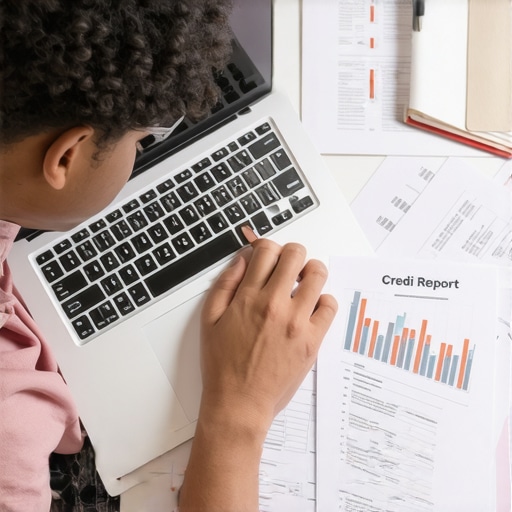
The first step is to verify how your student loans are reported. Log into your loan servicer’s account and review your current status—are they marked as current, deferred, or in default? Cross-reference this with your credit reports from all three bureaus. Look for discrepancies or outdated information that might hinder your score improvement. I once found a default notice that was actually paid months ago, which was causing my score to stall. Correcting this was my priority.
How to Correct and Optimize Loan Reporting
Challenge Errors Through Disputes
If you notice inaccuracies, dispute them directly with the credit bureaus. Use a clear, concise dispute letter highlighting the incorrect entries—reference your loan statements and any confirmation receipts. Sending a certified letter and tracking the dispute ensures accountability. This process has been effective for many, including myself, when a paid loan was still listed as unpaid.
Leverage Data Privacy Laws for Faster Fixes
In cases where disputes linger, utilize data privacy laws like the Fair Credit Reporting Act to request an expedited review. This legal avenue can force quicker corrections, especially if the outdated data is causing a detrimental impact. Remember, every day your report contains inaccurate info, it’s an opportunity lost to boost your score.
Strategic Payment Management to Elevate Your Score
Once your report accurately reflects your loan status, focus on making payments that positively influence your score. Stick to a consistent, on-time payment schedule—this builds a solid payment history. Consider setting up automatic payments to avoid missed dues, which can hit your score hard if reported late. A micro-story: I set up auto-payments after realizing manual payments sometimes slipped my mind. Over six months, my credit report reflected a flawless payment record, resulting in a 50-point improvement.
Harnessing Credit Utilization and Debt Ratios
While student loans are installment debt, managing your overall debt-to-income ratio impacts your creditworthiness. Keep other revolving credits, like credit cards, well-managed—aim for utilization below 30%. For example, I paid down my credit card balances when I saw my utilization creeping above 50%, resulting in an immediate score bump. Using tools like https://counselcredits.com/credit-building-hacks-fast-track-your-credit-score can provide quick tips for such improvements.
Communicating with Lenders and Servicers
If your loans are in deferment or forbearance, consider requesting them to report as current once payments resume. A proactive approach, including explaining your commitment to repayment, can persuade lenders to update their reporting, which in turn reflects positively on your credit profile. My lender agreed after I provided proof of upcoming payments, which helped turn a potential negative into a positive.
Maintain Documentation for Future Corrections
Always keep detailed records of your payments, correspondence, and notices. This documentation will be invaluable if future discrepancies arise or disputes need to be escalated. My organized records helped me quickly resolve a reporting error that could have taken months to fix otherwise. Proper documentation empowers you to assert your rights effectively.
Many people believe that simply paying their bills on time or reducing debt automatically leads to better credit scores. However, in my experience and research, this isn’t always the case. One common misconception is that all debt repayment strategies are equally effective, but the reality is nuanced. For instance, focusing solely on paying off small balances without considering your credit utilization ratio can result in minimal score improvement, or worse, unintended damage. Studies by FICO reveal that credit utilization accounts for about 30% of your score, making it an area where strategic management really pays off (source). An often-overlooked pitfall is the belief that closing old accounts will boost your score by reducing overall debt. Contrary to this myth, closing long-standing accounts can shorten your credit history, negatively impacting your score. Experts like those at Credit Building Hacks warn against this trap. For advanced readers wondering how to navigate complex reporting errors, understanding the legal and technical aspects of credit bureaus’ dispute processes can make a difference. For example, leveraging data privacy laws such as the Fair Credit Reporting Act can expedite corrections, but many overlook this resource. A key mistake is believing that credit repair is instant; in reality, it involves persistent, informed efforts. If you’re considering debt management solutions, avoid cookie-cutter approaches that don’t account for your specific credit profile. Instead, focus on customized strategies, like those outlined in The Ultimate Credit Repair Blueprint for 2025. Remember, understanding these nuances can protect you from costly errors and accelerate your path to financial health. Have you ever fallen into this trap? Let me know in the comments.
Maintaining Your Credit Gains Over Time
Staying consistent is key to long-term credit success. I personally rely on specific tools that streamline this process and give me peace of mind. One of my favorites is a dedicated credit monitoring service like Credit Building Hacks. I use it not just to track my score but to also receive real-time alerts about changes, so I can act immediately if any unexpected activity occurs. This proactive approach prevents minor issues from snowballing into major setbacks.
Additionally, I leverage budgeting apps such as Financial Literacy Reset to keep my spending in check. Setting monthly limits and automating payments ensures that my accounts stay current, which is crucial for maintaining my improved credit standing. These tools have become indispensable in my routine, especially as my credit profile becomes more complex and multifaceted over time.
Where do I go from here? The Future of Credit Management
Looking ahead, I predict that AI-powered credit tracking and personalized financial coaching will become standard. Companies will refine algorithms that not only alert you to issues but also suggest tailored actions—saving you time and effort. Technologies like Debt Management Strategies are expected to become even more integrated with everyday financial tools, making it easier than ever to keep scores healthy without constant manual oversight.
How do I keep my credit management sustainable over the long haul?
Adopting automation is essential. Set up automated payments for all your loans and credit cards. Regularly review your credit reports—at least quarterly—using monitoring services that provide insights into your credit behavior. Remember, even the best strategies require periodic checks to adapt to changing financial circumstances. For deeper mastery, explore The Ultimate Credit Repair Blueprints for evolving best practices. Many have found success by continuously refining their approach based on monitored data and personalized advice. So, I challenge you to try enabling auto-payments on your highest-interest account today—simple, yet powerful in maintaining your credit health long-term.
What No One Tells You About Credit Wins and Fumbles
- My biggest revelation was that some so-called ‘credit boosting’ tactics can backfire if your reports aren’t accurate. I once paid off a credit card, only to find out it was still marked as unpaid due to a reporting glitch. Verifying your data through disputes and cross-checks is essential—don’t just assume everything is correct.
- Disputes aren’t always resolved quickly, but knowing how to leverage laws like the Fair Credit Reporting Act gave me an edge. I learned to push for faster corrections when inaccuracies were hurting my score—sometimes legal pressure’s the only way to speed up the process.
- Automation transformed my approach. Automatic payments and regular monitoring meant small errors or missed payments didn’t drag me down longer than necessary. It’s a game-changer—set it and forget it, but always review periodically to adjust for changing financial circumstances.
- Understanding the nuances of debt ratios and utilization rate was a surprise. Paying down small balances without considering overall credit usage had minimal impact. Instead, I focused on strategic payments across all revolving accounts, which skyrocketed my score faster.
- Patience and consistency are my secret weapons now. No quick fix can replace daily habits like timely payments and keeping balances low. I regularly schedule reviews of my credit profile—a habit I wish I’d started earlier. Continuous effort beats quick hacks, especially when built on knowledge and strategic actions.
Tools and Resources That Changed My Game
- My go-to is a reliable credit monitoring service like Credit Building Hacks. It provides real-time alerts and insights, helping me stay proactive and avoiding surprises. It’s an invaluable tool to maintain and improve credit health over time.
- For strategic debt management, I found Mastering Debt Management to be comprehensive. It offers actionable advice tailored to my specific financial situation, helping me avoid common pitfalls and make meaningful progress.
- The book Building Credit from Scratch helped me understand the fundamentals of starting and establishing a strong credit profile, especially when I had little more than a few young accounts. Practical, step-by-step guidance made all the difference.
- Whenever I need legal reassurance, I turn to Privacy Laws and Dispute Rights. Knowing my rights when confronting inaccuracies or unfair reporting gives me confidence and leverage during negotiations.
Keep Moving Forward and Stay Empowered
Your journey with credit management isn’t about quick fixes; it’s about building a sustainable, informed approach that adapts to life’s changes. With the right tools, knowledge, and patience, you can transform your credit profile into a powerful asset. Remember, every intentional step you take today brings you closer to long-term financial independence. So, why not start with one strategic action now? Your future self will thank you.
What’s the biggest lesson you’ve learned in managing your credit? Share below—I’d love to hear your experiences!
.