The Move to Make If You Can’t Afford Your Student Loan Payments
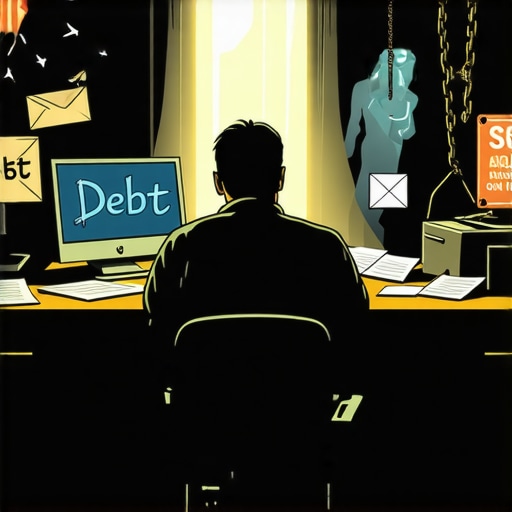
I remember sitting in my kitchen with the smell of burnt toast still lingering, staring at a ‘Past Due’ notice that felt heavier than a lead brick. I had exactly $22.40 left in my bank account after paying rent, and my student loan servicer was demanding $450. I felt like a total failure, like I was drowning in a sea of my own education. I did what any terrified 24-year-old would do: I threw the letter in a drawer and hoped it would disappear. Spoiler alert—it didn’t. In fact, that silence led to a massive headache where I realized why student loan interest is quietly killing your credit limit and my sanity. Today, I’m going to show you the exact move I eventually made to stop the bleeding and keep the debt collectors from my door. We are going to tackle the fear head-on and look at Income-Driven Repayment (IDR) plans as your primary lifeline. Have you ever felt that literal pit in your stomach when you realize the math just doesn’t add up for your monthly bills?
The Heart-Sinking Moment My Student Loan Auto-Draft Failed
When that first payment bounced, I panicked. I thought my credit was ruined forever and that I’d never be able to buy a house or even a decent used car. I didn’t realize that why your student loans might be helping your score even when the balance is high, as long as you keep the account in good standing. My biggest mistake early on was thinking I had to pay the full amount or nothing at all. That ‘all or nothing’ mentality is a trap. I spent months in default because I was too proud to admit I couldn’t afford the ‘standard’ plan. According to the Education Data Initiative, about 15% of all student loan borrowers are in default at any given time, proving that if you’re struggling, you are far from alone.
Does this strategy actually work or is it just a trap?
Many people worry that switching to an income-driven plan is just kicking the can down the road. They fear the balance will grow forever. While interest does accrue, the goal here is survival and protecting your credit profile. You need to stop falling for the minimum payment trap on other debts just to satisfy a student loan that has built-in flexibility.
Switch to an Income-Driven Repayment Plan Immediately
The single most effective move you can make when you can’t pay is to apply for an IDR plan. This isn’t just a ‘delay’ tactic; it’s a legal right for federal loan borrowers. It can drop your payment to as low as $0 per month while still counting as an ‘on-time’ payment for your credit history. I wish I had known this before I let my score tank. If you’re also juggling high-interest cards, you might find the truth about consolidating your student loans is that it simplifies your life, but the IDR plan is what actually saves your cash flow. If you find your score has already taken a hit, don’t worry—there are effective credit repair tips to boost your score today that can help you recover while you get your payments under control. Don’t wait until you’re six months behind like I did.Applying for an IDR plan is like installing a pressure-release valve on a steam engine. Without it, the pressure builds until the whole system—your credit score—explodes. When I finally stopped hiding from the mail and logged into the federal student aid portal at 2 AM, my palms were sweating. I expected a ‘denied’ screen or a demand for thousands in back payments. Instead, the system calculated my adjusted gross income and told me my payment would be $0. It felt like I’d cheated the system, but I was just using the rules to my advantage. This is the foundation of debt management secrets tackle debt before it takes over your life.
Submit Your Income-Driven Repayment Request Today
You can do this entire process in about 20 minutes. Don’t call your servicer and wait on hold for three hours; go straight to the source at StudentAid.gov.
Sync Your IRS Data for Accuracy
The most common reason applications get stalled is a discrepancy in reported income. When the site asks if you want to link your IRS tax returns, click ‘yes.’ This ensures the Department of Education sees exactly what the IRS sees. If you’ve recently lost your job, you can check a box stating your income has changed, which is the fastest way to hit that $0 payment threshold. This is a critical part of smart credit counseling how to rebuild your financial life when you’re starting from a deficit. 
Mark Your Calendar for Recertification
IDR isn’t a ‘set it and forget it’ solution. You have to prove your income every 12 months. If you miss that window, your payments revert to the ‘Standard’ 10-year plan, and all that capitalized interest gets added to your principal balance. I once missed my recertification date by two weeks because I changed my email address and didn’t see the notification. My payment jumped from $80 to $650 overnight. It was a nightmare that taught me credit counseling insights avoid common pitfalls in debt management early on.
The Magic of Paid as Agreed Status
Once your student loan is officially in an IDR plan, it reports to the bureaus as ‘Paid as Agreed’ even if your required payment is zero. This gives your credit score the ‘breathing room’ it needs to heal. Think of your credit score as a physical wound; you can’t put a band-aid on it while you’re still getting poked by high-interest debt. You need to focus on mastering credit building proven strategies for a strong financial future while the IDR plan acts as your shield.
Target Toxic High-Interest Debt First
If you have extra cash from the lowered payment, target your smallest high-interest credit card. While student loan interest is frustrating, it’s rarely as toxic as a 29% APR credit card. This is the single most effective way to stop interest from eating your income while you stay afloat.
Use the Fresh Start Program if You’re Already in Default
If you’ve already missed so many payments that your loans are in default, don’t lose hope. The government’s ‘Fresh Start’ program is a one-time opportunity to pull your loans out of default and remove the ‘default’ notation from your credit report. I helped a friend do this last year—they had given up entirely. By simply asking for the Fresh Start, they moved their loans back into ‘good standing’ status in less than 30 days. This is significantly faster than standard effective credit repair techniques for a fresh financial start and it costs absolutely nothing but a few phone calls.
Now that we’ve talked about the emergency ‘Fresh Start’ for student loans, let’s look at the nuances most people miss. Everyone tells you that being debt-free is the ultimate goal for your credit score. In my experience, that’s actually a bit of a half-truth. If you pay every single balance down to exactly $0 before your statement closes, you might actually see your score dip. It’s called the ‘no activity’ penalty. Lenders want to see you using credit responsibly, not avoiding it entirely. This is one of the biggest top credit repair myths busted by experts in 2025. You need a small ‘placeholder’ balance—usually less than 3%—to show the algorithm that you are an active, reliable borrower.
Why did my score drop right after I finally paid off my car loan?
This is the ultimate ‘slap in the face’ for anyone trying to be financially responsible. You make that final payment, celebrate, and three weeks later, your score drops 20 points. Why? Because you just killed your ‘credit mix.’ According to FICO research, your credit mix accounts for about 10% of your total score. When you close an installment loan, you have one less ‘type’ of credit active. I’ve seen people panic and think they’ve done something wrong, but it’s just the algorithm being finicky. This is why why your credit score drops when you pay off a loan 2 is such a common frustration for those nearing the finish line of their debt journey.
Avoid the Temptation of the Clean Slate
The most dangerous ‘oops’ I see is the ‘Clean Slate’ urge. When people get their student loans or credit cards under control, they often want to close those old accounts to ‘start fresh.’ Stop right there. Your credit history is like a fine wine; it needs age. When you close an account, you eventually lose that history and shorten your average age of accounts. You should why you should never close a credit card account unless it has a massive annual fee that outweighs the benefits.  Keeping that dusty old card in a drawer is actually a sophisticated way to anchor your score. If you feel overwhelmed, getting credit counseling insights unlock your path to better credit can help you decide which accounts are structural pillars and which are just clutter.
Never Give a Debt Collector Your Bank Info
One advanced mistake that even ‘money-smart’ people make is paying off a collection agency with a debit card. You think you’re doing the right thing by settling, but you’ve just given a predator direct access to your primary checking account. This is why you should never pay a collection agency via debit card. Instead, use a cashier’s check or a prepaid card. It’s these small, technical nuances that separate a successful recovery from a financial relapse. True credit counseling secrets for smarter debt management in 2025 involve protecting your existing assets while you fix the past. You also need to be wary of where you get your data. Many people check their score on free apps and think they are ready for a mortgage, but why VantageScore might be giving you false hope is that most lenders still use FICO 8 or 9. The ‘free’ score is often a different model entirely. Have you ever fallen into this trap of closing an account only to watch your score sink? Let me know in the comments.
Once you’ve cleared the immediate hurdles of Income-Driven Repayment and stopped the debt collection calls, you enter the ‘Maintenance Phase.’ This is where most people get bored and let their guard down. I personally stopped using automated budgeting apps last year because why most popular budgeting apps fail to change real habits is they make you too passive. Instead, I use a manual ‘Zero-Based’ spreadsheet where I physically type in every transaction once a week. It sounds tedious, but that friction is exactly what keeps me from overspending on impulse. This manual tracking is the backbone of smart debt management practices for maintaining financial health long after your initial crisis has passed.
How can I keep my score rising after the initial jump?
The secret isn’t more debt; it’s granular optimization. I swear by the ‘AZEO’ (All Zero Except One) method. You keep all your credit cards at a zero balance except for one primary card, which carries a small balance—usually under $10—until the statement closes. According to the Consumer Financial Protection Bureau (CFPB) in their 2023 Consumer Credit Card Market Report, users who maintain very low utilization across multiple lines consistently outperform those who carry revolving balances on every card. This is a core part of the ultimate credit repair blueprint for 2025 that separates the good scores from the elite ones.

Ditch the National Banks for Local Credit Unions
If you’re looking to scale your credit limit, stop asking the big-box banks for increases. I moved my primary checking to a local credit union because why your local credit union beats your national bank is their manual underwriting process. They actually look at your consistent payment history, not just a cold algorithm. This is how I secured a $15,000 credit limit when the ‘Big Three’ banks wouldn’t give me more than $2,000 despite my income growth. It’s one of those credit counseling secrets for smarter debt management in 2025 that the wealthy have used for decades to anchor their financial stability.
Prepare for the Rise of Trended Data
Looking ahead, the industry is moving toward ‘Trended Data’ with credit models like FICO 10T and VantageScore 4.0. This means lenders won’t just see a snapshot of your debt today; they’ll see if you’re paying it down or building it up over a 24-month trajectory. You need to start how to use your credit card like a debit card for rewards now to establish that downward trend in your reported balances. If you need a quick win to lower your overhead, try the 5 minute check-in call that could cut your apr by 5. Lowering your interest rate today makes it much easier to show that positive trend for tomorrow’s lenders. Try calling your bank today and asking for an APR reduction based on your ‘consistent payment history’—it works more often than you’d think.
What I Wish Someone Had Whispered in My Ear About IDR
Looking back at my $22.40 bank account balance, I realize now that the biggest obstacle wasn’t the money—it was the shame. One thing the textbooks don’t tell you is that credit scores are a game of rules, not a reflection of your character. I learned that an Income-Driven Repayment plan isn’t a handout; it’s a strategic tool designed for people who are building their lives. I also discovered that the ultimate credit repair blueprint for 2025 is less about finding a magic trick and more about the boring, consistent habit of checking your status before a crisis hits. You also have to realize that the ‘all or nothing’ mindset is what keeps most people in a cycle of fear; making a $0 ‘payment’ is infinitely better for your future than ignoring the debt entirely.
The Tools That Kept My Financial Ship Afloat
If you are ready to stop guessing, there are three resources I swear by. First, the Federal Student Aid Simulator is the only way to accurately project your future payments under different IDR scenarios. Second, I recommend picking up a copy of ‘The Total Money Makeover’ by Dave Ramsey—even if you don’t agree with every point, his focus on psychological wins is life-changing. Lastly, if you’re struggling with the ‘how-to’ of it all, utilizing credit counseling secrets for smarter debt management in 2025 can help you identify local credit unions that offer much better terms than the national giants. These tools act as your compass when the sea of numbers gets too choppy to navigate alone.
#IMAGE_PLACEHOLDER_E#
Step Out of the Shadow of Your Debt
You are more than the sum of your liabilities. It is so easy to let a three-digit number determine your self-worth, but that ends today. By taking that 20-minute window to apply for an IDR plan or looking into step by step guide to credit building for new borrowers, you are reclaiming your narrative. Debt management is not about being perfect; it’s about being proactive. I promise that the first night you sleep without that pit in your stomach will be worth every minute of paperwork you do tonight. You have the map now—it’s time to start walking. Have you ever felt like your credit score was a permanent weight holding you back, and what is the one small move you’re taking today to lighten that load? Let me know in the comments below.