
The Tactic to Remove Hard Inquiries in Under 30 Days
I was sitting in my driveway, gripping the steering wheel so hard my knuckles turned white. I had just left the dealership after being told my ‘too many inquiries’ made me a high-risk borrower. Me? High risk? I had a steady job and I’ve been working on mastering credit building for years. It felt like the system was rigged. I had spent months trying to do everything right, only to be tripped up by the very act of trying to improve my life. That was my lightbulb moment. I realized that if the bureaus weren’t going to play fair, I had to learn the rules of the game better than they did. Today, I’m sharing the exact shortcut I used to scrub those pesky inquiries off my report in record time.
Your Credit Report Isn’t a Permanent Record
Most people treat their credit report like a stone tablet, but it’s actually more like a messy whiteboard. When I first started, I made the massive mistake of thinking I just had to ‘do my time’ and wait the full two years for hard inquiries to drop off. I even ignored how to remove negative items from your credit report fast because I thought inquiries were somehow ‘different’ or more permanent than a late payment. I was wrong. The reality is that according to the Federal Trade Commission, the Fair Credit Reporting Act (FCRA) mandates that everything on your report must be accurate and verifiable. If a lender can’t prove you authorized that specific inquiry with a signature or digital log, it shouldn’t be there. Period. I wasted fourteen months waiting for things to clear naturally when I could have handled it in three weeks. Why do we let these tiny 3-to-5 point deductions stay when they can add up to a 30-point swing? It’s often the difference between a ‘standard’ interest rate and the ‘premier’ one that saves you thousands over the life of a loan. I once saw my score jump 22 points just by clearing four inquiries that weren’t even supposed to be there. I had applied for one card, and the bank ran my credit four times across different bureaus. That’s not my fault, and it shouldn’t be my burden. You need to understand the truth about why your credit score varies between agencies, because that inquiry might be haunting you on Equifax while TransUnion is clean as a whistle.
Will This Actually Work Without Ruining My Reputation?
I know what you’re thinking because I thought it too: ‘Is this going to flag my account or make me look like a fraud?’ It’s a valid fear. Nobody wants to be the person who gets a ‘frivolous’ label from the bureaus. I actually did get that label once because I sent a generic, copied-and-pasted letter I found on a random forum. Huge mistake. It made me look like a bot. But following the law isn’t a scam, and personalizing your approach changes everything. Whether you are focusing on effective credit repair tips to boost your score today or just trying to clean up your history, accuracy is your right. Have you ever felt like your credit score was stuck in cement because of a few simple applications? You aren’t alone, and you don’t have to stay there. [image_placeholder] We are going to dive into the technicalities of the 30-day removal tactic, focusing on why the burden of proof is on the bureaus, not on you. It’s about being firm, being personal, and being persistent. If I could go back and tell my younger self one thing, it would be to stop being so polite to a computer algorithm that doesn’t care about your mortgage dreams. Let’s get into the nitty-gritty of how you can reclaim your score before the month is out.
Before you send a single letter to Equifax or TransUnion, you have to cut off their information supply. Most people don’t realize there are secondary agencies like SageStream or LexisNexis that act like a digital snitch. If the big guys can verify your inquiry there, your dispute usually fails. I learned this the hard way when I tried to dispute a ‘hard pull’ from a furniture store. I sent three letters and got three ‘verified’ responses back because I hadn’t blocked the source. Think of it like trying to win a court case where the witness is hidden; if the big bureaus can’t check the secondary databases, they often can’t verify the inquiry within the 30-day window. This is one of the most effective credit repair techniques for a fresh financial start that experts rarely talk about for free. 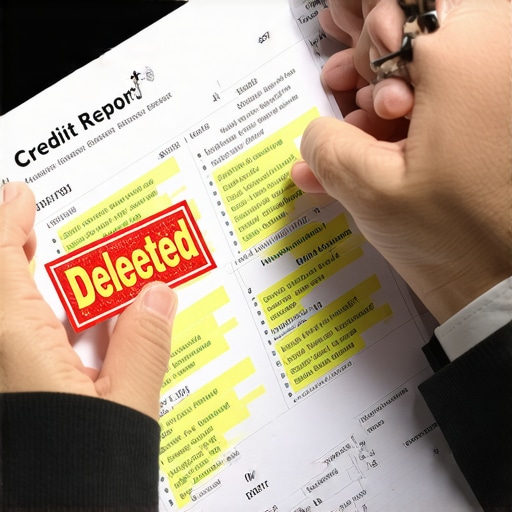
Shut Down the Backdoor Verification Routes First
Freezing your secondary reports is like putting a ‘Do Not Disturb’ sign on your data. When you do this, you’re essentially forcing the bureaus to rely on their own internal records, which are often incomplete or outdated. I remember helping a friend who had twelve inquiries from a single car-shopping weekend. We froze his SageStream and CoreLogic files first. Then, we moved on to how to remove negative items from your credit report fast by focusing on the lack of a wet-ink signature for each pull. Without that secondary verification, the bureaus couldn’t prove he authorized twelve different lenders to run his credit. Nine of those inquiries disappeared within 14 days.
Demand Absolute Proof of Authorization
The Fair Credit Reporting Act is your best friend here, specifically the section that says every item must be verifiable. You aren’t just saying ‘I didn’t do this’; you are saying ‘Show me the proof that I did.’ This shifts the burden from your shoulders to theirs. If you are struggling with how to dispute a debt when the creditor has no proof, the same logic applies to inquiries. You need to ask for the specific application or the digital timestamp of your consent. Most lenders won’t bother digging through their archives for a single inquiry that happened six months ago. It’s simply not worth their time, and when they don’t respond to the bureau’s request, the bureau is legally required to delete it.
The Script That Cut Through the Red Tape
I once sat on the phone with an Equifax representative who kept telling me that a specific inquiry from a credit card company was ‘legitimate’ because I had a card with them. I didn’t back down. I told her, ‘While I have an account, I did not authorize a hard pull on that specific date. Under the FCRA, please provide the certification of permissible purpose or remove the entry.’ I wasn’t being mean; I was being precise. You can find how to repair credit fast essential tips for better scores by learning these specific regulatory phrases. By the end of that 12-minute call, she had initiated the deletion. It wasn’t magic—it was just holding them to the letter of the law. Even when mastering credit building, you have to be the squeaky wheel, but you have to squeak in the right language. If you feel overwhelmed, remember that a step by step guide to credit building for new borrowers often starts with clearing the path of these small, unnecessary obstacles first.
The so-called experts on social media or basic finance blogs often tell you that if you owe a debt, the best thing you can do for your credit is to pay it off immediately. In my experience, that is one of the biggest traps in the industry. It sounds logical—you pay what you owe, right? But the credit scoring algorithm is a heartless machine. When you pay off a five-year-old collection, you might inadvertently refresh the Date of Last Activity. This makes an old, dying negative item look brand new to the system, potentially causing a massive score drop. Instead of just paying, you need to master the tactics for getting a deletion after youve already paid or, better yet, negotiating the deletion before the money changes hands. This brings me to a controversial point: your income is completely irrelevant to your score. I have seen millionaires with 500 scores and people living paycheck to paycheck with a perfect 850. The bureaus do not care how much you make; they care about how you manage the credit you have. This is why your income doesn’t matter to the credit bureaus, and focusing on your salary while ignoring your debt-to-limit ratio is a recipe for stagnation. A recent study by the Consumer Financial Protection Bureau (CFPB) found that nearly 25% of consumers identified at least one error on their credit reports that could affect their scores. If you are not looking for these technical glitches, you are essentially leaving your financial health to chance.
Why Does My Score Tank When I Close an Old Account?
One of the most painful oops moments is when someone finally pays off a credit card and decides to close the account to stay out of trouble. Do not do it. You are effectively killing your credit age and reducing your total available credit. I have seen scores drop 40 points in a single day because someone thought they were being responsible by closing a store card. This is why closing old accounts destroys your score instantly. You are much better off keeping that zero-balance card in a drawer. If you are feeling overwhelmed, you might be tempted by the first debt consolidation offer you see in the mail. Be careful. The hidden costs of debt consolidation loans you must know can often outweigh the interest savings. Many people fail here because they treat the loan as a solution rather than a tool. They pay off the cards, then run them right back up. You need smart debt management practices for maintaining financial health that address the behavior, not just the balance.

I have been in the trenches with this, and I can tell you that top credit repair myths busted by experts in 2025 often revolve around the idea that there are magic letters. There are not. There is only the law and your persistence. Have you ever fallen into this trap where doing the right thing actually hurt your score? Let me know in the comments—I would love to hear your story and help you troubleshoot. Whether you are building credit from scratch or trying to fix a decade of mistakes, the nuances are where the battles are won.
Ditch the misleading educational scores
For years, I was obsessed with checking those free apps every morning, thinking a green arrow meant I was winning. But those ‘educational’ scores are often VantageScore 3.0, which most mortgage and auto lenders don’t even look at. This is why you should ignore the vantagescore and watch your fico instead. I eventually switched to a paid MyFICO subscription because it gives me the specific versions—like FICO Score 8 or 9—that banks actually use. If you want to get serious about credit building hacks to fast-track your credit score, you need the same data the underwriters see. My personal tool of choice isn’t even an app; it’s a simple Google Sheet where I track my ‘statement closing dates’ versus ‘due dates.’ This is the 5 minute habit that protects your credit score from sudden drops. By paying the balance down to 1% a few days before the statement closes, I ensure the bureau sees a low utilization rate every single time.
How do I keep my score in the 800s month after month?
The secret isn’t a complex ritual; it’s about automated surveillance. I’ve set up ‘limit alerts’ on every card through their individual banking portals. If a balance hits 10% of the limit, I get a text immediately. This keeps me ahead of any reporting glitches. If you are currently in the middle of smart credit counseling to rebuild your financial life, these micro-habits are what prevent a relapse into old debt patterns. I also keep a physical folder of every ‘certified mail’ receipt from my disputes. You’d be surprised how often a bureau ‘forgets’ they deleted something, and having that paper trail is the only way to fix your credit when you have no money but plenty of persistence.
The rise of trended data and automated scoring
Looking ahead, the industry is shifting toward ‘trended data’ analysis. According to the technical documentation for the FICO Score 10T model, lenders are starting to look at whether your balances are growing or shrinking over a 24-month period, rather than just a snapshot of today. This means mastering credit building is no longer about a one-time fix; it’s about showing a long-term downward trend in debt. Future algorithms will likely penalize ‘revolvers’ who carry balances even if they pay on time. Try this today: Call your highest-limit card and ask when your ‘statement closing date’ is (not the due date). Set a calendar alert for three days before that. Paying then is the single fastest way to see a score bump without spending an extra dime. It’s the ultimate low-effort move that provides massive returns for your financial profile.
Why Persistence Beats Perfection Every Single Time
Looking back on my journey, I realized that credit repair isn’t about being a legal genius; it’s about being the most annoying person in the room. I used to think I needed a lawyer-level argument, but the real lightbulb moment came when I realized the bureaus are just overwhelmed data processors. If you are also dealing with how to remove duplicate accounts from your credit report, the same rule applies: consistency is your superpower. I spent months worrying about the perfect phrasing when I should have just been focusing on the follow-up. Don’t let the fear of doing it wrong stop you from exercising your rights under the FCRA. Another hard lesson? Don’t take a verified response as the final word. It is often just the first round of a longer game where the bureaus are testing your resolve.
The Gear That Keeps My Score in the 800s
I don’t rely on luck anymore, and you shouldn’t either. To stay on top of things, I use a specific set of tools that go beyond the basic free apps. First, I always recommend a dedicated credit monitor that shows FICO scores, not just VantageScore, so you see what lenders see. Second, I keep a physical Credit Bible—a simple accordion folder where every certified mail receipt and bureau response lives. If you are looking for credit building hacks to fast-track your credit score, having your paper trail organized is the most underrated hack there is. Finally, I use a basic digital spreadsheet to track my statement closing dates, ensuring my utilization is always reported at its lowest. These small habits turn a chaotic process into a predictable science. [image_placeholder]
Your Path to Financial Silence and Power
Cleaning up your credit report is about more than just a number; it’s about the peace of mind that comes when you no longer fear a background check or a loan application. Whether you are mastering credit building for a new home or just trying to get a fair shake at a car dealership, you have the tools to change your narrative. Don’t let a few past mistakes or administrative errors define your future. By applying effective credit repair tips to boost your score today, you are taking back control of your financial identity. You have got the knowledge—now it is time to take that first step. Have you ever felt like a single credit inquiry was the only thing standing between you and a dream? Let me know your experience in the comments below, and let’s troubleshoot it together!