The Impact of Closing a Credit Card on Your Credit Score
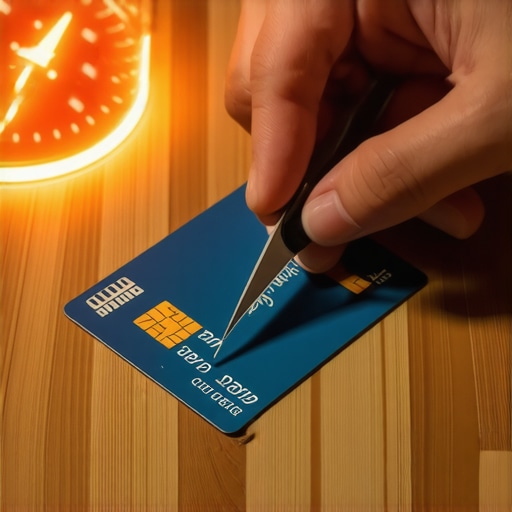
I stood in my kitchen, clutching a pair of heavy-duty shears like I was about to perform some grand act of liberation. With one satisfying, crunchy snip, I sliced through my very first credit card. It was a beat-up piece of plastic I’d carried since my college days, mostly sitting in my drawer gathering dust. I thought I was being a financial minimalist. I thought I was cleaning house. Man, was I wrong. A month later, I was sitting in a chilly, glass-walled office at a local dealership, trying to finance a family SUV. The salesman, who had been all smiles five minutes ago, came back with a look of pure pity. Your score took a hit, he said. My score had plummeted nearly 50 points. By trying to be responsible, I’d accidentally sabotaged my own credit history. It felt like I’d been penalized for doing exactly what I thought the experts wanted. Today, I’m going to pull back the curtain on why this happens and show you how to navigate these accounts without getting burned.
Why Your Score Tanks When You Try to Do the Right Thing
The irony of the credit world is that the bureaus don’t reward you for simplicity; they reward you for having a long, boring, and predictable history. When I cut that card, I didn’t just get rid of an annual fee; I effectively erased a decade of data that proved I could handle money. I learned the hard way that why closing your oldest credit card is a massive mistake is rooted in the length of credit history category of your score. The math is brutal. According to FICO—the company that actually creates the scores most lenders use—the length of your credit history accounts for 15% of your total score. When you close your oldest account, you’re essentially telling the algorithm that you’re a much younger borrower than you actually are. My ten-year-old history was suddenly replaced by a much shorter average, making me look like a riskier bet to the bank. Another major blow comes from your debt-to-credit ratio. This is where why your balance to limit ratio is the most important number you have becomes a reality. When you close an account, your total available credit limit drops. If you have balances on other cards, your utilization percentage spikes instantly. It’s like trying to lose weight by cutting off a limb—the number on the scale drops, but you’re definitely not in better shape.
Is closing an unused card ever actually worth the risk?
I get the skepticism. You might be paying an annual fee for a card you never touch, or maybe you’re worried that having too many open lines of credit makes you a target for fraud. These are valid fears. However, in the eyes of the credit bureaus, an open, unused account is the ultimate sign of discipline. It shows you have access to money but choose not to spend it. If you’re desperate to see that number climb again, you might need to look into credit building hacks to fast track your credit score to offset the damage done by a closed account. Have you ever closed a card thinking you were helping your finances, only to see your score drop the very next month? I’d love to hear your story in the comments. Let’s break down exactly what happens to your report the moment that account closed status hits.
Plug the Credit Gap Without Opening New Accounts
When I realized my score had tanked, I knew I needed to replace that lost credit limit fast. The mistake most people make is applying for a brand-new card. Don’t do that. You’ll just add a hard inquiry to your report, which is like kicking a man while he’s down. Instead, you need to learn how to get a credit limit increase without a hard credit pull. I remember one Tuesday afternoon spent calling my existing lenders. By simply asking for a higher limit on the cards I already owned, I recovered about 70% of the total available credit I’d lost by cutting my old card. It brought my utilization back down to a healthy range almost overnight. If you explain that your income has remained steady or increased, many lenders are happy to bump your limit without running a new credit check.
Keep Your Old Accounts Breathing Using the Automated Subscription Trick
An unused card is a ticking time bomb—eventually, the bank will close it for inactivity. To stop this, I set up what I call the Life Support strategy. I picked a small, recurring $10 subscription—like a streaming service—and put it on my oldest, dustiest card. Then, I set the card to auto-pay from my checking account. This ensures the account stays active and continues to age, which is vital for smart debt management practices for maintaining financial health. It turns a potential liability into a silent engine for your score growth. 
Protect Your Progress with the Five-Minute Audit
You can’t just set it and forget it. I once missed a notice that my bank was planning to slash my limit because I hadn’t used the card in months. If I hadn’t caught it, my utilization would have spiked again, damaging my progress. This is why the 5-minute habit that protects your credit score from sudden drops is non-negotiable. Check your banking apps once a week. If you see something weird, like a lower limit or an unfamiliar fee, you need to know how to handle a credit card issuer that arbitrarily lowered your limit before the next reporting cycle hits. I found that being proactive—calling them to explain my spending habits—often gets that limit restored immediately.
Master the Art of Spending Like It’s Cash
To keep your score high, you have to treat plastic like paper. I started practicing how to use your credit card like a debit card for rewards. I would buy groceries, and before I even left the parking lot, I’d open my banking app and pay it off. This keeps your reported balance at zero, which is the gold standard for your credit report. If you’re looking for more ways to polish your profile, these effective credit repair tips to boost your score today can help you scrub away any other lingering issues. Think of credit as a garden; it requires regular weeding and watering to flourish.Let’s dig deeper into the mechanics that the self-proclaimed experts usually skip over. Most people assume that if they have a negative mark on their report, the only solution is to pay it off and hope for the best. In my experience, that is a strategy built on a fundamental misunderstanding of how credit algorithms actually function. We need to talk about the “paid collection” trap. One of the top credit repair myths busted by experts in 2025 is the idea that paying a debt automatically improves your score. In reality, if you are being judged by the FICO 8 model—which the vast majority of lenders still use for credit cards and auto loans—a paid collection is treated almost exactly the same as an unpaid one. It still sits on your report like a lead weight, dragging down your numbers. If you want that weight gone, you have to learn how to remove a paid collection from your credit report permanently through “pay-for-delete” negotiations or aggressive validation disputes.
Paying Off Collections Won’t Always Save Your Score
The nuance here is that newer models, like FICO 9 and VantageScore 4.0, actually ignore paid collections entirely. But because the mortgage industry is notoriously slow to update its technology, you might be following advice meant for 2025 while your lender is still stuck in 2009. This is where effective credit repair techniques for a fresh financial start become surgical. You aren’t just paying bills; you are choosing which specific version of the score you’re trying to influence.
Don’t Accidentally Restart the Clock on Your Debt
Here is the “Oops” factor that keeps me up at night: the Statute of Limitations. I’ve seen so many well-meaning people try to do the right thing by making a tiny $20 good-faith payment on a seven-year-old debt. The moment you do that, you might be “re-aging” the debt. According to research from the Consumer Financial Protection Bureau (CFPB), many consumers fail to realize that certain actions, like acknowledging a debt in writing or making a partial payment, can reset the legal timeframe a creditor has to sue you. You need to understand the truth about the statute of limitations on debt in your state before you even pick up the phone to talk to a collector. Once that clock restarts, you’ve lost your biggest piece of leverage in negotiations. 
Is a Paid Collection Better Than an Unpaid One?
It’s a sophisticated question because the answer depends entirely on your immediate financial goal. If you’re applying for a mortgage, a human underwriter might require the collection to be paid regardless of the score impact just to clear the title. If you’re just trying to boost your number for a better credit card rate, paying it might be a waste of cash better spent elsewhere. This is why credit counseling secrets for smarter debt management in 2025 emphasize strategy over raw payments. You should also know how to dispute a debt when the creditor has no proof, because if they can’t validate the accuracy of the record, it shouldn’t be there at all—paid or not. Dealing with how to handle medical collections without ruining your credit requires even more finesse, as these often have different reporting rules than standard consumer debt. We often think of the truth about credit counseling vs debt settlement as a binary choice, but the reality is often a mix of both. Have you ever fallen into this trap? Let me know in the comments.
Stop Guessing and Start Automating Your Credit Defense
Maintaining a high score isn’t about grand gestures; it’s about the boring, repetitive tasks that happen when no one is looking. I personally rely on the Experian app because it gives me my FICO 8 score directly, which is the number most lenders actually care about. If you are serious about your financial profile, you need to know why you should ignore the VantageScore and watch your FICO instead of getting distracted by the fluff. I set a recurring calendar alert for the 1st of every month to do a deep dive. I’m not just looking for the number; I’m looking for new inquiries or changes in my reported balances. This is how I learned how to use credit monitoring services without hurting your score to catch errors before they fossilize on my report. According to the Consumer Financial Protection Bureau (CFPB) in their latest Supervisory Highlights, credit reporting errors remain the top consumer complaint, specifically regarding the failure of bureaus to conduct timely investigations under Section 611 of the FCRA. By being your own auditor, you force the system to work for you.
What does it take to keep your score high year after year?
Consistency is the only real ‘secret’ left in the industry. I suggest moving away from complex spreadsheets and using the no-math way to budget your monthly income. I automate every single minimum payment to ensure I never hit a 30-day delinquency, then I manually pay off the remaining balances a few days before the statement closing date. This ensures my utilization is reported as near-zero, which is essential for smart debt management practices for maintaining financial health. #IMAGE_PLACE_HOLDER_D#
The Shift Toward Cash Flow and AI Underwriting
I predict that within the next few years, your static credit score will matter slightly less than your real-time cash flow. We are already seeing ‘UltraFICO’ and other models that want to peek at your bank account activity to see how much you save versus how much you spend. This is why mastering credit building proven strategies for a strong financial future now involves keeping a healthy cushion in your checking account, not just paying down cards. Lenders are getting smarter, and they want to see that you aren’t living on the edge of your means. If you’ve been struggling, I highly recommend following the ultimate credit repair blueprint for 2025 to clean up your past while you prepare for this more transparent future. Don’t wait until you’re applying for a mortgage to fix a mistake from three years ago. Go ahead and log into your primary credit app right now—check one thing: is your reported address correct? It’s the smallest detail, but it’s often the first domino to fall in a successful dispute.
Checking that address was the final piece of my own recovery puzzle, but it led me to a much bigger realization about how these systems actually work. When you stop looking at credit as a grade on your character and start seeing it as a data-driven game, the stress begins to melt away.
Credit Is Not a Reward for Good Behavior
The hardest lesson I had to swallow was that the credit bureaus don’t care if you’re a ‘good person’ who pays their debts eventually. They only care about the predictability of your data. Here are the lightbulb moments that finally made it all click for me:
- The Math Always Beats the Narrative: I spent years trying to explain my situation to lenders, but the algorithm only cares about your utilization and payment history. Focus on the numbers, not the excuses.
- Quiet Accounts Are Your Best Friends: We often feel the urge to clean up our wallets by closing old cards. Resist it. That silence is actually the sound of your credit history aging gracefully.
- Risk Is Relative: A high score doesn’t mean you have no debt; it means you handle the debt you have with surgical precision.
How I Keep My Financial World from Falling Apart
I don’t spend hours on this anymore because I’ve built a system that does the heavy lifting for me. If you’re looking to replicate this, these are the resources I personally rely on to keep everything moving in the right direction:
- The FICO 8 Dashboard: I ignore the ‘educational’ scores provided by free apps and go straight to the source. Knowing your real FICO score is the only way to avoid surprises at the dealership.
- The Weekly Review: I use the no-math way to budget your monthly income to ensure my spending never outpaces my available credit. It’s the simplest way to stay under that 10% utilization threshold without a spreadsheet.
- Professional Guidance: If you find yourself overwhelmed, smart credit counseling can provide a roadmap when you can’t see the path forward yourself. These insights can help you unlock your path to better credit without the trial and error I went through.
Your Score Is Only a Tool So Use It Wisely
At the end of the day, your credit score is just a tool to help you build the life you want. It isn’t a reflection of your worth, and it isn’t permanent. Whether you are just starting out with a step-by-step guide to credit building for new borrowers or you are recovering from a major setback, the process is exactly the same: consistency, patience, and a little bit of strategy. Don’t be afraid to make a mistake; just be ready to fix it when you do. #IMAGE_PLACEHOLDER_E#
Have you ever accidentally lowered your score while trying to do something ‘responsible’ with your money? Let me know your story in the comments below!