
How to Handle a Collection Agency That Keeps Selling Your Debt
I sat at my kitchen table, staring at a lime-green collection notice for a debt I was certain I had handled months prior. The name of the agency was different, but the amount—an annoying $342.19—was identical. I felt a pit in my stomach. It wasn’t just the money; it was the feeling of being hunted by ghosts. I’d spend hours on the phone, think it was over, and then—bam—a new letter from a new company would arrive like a bad sequel. It felt like I was stuck in a financial loop where the rules changed every time I tried to win. This cycle of “zombie debt” is more than just an annoyance; it is a calculated industry tactic that relies on you feeling overwhelmed and helpless.
Stop the Infinite Loop of Debt Reselling Today
If you feel like you’re playing a never-ending game of debt Whack-A-Mole, you aren’t crazy. It’s a common tactic in the industry where accounts are bundled and sold for pennies on the dollar. I used to think that just answering the phone and explaining my situation would make it go away. That was my first big mistake. I wasted months trying to be “the nice guy” without realizing that you should not fear debt collectors; you just need to know the rules of the game. Today, I am going to show you exactly how to lock down your file so that once a debt is addressed, it stays dead and buried. We’ll look at how to demand proof and why the move to make when your debt collector sells your account is actually a massive opportunity for you to clean up your record for good. Have you ever felt like you finally settled a bill only to have a new company call you three weeks later? Leave a comment below and let me know—I’ve been there, and it’s a total drain on your mental health.
Is it even legal for them to keep passing my debt around like a hot potato?
It feels like a scam, doesn’t it? But yes, it’s legal—within certain boundaries. According to the Consumer Financial Protection Bureau (CFPB), debt buyers purchase millions of delinquent accounts every year, often with very little documentation to back them up. This lack of paperwork is your secret weapon. When I first started digging into smarter debt management, I realized that if they can’t prove you owe it, they can’t collect it. I once made the mistake of making a small “good faith” payment on an old debt, not realizing I was actually restarting the statute of limitations. It was a $25 lesson that cost me thousands in the long run. By the end of this guide, you’ll know how to avoid that trap and use the Fair Debt Collection Practices Act to your advantage to silence the phones and regain your peace of mind.
Force Them to Prove Every Cent
Think of debt collectors like a retail store trying to charge you for a shirt you never bought. You wouldn’t just hand over your credit card; you’d demand to see the security footage or the signed receipt. The same logic applies here. When a debt is sold and resold, the actual proof (the original contract with your signature) often gets lost in the shuffle. I once had a collector chase me for a gym membership I cancelled in 2018. They had my name and the amount, but when I pushed back, they couldn’t produce the original agreement. Since they couldn’t find the paperwork, they had no legal leg to stand on. This is exactly how to dispute a debt when the creditor has no proof and win by default.
Send the Debt Validation Letter Within 30 Days
The moment you get that first collection letter, the clock starts ticking. You have a 30-day window to send what is called a Debt Validation Letter. This isn’t just a polite request; it is a legal demand. You are telling the agency, “Do not call me again until you send me the name of the original creditor and the exact chain of ownership for this debt.” Most of these agencies are buying thousands of accounts at once and do not actually have the granular data. If they cannot provide it, they are legally required to stop collection efforts. If they keep ringing your phone regardless, you need to know how to deal with a debt collector that wont stop calling so you can protect your sanity and your rights.#IMAGE_PLACE_HOLDER_B#
Watch Out for the Statute of Limitations Trap
One of the dirtiest tricks in the book is “re-aging” debt. Every state has a shelf life for how long a creditor can sue you for a balance. Once that time passes, the debt is “time-barred.” However, the second you make even a $5 payment or acknowledge that the debt is yours over the phone, you might accidentally reset that clock. I have seen people turn a 10-year-old dead debt into a fresh legal nightmare just by trying to be helpful. You must check the truth about the statute of limitations on debt in your state before you even think about negotiating a settlement.
Lock Your Credit Report Against Ghost Collections
Once you have disputed a debt and the agency has failed to provide proof, your next job is to make sure it does not pop back up under a different name. This happened to me with a medical bill. I beat one agency, and a month later, a different firm showed up with the same balance. To prevent this, keep copies of all your correspondence. If a new agency reports the same item, you do not start from scratch; you send your previous failure to validate proof to the credit bureaus. Especially with healthcare, knowing how to handle medical collections without ruining your credit involves a specific set of rules that often favor the consumer if you act quickly. This is part of the broader debt management secrets that the big agencies hope you never discover.Most people think credit repair is just a game of ‘delete the bad stuff.’ But here is a contrarian take: your biggest gains often come from what you add, not just what you remove. I have seen folks spend a year fighting a $50 utility bill from 2018 while their ‘credit garden’ is completely bone-dry of positive accounts. You need to realize that effective credit repair techniques for a fresh financial start require a balance of aggressive clean-up and strategic rebuilding. If you only look backward at your mistakes, you never build a path forward.
The Paid-in-Full Trap Most People Fall Into
There is a massive misconception that paying off an old collection will automatically skyrocket your score. In reality, unless you secure a ‘pay for delete’ agreement, paying a five-year-old debt can sometimes *lower* your score in older FICO models used by mortgage lenders. This happens because the payment updates the ‘date of last activity,’ making an old mistake look brand new to the algorithm. This is exactly how to effectively use credit counseling to fix your finances—by knowing when to pay and when to negotiate for a total removal.
Does the FICO model penalize you for being too responsible?
It sounds backward, but if every single one of your credit cards shows a $0 balance, you might be losing points. This is known as the ‘all zero’ penalty. FICO wants to see that you can manage credit, and if you aren’t using it, they have no data to score. A study by the Consumer Federation of America highlighted that consumers often misunderstand the nuances of ‘utilization.’ The highest scores usually belong to people who have at least one card reporting a balance of less than 3% while the rest stay at zero. This is one of those credit building hacks that can give you a quick 15-to-20 point bump when you’re stuck at a plateau. 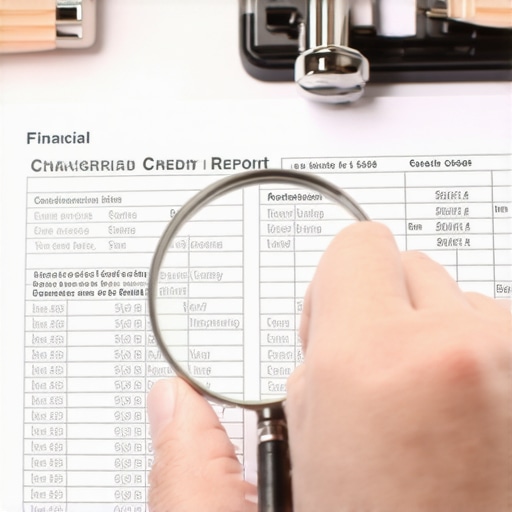
Stop Killing Your Credit History by Closing Old Cards
Another common ‘oops’ factor is the urge to close a card once it’s paid off. I get it—it feels like a victory lap. But why closing your oldest credit card is a massive mistake comes down to ‘length of credit history.’ When you close that 10-year-old account, your average age of accounts shrinks, and your total available credit drops, which spikes your utilization. It’s a double-whammy of bad news. Instead, put a small recurring charge like Netflix on it and set it to autopay. This keeps the account active and your score stable.
Why Debt Consolidation Fails Most Borrowers
Everyone looks for the ‘magic bullet,’ and for many, that’s a consolidation loan. But here is the hard truth: why most people fail at debt consolidation is because they treat the loan as a cure rather than a Band-Aid. If you use a loan to clear your cards but don’t change the spending habits that maxed them out in the first place, you’ll end up with a loan payment *and* new credit card debt within six months. Real success requires credit counseling insights that address the psychology of spending, not just the interest rates. Have you ever fallen into this trap? Let me know in the comments—I’ve seen it all, and there’s always a way back.
Ditch the Over-Engineered Apps for a Simple System
Once you have cleared the initial hurdles of debt validation and dispute letters, the real work shifts from ‘fixing’ to ‘maintaining.’ Most people fail here because they try to use five different budgeting apps that never quite sync right. I have found that the best way to organize your bills without an app is to use a simple, manual spreadsheet. Why? Because when you have to physically type in your balance every Sunday, you develop a visceral connection to your money that an automated alert can’t provide. This is the cornerstone of smart debt management practices for maintaining financial health. I personally spend 15 minutes every Sunday morning with my coffee, updating my balances. If my utilization on any one card creeps above 5%, it triggers a ‘red cell’ in my sheet, and I pay it down immediately. 
The Five-Minute Habit That Saves Thousands
The most dangerous thing you can do once your credit is healthy is to stop looking at it. I recommend what I call the 5-minute habit that protects your credit score from sudden drops. This involves checking your FICO score—not your VantageScore—once a week. You need to understand why you should ignore the vantagescore and watch your fico; most lenders don’t even use the score you see on free apps. By catching a small reporting error early, you prevent it from snowballing into a collection nightmare. If you’re worried about ‘hard pulls,’ remember that how to use credit monitoring services without hurting your score is all about using consumer-facing portals that only trigger soft inquiries.
Is there a way to put my credit growth on autopilot?
Yes, and it’s simpler than most ‘gurus’ make it sound. Once your scores are in the mid-700s, you can scale your results by requesting limit increases every six months like clockwork. According to technical documentation from the National Foundation for Credit Counseling (NFCC), consumers who proactively manage their credit limits often see a more stable score during economic downturns. I set a calendar reminder for April and October to call my card issuers. I don’t ask for a new card; I just ask for a higher limit on my existing ones. This naturally lowers my utilization ratio without me having to spend a dime less. It’s one of those credit building hacks that works while you sleep.
Watch Out for the Rise of Trended Data
As we move further into 2025, the way banks look at us is changing. The industry is moving toward ‘Trended Data,’ specifically with models like the FICO® Score 10 T. Unlike older models that only see your balance today, 10 T looks at your behavior over the last 24 months. It can see if you are ‘transacting’ (paying in full) or ‘revolving’ (carrying a balance). This means the ‘quick fix’ of paying off a card right before a mortgage application won’t work as well as it used to. You need smart credit counseling that focuses on long-term behavior rather than short-term tricks. If you want to stay ahead of this trend, start the ‘3% rule’ today: never let more than 3% of your limit report on your statement date, even if you pay it off in full a day later. Try setting up an auto-payment for just $20 on your oldest card right now—it’s the easiest way to ensure that account never gets closed for inactivity.
The Hardest Lesson I Learned While Cleaning Up My Credit
When I was first knee-deep in collection notices, I thought the only way out was to hide. But the biggest ‘lightbulb moment’ I had was realizing that debt collectors are just data entry clerks with a script. They aren’t the police, and they aren’t your boss. Once I stopped treating them like an authority and started treating them like a business transaction that required a receipt (the debt validation), everything changed. I also learned that you can’t just delete the bad stuff; you have to actively plant new seeds. Even while I was fighting old bills, I started using credit building hacks to ensure my future score would have a solid foundation. Finally, remember that progress isn’t linear. You might see a dip when you pay off a debt, but knowing how to remove a paid collection from your credit report permanently is the key to that long-term recovery you’re looking for.
#IMAGE_PLACEHOLDER_E#
The Three Things I Keep in My Financial Emergency Kit
I don’t believe in fancy, expensive software. To keep my smart debt management on track, I rely on a few specific things. First, I use a dedicated FICO-monitoring service. Seeing the actual numbers the lenders see is vital, and you need to know why you should ignore the vantagescore and watch your fico before making any big moves. Second, I keep a physical folder of every ‘Verification of Debt’ letter I’ve ever received. If a zombie debt reappears, I have the paper trail to kill it instantly. Third, I recommend reading the ultimate credit repair blueprint for 2025 to stay updated on how reporting laws are shifting in favor of consumers. I trust these methods because they rely on logic and law, not luck or ‘secrets’ hidden behind a paywall.
You Are More Than Just a Score
It is so easy to get buried in the stress of numbers and letters. But your value isn’t tied to a three-digit integer. By taking these steps—demanding proof, watching the statute of limitations, and using smart debt management practices for maintaining financial health—you are doing more than just fixing a report. You are regaining your freedom. Don’t be afraid to take that first step, even if it’s just sending one letter or checking one statement. The future of your finances is something you control, and with the right tools, those ghost debts won’t stand a chance. Have you ever had a debt you thought was gone suddenly pop back up on your report? Let me know in the comments below—I’d love to hear how you handled it!