Why Your Credit Score Isn’t Moving Despite On-Time Payments
I remember sitting at my kitchen table three years ago, staring at my laptop screen until my eyes burned. Every single bill was paid. My calendar was a sea of green checkmarks. Yet, my score hadn’t budged more than three points in six months. It felt like I was screaming into a void. I was doing exactly what the experts told me to do: pay on time, every time. So why was my progress stuck in the mud?
The Frustrating Reality of the Credit Plateau
You are doing the work, but the numbers aren’t moving. It is a special kind of financial ghosting. I lived in that 640-score purgatory for way too long because I did not realize that why your credit score flatlined despite monthly payments often has nothing to do with your payment history at all. My big mistake was thinking that as long as I was not late, I was winning. I was carrying high balances on three different cards, thinking that as long as I hit that minimum due button by the 15th, the bureaus would reward me. Spoiler alert: they did not. According to data from FICO, credit utilization accounts for roughly 30% of your total score, making it nearly as important as payment history itself. If your balances stay high, your perfect payment record is basically just treading water.
Is the entire scoring system just a scam?
It is easy to feel like the game is rigged against us. You might be wondering if these secret formulas are designed to keep you in debt. I certainly felt that way when my score dropped ten points after I paid off a loan! But once I stopped looking at my score as a grade for being a good person and started seeing it as a risk-assessment algorithm, things clicked. We are going to fix this today. I am going to show you how to break through that ceiling by looking at what is happening behind the scenes of your report. Have you ever felt like no matter how much you pay, the needle just will not move?
Why High Balances Mute Your Progress
The biggest reason you are stuck is likely the balance shadow. Even if you pay your bill in full every month, if the credit bureau snaps a photo of your account while the balance is high, they think you are overextended. I used to wait until the due date to pay, not realizing the statement date was the one that actually mattered for my score. You might need to look into the logic behind the 15-15 rule for credit card payments to trick the system into seeing a lower balance. It is about timing, not just the amount. If you are feeling overwhelmed by the complexity, credit counseling insights can help you see the patterns you are missing in your financial habits.To break through a score that has stayed stagnant for months, you have to stop playing defense and start playing offense. The system treats your credit report like a rolling average of your reliability, but you can tilt those averages in your favor by mastering the calendar.
Master the Art of the 15-15 Rule
Most people wait for their bill to arrive, look at the due date, and pay it. If you want to see a real shift, you need to use the 15-15 rule for paying off credit card balances effectively. This involves making a payment fifteen days before your statement date and another one just three days before it closes. I remember the first time I tried this. I had a $3,000 balance on a card with a $5,000 limit. Even though I paid the whole thing off by the due date every month, my score was trapped in the low 600s. The month I split that payment and hit the account before the statement closed, my reported utilization dropped from 60% to 2%. My score jumped 42 points in a single billing cycle. It felt like I’d found a cheat code.
Why the Statement Date Beats the Due Date
Your due date is for the bank; your statement date is for the credit bureaus. If you carry a balance until the due date, the bank has already reported your high balance to the bureaus. This is the best time of month to pay your balance for a score boost because it ensures the ‘snapshot’ taken of your finances shows you using almost none of your available credit. 
Find the Hidden Errors Killing Your Score
You cannot fix what you cannot see. Most people glance at their score on a banking app and think they know their status. That is a mistake. You need to know how to get your credit report for free without hidden fees so you can perform a line-by-line audit. Look specifically for the error on page 3 of your report thats tanking your score. This is often where small, incorrect details like a misspelled former employer or an address you never lived at live. While these seem minor, they can link your file to someone else’s bad habits, creating a ‘mixed file’ that drags you down.
Utilize the Ghost Account Maneuver
If your utilization is still too high and you cannot afford to pay down the debt today, you might need to use the ghost account trick for lowering your utilization overnight. This isn’t about opening fake accounts; it is about strategically increasing your total available credit to dilute the impact of your current debt. When I was struggling, I called my least-used card issuer and asked for a limit increase. They granted me an extra $2,000 without a hard inquiry. Instantly, my math changed. I went from being 50% utilized to 30% utilized without spending a single dollar. These types of credit building hacks are the difference between waiting years for progress and seeing results by next month.Let’s dig deeper into the actual mechanics of credit repair, because most people are doing it completely wrong. There is a common belief that if you just send enough dispute letters, the bureaus will eventually get tired and delete the negative marks. This is fundamentally false. In fact, why your dispute letter got rejected by the credit bureau often comes down to the fact that you used a template that everyone else is using. The bureaus use automated OCR scanners to flag these ‘template’ letters as frivolous, meaning they don’t even have to investigate them. Instead of a blanket dispute, you need the method of verification letter every credit repair-diyer needs to force them to prove exactly how they verified the debt. According to a 2023 research report by the Consumer Financial Protection Bureau (CFPB), the sheer volume of automated disputes has made the bureaus more aggressive in dismissing legitimate claims that are not backed by specific evidence.
Stop Sending Those Generic Template Letters
To really see movement, you have to move past the basics. Most ‘gurus’ tell you to dispute every negative item on your report at once. In my experience, this is the quickest way to get blacklisted by the internal fraud filters. You need to be surgical. Focus on one or two items at a time and provide actual proof. If you are struggling with a specific late payment, instead of a standard dispute, try the simple script for getting a goodwill deletion on late payments. It’s about building a narrative of responsibility rather than just being another ‘delete this’ bot in their system.
The Dangerous Trap of Paying Old Collections
Then there is the ‘pay-for-delete’ myth. Everyone says it’s the holy grail of credit repair, but it is often a coin toss that lands on its edge. I have seen people negotiate these deals only to find out the collection agency didn’t have the authority to delete the tradeline from all three bureaus. You must understand the hidden dangers of pay-for-delete agreements you should know before you send a single dollar. If you pay an old debt without a written guarantee, you might actually lower your score because you’ve just updated the ‘date of last activity,’ making an old, decaying debt look brand new to the scoring algorithm. This is a massive ‘oops’ factor that can set you back months. Instead, learn how to handle collections without admitting ownership of the debt to keep your leverage intact during negotiations. 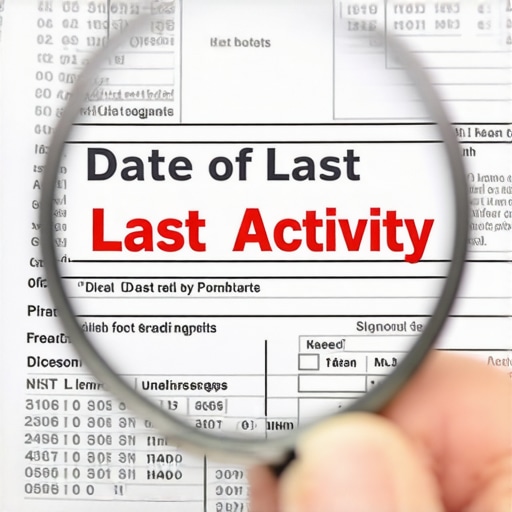
Does settling an old account really help your mortgage chances?
Many advanced borrowers believe they need a ‘clean’ report to qualify for a home loan. The truth is much more nuanced. Many mortgage lenders care more about your recent history than a three-year-old medical bill. If you settle that bill right before applying, you might trigger a score drop that actually disqualifies you for the best rates. This is one of the many top-credit-repair-myths-busted-by-experts-in-2025. Sometimes the best move is to do nothing at all until after you close on the loan. It’s about looking at debt management secrets tackle debt before it takes over and realizing that a high score isn’t the only goal—stability is. Real effective credit repair techniques for a fresh financial start involve a blend of removing old errors and drowning out negative data with credit building hacks that strengthen your current profile. High-level credit management is a chess match, not a boxing match. Have you ever fallen into this trap of paying a debt only to see your score plummet? Let me know in the comments.Once you have successfully navigated the minefield of disputes and tactical payments, you enter what I call the ‘maintenance phase.’ This is where most people get lazy, and it is exactly where I failed the first time around. I thought that once I hit 750, the job was done. I stopped checking the dates and went back to my old habit of paying whenever I had the extra cash. Within four months, my score had drifted back down to 710. To stay on top, you need smart debt management practices for maintaining financial health that do not require three hours of your life every weekend.
The Gear I Actually Use to Keep Things Moving
I am not a fan of complicated apps that want to link to every bank account I own. Instead, I use a simple, manual Google Sheet. Why manual? Because the act of typing in my ‘Statement Close Date’ keeps it at the front of my mind. If you want to follow my lead, you can find similar strategies in the ultimate credit repair blueprint for 2025. I also rely heavily on calendar alerts set for three days before my statement closes. This is the best way to track monthly expenses without stress because it focuses only on the numbers the bureaus see, rather than obsessing over every cup of coffee.
How do I maintain my credit score once it finally reaches the top?
Maintenance is about consistency, not intensity. You do not need to dispute things every month; you just need to ensure no new errors creep in. One of the biggest mistakes I see is people relying on free apps for their daily fix. You really have to why you should ignore the credit monitoring score you see online if you want the truth. Those ‘educational scores’ use VantageScore 3.0, while 90% of lenders still look at FICO. I check my actual FICO once a quarter, and that is it. 
Why Trended Data is the Next Big Hurdle
Looking ahead, the game is changing. According to technical documentation from VantageScore 4.0, the industry is moving toward ‘trended data.’ This means the bureaus are no longer just looking at what you owe today; they are looking at whether your balances are growing or shrinking over the last 24 months. If you are just making minimum payments, even if they are on time, the new algorithms will flag you as a higher risk. This is why credit counseling secrets for smarter debt management in 2025 are becoming essential—they help you build a downward trend that AI-driven scoring models love.
Scale Your Success with Automated Safety Nets
If you want to go from repairing to building, you have to automate the defense. I set my minimum payments to auto-pay on the 1st of every month, regardless of when they are due. This is a baseline safety net so I never, ever miss a date. Then, I manually go in and apply my ’15-15 rule’ payments to optimize the score. If you are just starting this journey, check out how to repair credit fast essential tips for better scores to get your foundation solid before you worry about these advanced automations. My challenge to you today: Open your credit card app, find your ‘Statement Closing Date’ (not the due date!), and set a calendar reminder for three days prior. That one three-minute task is the single most effective maintenance tool in my arsenal.
The Reality Check Most Gurus Forget to Mention
If there is one thing three years of trial and error taught me, it is that you cannot out-earn a bad habit. I spent months sending letters while still overspending on the weekends. Real progress only happened when I embraced smart debt management practices for maintaining financial health. You have to realize that the bureaus are looking for patterns of stability, not just a one-time payment. Another lightbulb moment was discovering that my educational score was often a distraction; I had to learn why you should ignore the credit monitoring score you see online to stop stressing over fluctuations that did not matter to my mortgage lender.
#IMAGE_PLACEHOLDER_E#
Tools That Actually Moved the Needle for Me
I stopped guessing and started using a structured approach. I highly recommend keeping a copy of the ultimate credit repair blueprint for 2025 on your desk. It keeps you from making the emotional mistakes that tank your score. If you are feeling overwhelmed by high-interest debt, do not just sign up for the first program you see. Make sure you get the one document you need before signing a credit counseling agreement to protect your rights. I also found that debt management secrets tackle debt before it takes over your life once you stop treating every bill like an emergency and start treating it like a tactical move in a game.
Claim Your Financial Future Right Now
The best time to start was a year ago, but the second best time is right now. You have the tools to implement effective credit repair techniques for a fresh financial start without needing a high-priced attorney. Remember, your credit score is a tool for your future, not a reflection of your worth. Take one small action today—whether it is checking for errors or setting that 15-day reminder—and watch how quickly the momentum builds. Have you ever struggled with a score that refused to move despite your best efforts? Let me know below.