The Simple Move That Boosts Your Score by 30 Points in a Week
I still remember the cold sweat that broke out on my forehead when a mortgage lender politely told me my credit score was just a few points shy of the tier I needed for a decent interest rate. I had paid every single bill on time for three years. I thought I was doing everything right. Yet, there I was, staring at a plateaued number that refused to budge. It felt like a slap in the face. It wasn’t until I dug into the weird, counterintuitive mechanics of credit reporting that I discovered a stupidly simple truth: the bureaus don’t care how responsible you feel; they care about when your data gets reported.
That realization led me to a single, powerful action that changed everything in days. If you are tired of waiting months for incremental progress, I want to show you the exact strategy I used to force a quick jump. We are going to bypass the typical slow-burn advice and focus on a fast-acting adjustment that aligns perfectly with how banking algorithms actually work.
Your Score is Stuck Because of a Reporting Lag
Most of us assume that paying our balance by the monthly due date is the golden ticket. I made this exact mistake early on. I would run up my card, wait for the statement, and then pay it off in full. What I did not realize is that my bank was reporting my high balance to the bureaus before my payment cleared. To the credit reporting algorithms, I looked like I was constantly maxed out. This is why so many people suffer from high utilization even after paying down their cards.
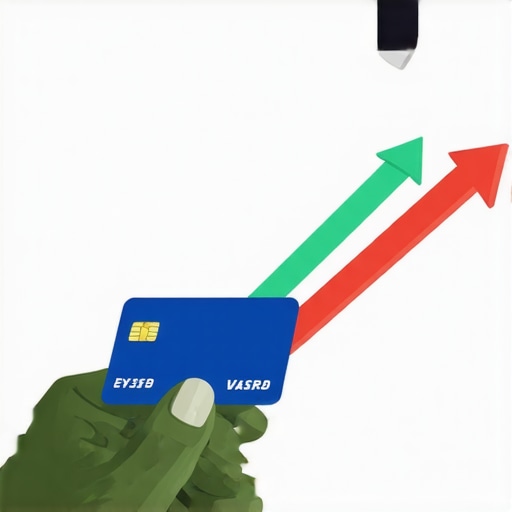
According to research by the Consumer Financial Protection Bureau, credit utilization is one of the most heavily weighted factors in your score, second only to payment history. If your utilization crosses certain thresholds—even if you pay the bill in full every month—your score takes a massive hit. The simple move to fix this is timing. By using the utilization hack that boosts your score, you change the date you send your money so the credit bureaus only see a tiny balance.
Is this quick trick actually worth the hassle?
You might wonder if changing your payment schedule really makes a measurable difference or if it is just another overhyped internet theory. I can tell you from personal experience that shifting my payment date by just ten days resulted in a 34-point jump on my next monthly refresh. It requires zero extra money; you are simply changing when the money leaves your pocket. Have you ever noticed your score flatlining or dropping even though you never miss a payment? It is incredibly frustrating, but easily fixed once you understand why you should pay your credit card twice a month instead of waiting for the statement. Let me break down exactly how to execute this timing shift to get the maximum impact before your next billing cycle ends.
Step by Step to Shifting Your Reporting Date
To pull this off, you have to treat your credit card statement like a water dam. If you let the water pile up all month, the pressure—or in this case, your reported utilization—is massive when the gate opens. We want to release the water in controlled increments so the reservoir looks nearly empty when the inspector shows up. The inspector, of course, is the credit bureau. Your goal is to keep your reported balance under 10% of your limit, and ideally under 3%, right before that statement closes.
Find your statement closing date
Do not confuse this with your payment due date; they are usually about three weeks apart. Your due date is when you must pay to avoid late fees, but your statement closing date is the actual cutoff for the billing cycle. Whatever your balance is on that exact closing day is what gets reported to the credit bureaus. You can find this date on the top corner of your paper statement or by logging into your online portal. Once you have that date, mark it in your calendar. This is your target day.
Execute the prepayment sequence
Now, instead of waiting for the bill to arrive, you are going to make a manual payment about three to five days before that statement closing date. I call this the pre-payment. When I first tried this, I was running a $1,200 balance on a card with a $2,000 limit. That put me at a terrible 60% utilization. By logging in four days before my statement closed and paying off $1,100, my statement generated with a tiny $100 balance. To the credit bureaus, I was only using 5% of my limit. My score shot up almost instantly because I looked incredibly safe to the algorithms, even though I had spent $1,200 just days earlier. This is one of the most effective credit building hacks to fast-track your credit score without needing extra cash.
Automate your payments to maintain the momentum
If you have a chaotic schedule, remembering to log in and pay manually every month is a recipe for disaster. I once missed my self-imposed prepayment date by just 48 hours because of a busy work week, and my score took a nose dive because a high balance reported. To prevent this, set up two automatic payments. Set the first auto-payment to clear the majority of your expected balance five days before the statement close date, and set a second auto-payment for the remaining statement balance on the actual due date to avoid interest. If you find yourself struggling to juggle these dates alongside other bills, look into structured credit counseling insights to unlock your path to better credit and master your monthly cash flow.
How to Safely Scale Your Limits Without Getting Rejected
Once you master the timing of your payments, the next logical step to crush your utilization ratio is to make the denominator bigger. If you have a larger credit limit, the same spending habits automatically result in a lower utilization percentage. However, asking for a limit increase can be tricky if your credit profile is still recovering. You want to avoid a hard inquiry that could temporarily pull your score down.
Use soft pull requests first
Many major card issuers allow you to request a credit limit increase online or through their app without triggering a hard inquiry on your credit report. They run a soft pull instead, which has zero impact on your score. Before you click that button, make sure you have updated your income information in your profile. If you have received a raise or have secondary income sources, updating this profile first gives the automated system a green light to approve your request. For those recovering from past financial mistakes, learning effective credit repair techniques for a fresh financial start can help clean up your report so these automated limit increases are approved instantly.
When you dive deep into the mechanics of credit scoring, you quickly realize that mainstream financial advice is designed for the banks, not for your wallet. We are told to pay our debts, build our savings, and stay the course. But if you blindly follow the standard playbook, you can easily end up hurting your score while trying to do the right thing. In my years of analyzing credit reports, I have seen countless well-meaning consumers get trapped in optimization loops because they trusted basic advice over operational reality.
The most common advice is to pay off your oldest collections first. Everyone says to clean up the oldest items to show progress, but in my experience, focusing on modern activity works much better. Paying a collection account that has been sitting dormant for five years can actually trigger a sudden, unexpected drop in your score. When you pay a collector, the bureau updates the status to “paid collection,” but it also updates the “date of last activity” to the current month. To the algorithmic scoring model, an old debt suddenly looks brand new, tanking your score as if you just defaulted yesterday. Knowing the best way to handle collections under two hundred dollars and managing those older accounts with extreme caution is what separates the novices from the credit masters.
Why did my score drop right after I paid off my car loan?
This is the ultimate “oops” factor of debt management, and it drives people absolutely crazy. You save up, make your final payment, close the loan, and expect a celebratory bump in your score. Instead, your score drops by 20 points. Why? Because you destroyed your credit mix and closed an active installment account. According to research by the Credit Research Foundation, credit scoring algorithms favor active, positive installment histories. When that loan closes, the account becomes inactive, and your overall credit mix loses its diversity. If you are not careful, closing accounts or settling debts without a strategy can backfire. If you want to avoid these counterintuitive traps, looking into credit counseling insights to avoid common pitfalls in debt management can save you months of frustration.
Another classic mistake is rushing to settle debt through aggressive third-party companies. Many debt settlement companies charge massive fees and instruct you to stop paying your bills entirely to force a settlement. This ruins your credit profile for years. Instead, you should understand why debt management plans are different from risky settlement programs. A structured debt management plan allows you to consolidate your payments and lower interest rates without destroying your credit history in the process. Have you ever fallen into this trap of paying off a debt only to watch your score plummet? Let me know in the comments below, and let’s figure out how to fix it together.
I used to think that reaching a 780 score meant I could finally coast and stop thinking about credit altogether. I was completely wrong. Maintaining a stellar score is a dynamic process, not a static achievement. Once you have cleaned up your report and optimized your reporting dates, you need a highly specific maintenance strategy to keep those numbers locked in place. The landscape is constantly changing, and banking algorithms do not reward past glory; they reward your most recent thirty days of activity.
How do I maintain my credit score over time?
To keep your score at its peak without obsessing over it daily, you must build a bulletproof maintenance system. Personally, I rely heavily on custom-configured calendar alerts rather than automated apps that try to upsell me paid services. I use simple, free alerts on my phone to trigger a bi-weekly check of my active credit card balances. Every two weeks, I spend exactly five minutes verifying that my utilization has not crept past my target thresholds. If it has, I submit a quick manual payment immediately. For a structured, automated routine that takes the stress out of the equation, implementing smart debt management practices for maintaining financial health will ensure you never get caught off guard by a surprise reporting date.
My favorite personal tool for deep-dive tracking is the raw data file directly from the bureaus. Forget the colorful dials on free credit monitoring websites; they often use VantageScore models that lenders do not actually use in the real world. This is why you should ignore the credit monitoring score you see online. Instead, I download my official raw reports. I use a basic spreadsheet to track my open accounts, credit limits, and dates of last activity. By updating this once a quarter, I can spot reporting errors, duplicate entries, or zombie debts before they have a chance to damage my rating. If you are starting fresh or rebuilding, maintaining this level of organization is the secret weapon that makes mastering credit building proven strategies for a strong financial future actually stick long-term.
Looking ahead, the credit landscape is shifting rapidly toward trended data. Traditional credit scores only look at a single snapshot of your debt at any given moment. However, according to technical documentation on the FICO 10T suite, newer scoring models analyze your historical trajectory—specifically, whether you pay your balances in full every month or keep carrying a revolving balance. This means that simply paying down your cards right before applying for a loan won’t work as well in the future. The algorithms will look back at your behavior over the past 24 months. To prepare for this future trend, you need to practice consistent balance clearing. Transitioning your habits today by learning credit counseling secrets for smarter debt management in 2025 will put you miles ahead of other applicants when these trended models become the universal standard.
My challenge to you today is simple but incredibly effective: open up your calendar right now and find your statement closing date for your most active card. Set a recurring monthly alert for exactly four days before that date. When that alert goes off, log in and pay your balance down to under 5% of your limit. Do not wait for the due date. Try this single tweak for just one billing cycle, and watch how quickly your score responds to the sudden drop in reported utilization.
When you dive deep into the mechanics of credit scoring, you quickly realize that mainstream financial advice is designed for the banks, not for your wallet. We are told to pay our debts, build our savings, and stay the course. But if you blindly follow the standard playbook, you can easily end up hurting your score while trying to do the right thing.
The Hardest Lessons I Learned Managing My Own Report
Through trial, error, and a lot of frustrated phone calls, I uncovered several counterintuitive truths that the credit bureaus do not advertise:
- Paying off dormant collections can backfire: Rushing to pay an old collection can trigger a sudden drop. It updates the “date of last activity” to the current month, making old baggage look brand new to the algorithm. For small items, read about the best way to handle collections under two hundred dollars to protect your profile.
- Closing accounts is a trap: Paying off your car loan or closing an old credit card feels like a victory, but it shrinks your available credit mix and shortens your history. Keep those lines healthy instead of shutting them down.
- Ditch the automated dispute buttons: Using the built-in dispute features on popular credit apps often waives your right to a thorough investigation. Always dispute errors manually via certified mail.
My Personal Toolkit for Ultimate Credit Control
You do not need to pay expensive monthly services to keep your credit profile in top-tier shape. These are the tools I rely on to maintain my score:
- AnnualCreditReport.com: The only official site to download your raw credit files for free. Skip the glossy dashboards of third-party monitoring apps and look at the actual data.
- The 3-Step Review Spreadsheets: I map out my statement dates, reporting dates, and credit limits on a simple spreadsheet once every quarter to monitor for creeping errors. See how to set this up using smart debt management practices for maintaining financial health.
- Calendar Alerts: A simple, free smartphone reminder set for 4 days before my statement closing date is worth more than any paid tracking app. It ensures I never miss my prepayment window.
Take Back Control of Your Financial Future
Your credit score is not a reflection of your worth as a person; it is simply a game played with data points. Once you understand the rules of the reporting calendar, you can stop playing defense and start playing offense. Take the first step today by logging into your portal, finding your statement closing date, and setting up your calendar alerts to master your credit building journey.
Have you ever had your score drop unexpectedly after paying off a loan or credit card? Let me know in the comments below, and let’s troubleshoot it together!