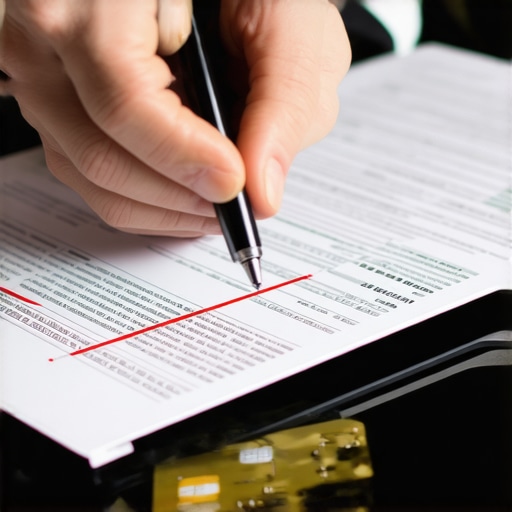
The Tactics for Getting a Deletion After You’ve Already Paid
I remember sitting at my kitchen table three years ago, staring at a ‘Paid in Full’ letter from a collection agency. I was so proud of myself. I had scraped together every extra cent from my side hustle to settle that old hospital bill, thinking it would finally wash my hands of the whole mess. I honestly thought I had won the battle. But when I checked my credit report a month later, my score was exactly where I left it. The mark was still there, now just labeled ‘Paid Collection.’ It felt like a cruel joke. I had the receipt, yet the damage remained. That was the moment I realized that in the world of credit repair, being ‘honest’ and just ‘paying up’ isn’t always enough to fix the score. I had fallen for the biggest trap in the book: thinking that the status of the debt mattered more than the existence of the record itself.
The Brutal Truth About Why Paying Doesn’t Fix Your Score
Most of us are taught that if we pay what we owe, our record will be clean. Unfortunately, the credit bureaus don’t work that way. A paid collection is still a collection. It screams to future lenders that you defaulted in the past, even if you eventually made good on it. If you have already sent the money, you might feel like you have lost your leverage. I certainly did. I made the classic mistake of paying before I had a written agreement for deletion. It is a common pitfall that stops many people from seeing a real jump in their numbers. But here is the good news: you still have options. We are going to dive into effective credit repair techniques that work even after the transaction is finished. According to the Consumer Financial Protection Bureau (CFPB), about one-third of consumers have found errors on their reports, which gives us a massive opening to challenge the persistence of that negative mark. This is exactly why your credit score stalled after that big payment, and it is time we move past the stall.
Does this actually work if the bank already has my money?
I get the skepticism. You are probably thinking, ‘Why would they help me now? They already have their cash.’ It is a fair point, and it’s a question I get asked all the time. But debt collectors are high-volume businesses. Once they have the money, keeping your file open and verified on your credit report actually costs them resources and time. By using specific tactics like the validation letter loophole, you can often nudge them to stop reporting it altogether. It is not about ‘tricking’ anyone; it is about making sure your report accurately reflects your current financial health. Have you ever felt stuck with a score that won’t move despite your best efforts to pay everything off? I’d love to hear your story. We are going to look at the exact letters and follow-up scripts you need to turn that ‘Paid’ status into a ‘Deleted’ one. It takes a bit of persistence, but knowing how to dispute a debt you already paid is a superpower. You have already done the hard part by finding the money. Now, let’s make sure you actually get the credit you deserve for it.
The Goodwill Letter Strategy for Paid Debts
Think of the goodwill letter as the ‘diplomatic’ approach. You aren’t arguing that the debt wasn’t yours; you’re arguing that because you’ve since cleaned up your act, the negative mark is no longer a fair representation of who you are as a borrower. This is the ultimate effective credit repair tip to boost your score today. It’s like asking a professor to drop your lowest quiz grade because you aced the final. You’ve already paid the bill, so the collector has nothing to lose by being a human being for once.
Send it to the right person
The biggest mistake I made during my first attempt was sending my letter to the general ‘customer service’ PO box. It went into a black hole. When I finally got a paid medical collection removed, it was because I did some digging and addressed my letter to the Vice President of Operations. I told a very specific, brief story about how I was trying to secure a mortgage and how that one 2021 bill was the only thing standing in my way. This is part of smart credit counseling: knowing that behind every corporate wall is a person who might actually press ‘delete’ if you’re polite enough.
#IMAGE_PLACE_HOLDER_B#
Challenge the Accuracy via the FCRA
If being nice doesn’t work, it’s time to get technical. Under the Fair Credit Reporting Act (FCRA), every single detail on your report must be 100% accurate. If the date of the first delinquency is off by even a day, or if the balance history has a typo, the entire entry is technically invalid. I once found a paid collection where the ‘date closed’ was listed differently on TransUnion than it was on Equifax. That’s a reporting error. By learning how to force a correction on your experian report, you can often get the whole record wiped if they can’t verify every tiny detail within 30 days.
Ask the one question they fear
When you dispute a paid debt, you need to be surgical. Use the one question to ask every debt collector regarding their documentation. Ask for the original contract with your signature. Often, after a debt is paid, the collectors move the file to a deep-storage archive. It costs them money to retrieve it just to verify a debt they’ve already collected on. If they don’t respond to the bureau’s inquiry in time, the law requires the bureau to remove the mark. This is one of those effective credit repair techniques that relies on the collector’s laziness. They have no financial incentive to fight you for a ‘paid’ account.
The Double-Dispute Method
Sometimes, the bureau will come back and say the item is ‘verified.’ Don’t give up. This is where you pivot. You can dispute the same error more than once if you provide new information or approach it from a different angle. Maybe the first time you disputed the balance; the second time, you dispute the account type. It’s like trying several different keys on a locked door. Eventually, one might turn. This persistence is key to mastering debt management and taking back control of your financial reputation.
Most people think credit repair is a linear path—you owe money, you pay it, and your score goes up. But the industry is full of nuances that can actually set you back if you aren’t careful. For example, a common trap is ‘waking up’ a zombie debt. I’ve seen people pay a small amount on a ten-year-old debt just to be ‘honest,’ only to find they’ve accidentally restarted the statute of limitations for a lawsuit in their state. This is exactly why you should never pay a debt older than 7 years without verifying its legal status first. It sounds counterintuitive, but in the world of credit reporting, sometimes doing nothing is safer than doing the wrong thing without a strategy. You have to treat your credit report like a legal document, not a moral scoreboard.
Why did my score drop after I finally paid off my car loan?
It’s the most frustrating paradox in finance. You make your final payment, expect a victory lap, and instead, your score dips by twenty points. This happens because you’ve closed an active installment account, which affects your ‘credit mix.’ Lenders want to see that you can manage different types of debt simultaneously. When that loan closes, your mix thins out, and the ‘age’ of your active accounts might actually decrease. This is a prime example of why your credit score drops when you pay off a loan and why you need to have other revolving lines of credit ready to pick up the slack. Understanding this proven strategy for financial freedom means looking at the long-term structure of your report, not just individual balances.
#IMAGE_PLACE_HOLDER_C#
Don’t fall for the quick fix hype
Beware the lure of the ‘instant’ recovery. You’ll see plenty of social media ads promising a 700 score in thirty days. The truth about those fix-your-credit-fast ads is that they often use illegal ‘file segregation’ tactics or blanket disputes that result in the negative marks reappearing months later. Real progress comes from credit counseling insights that help you avoid the common pitfalls of rushing the process. According to a report by the National Consumer Law Center (NCLC), debt buyers often purchase portfolios with ‘missing or inaccurate’ documentation, meaning your best weapon isn’t your checkbook—it’s your right to demand original proof of debt. If they can’t produce the contract, they shouldn’t be on your report. Using effective credit repair techniques is about exercising your rights under the law, not just asking for favors. Have you ever fallen into the trap of paying a debt only to see your score stay stagnant or even drop? Let me know in the comments below, I’d love to hear your story and help you figure out the next move.
I’ve learned the hard way that a messy desk often leads to a messy credit score. When I first started disputing items, I was using scraps of paper and sticky notes. I missed a crucial 30-day deadline because I simply lost the mail receipt. That’s when I shifted to a dedicated spreadsheet system. I personally use a simple Google Sheet to track the date I mailed each letter, the certified mail number, and the expected response date. This kind of smart debt management practices for maintaining financial health is what separates the people who see a 20-point bump from those who see a 100-point transformation. If you aren’t tracking your certified mail receipts like they are gold bars, you’re leaving your financial future to chance.
Organize your disputes like a professional
While many people look for the truth about credit repair software, I found that high-end automation often lacks the personal touch needed for complex ‘Paid in Full’ disputes. I recommend using a cloud-based folder like Dropbox or Google Drive to store high-resolution scans of every ‘Paid’ letter and every dispute response. This creates a digital paper trail that you can access instantly if a collector calls your cell. It’s about building a fortress of documentation. When you have the facts at your fingertips, you can confidently execute effective credit repair techniques for a fresh financial start without feeling like you’re being bullied by a call center agent. Trust me, there is no better feeling than quoting a specific reference number to a collector who claims they have no record of your payment.
How do I keep my score from dropping again?
The secret isn’t just fixing the past; it’s about automating the future. Maintenance is where most people fail. I set up ‘micropayments’ for all my active accounts. Instead of one big payment a month, I pay my utility and credit card bills every two weeks when my paycheck hits. This keeps my real-time utilization incredibly low, which is one of the credit counseling secrets for smarter debt management in 2025. It prevents that mid-month balance spike from being reported to the bureaus. By staying ahead of the reporting date, you ensure your mastering credit building proven strategies for a strong financial future actually stick for the long haul.
#IMAGE_PLACE_HOLDER_D#
Stop relying on those free estimates
One of my biggest pet peeves is when friends tell me their score is great based on a free app, only to get denied for a mortgage. You need to understand the truth about finding your real fico score vs free estimates. Most free apps use VantageScore 3.0, which many lenders ignore. I personally pay for a service that provides all 28 versions of my FICO score because that is what the ‘big boys’ look at. If you are serious about mastering debt management proven strategies for financial freedom, you need to see exactly what the lender sees. Looking at a VantageScore when you’re applying for a car loan is like checking the weather in Florida when you’re flying to New York.
Looking ahead, the industry is shifting toward ‘Trended Data.’ According to the FICO 10T technical specifications, lenders are now looking at your payment behavior over the last 24 months, not just a snapshot of today. They want to see if your balances are growing or shrinking over time. This means the ‘quick fix’ is becoming less effective than consistent, monthly discipline. This shift is a core part of credit-counseling-insights-unlock-your-path-to-better-credit. The trend is clear: the robots are getting smarter, so our habits have to get tighter. I want you to try this right now: go into your calendar and set a recurring ‘Credit Audit’ for the first Sunday of every quarter. Spend 15 minutes reviewing your accounts. That one small habit is the best tool I can ever recommend.
The Hardest Lesson I Learned About Paying My Way Out of Bad Credit
Looking back at my stack of ‘Paid’ letters, the most painful realization was that my honesty wasn’t being rewarded. I had to learn that the credit system is a math equation, not a character reference. Here are the lightbulb moments that finally moved the needle for me:
- Documentation beats memory every time. If a collector promises a ‘pay for delete’ over the phone, it doesn’t exist. Always get it in writing first. I learned this the hard way after one agency ‘forgot’ our conversation.
- A ‘Paid’ label is just a status, not a solution. Many top credit repair myths busted by experts in 2025 focus on this: paying doesn’t automatically erase the history. You have to be the one to push for the deletion.
- Silence is your enemy. The bureaus hope you’ll just accept a ‘Verified’ response. You have to be willing to follow up three, four, or five times. Persistence is the only thing that breaks through the automation.
My Personal Toolkit for Fighting the Credit Bureaus
To win this game, you need the right gear. I don’t rely on flashy apps; I rely on hard data and physical receipts. Here is what I keep in my financial ‘war room’:
- MyFICO: Stop looking at ‘educational scores.’ If you want to know what a mortgage lender sees, you need to see the truth about finding your real fico score vs free estimates. It’s worth every penny when you’re preparing for a big purchase.
- USPS Certified Mail Receipts: I keep these in a dedicated binder. They are your legal proof that the 30-day clock has started for a bureau response. These are essential smart debt management practices for maintaining financial health that protect your rights.
- The FCRA Handbook: You don’t need to be a lawyer, but knowing your basic rights helps you spot when a collector is breaking the law. This is a core part of the ultimate credit repair blueprint for 2025.
Your Financial Future Starts the Moment You Take Control
Fixing your credit isn’t about erasing the past; it’s about making sure your future isn’t held hostage by old mistakes. You’ve already taken the biggest step by educating yourself on these how to repair credit fast essential tips for better scores. Don’t let the complexity of the system intimidate you into inaction. Start with one letter, one dispute, or one phone call today. You deserve a score that reflects the hard work you put into your finances every single day. Using effective credit repair techniques is within your reach, and the peace of mind that comes with a clean report is worth every minute of the effort. Have you ever seen your score drop right after a big payment, or have you successfully negotiated a deletion? Drop a comment below and let’s troubleshoot it together.