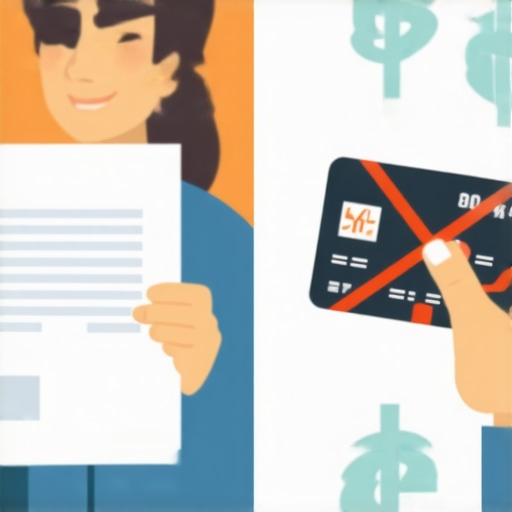
Why You Should Not Use Personal Loans to Pay Off Medical Debt
I remember the exact moment my stomach dropped into my shoes. I was sitting at my cluttered kitchen table, staring at a $12,000 bill from a three-day hospital stay that I thought my insurance had covered. Panic is a powerful motivator, and my first instinct was to ‘clean up the mess’ immediately. I thought, I’ll just grab a personal loan, pay the hospital, and have one neat little monthly payment. It sounded so responsible. It felt like I was taking control. But in reality, I was about to walk straight into a trap that would cost me thousands in interest and stripped away my legal rights as a patient. I made the mistake of thinking all debt is created equal, and it almost derailed my entire credit-building journey. Today, I want to show you exactly why that ‘quick fix’ loan is often a financial anchor and how you can protect your wallet without signing your life away to a bank.
Your Medical Debt Has Secret Protections You Just Can’t Trade Away
When you take out a personal loan to cover healthcare costs, you are essentially transforming ‘soft debt’ into ‘hard debt.’ It is like trading a library fine for a payday loan; the rules of the game change instantly, and not in your favor. Medical debt is unique in the American financial system because it comes with a built-in safety net. According to the Consumer Financial Protection Bureau (CFPB), medical debt is treated with much more leniency by credit reporting agencies than a standard loan, and most medical bills under $500 won’t even appear on your credit report. If you use a bank loan to pay those bills, you lose that protection. You’ve moved the debt from a category that is often ignored by lenders to one that is scrutinized heavily. I learned the hard way that why personal loans can be a trap for chronic overspenders and even those of us just trying to do the right thing.
Is a consolidation loan actually worth the hype for health bills?
The short answer? Almost never. Many people assume that the truth about consolidation loans and your wallet applies to every bill, but medical providers are not like credit card companies. Hospitals often offer 0% interest payment plans if you just ask, whereas a personal loan is going to hit you with an APR that could range from 7% to 36%. By taking the loan, you are literally choosing to pay interest on a debt that was likely interest-free. Plus, once the hospital is paid, you lose your leverage to negotiate a debt settlement like a professional. Have you ever felt pressured by a hospital billing department to ‘just put it on a card’ or take out a third-party loan? You aren’t alone, and that pressure is usually a sign you should do the exact opposite. Before you sign anything, you need to understand the best way to handle medical bill errors before they hit collections, because once that money is borrowed from a bank, there is no going back to the hospital to dispute a line item.
When you sign for a personal loan, you are essentially buying a product from a bank. When you owe a hospital, you are in a service dispute. Transitioning from one to the other is like trading a library book for a rented car; if you’re late with the book, they might bar you from the stacks, but if you’re late with the car, they’ll take your license and ruin your life. To avoid this, you need a tactical approach that treats medical debt as a negotiable service rather than a fixed financial obligation.
Force the Hospital to Justify Every Penny
The first rule of medical debt is that the initial bill is almost always a ‘first offer,’ not a final demand. I once spent forty-five minutes on hold just to dispute a ‘nursing fee’ that was actually supposed to be covered by the base room rate. That one call saved me $850. If I had just paid it with a loan, that $850 would have grown into $1,100 after interest. Before you even think about financing, you must demand an itemized bill. Compare every line item against your Explanation of Benefits (EOB) from your insurer. This is the foundation of the best way to handle medical bill errors before they hit collections. If you find discrepancies, don’t just call; send the method of verification letter every credit repair diyer needs to the billing department to force a formal review of the charges.

The Hospital Discount You Never Knew Existed
Non-profit hospitals are actually required by federal law to have financial assistance policies, often called ‘Charity Care.’ I’ve seen people earning $60,000 a year qualify for a 50% reduction simply because they asked for the application. A personal loan doesn’t care about your income level; it only cares about your credit score. By using debt management secrets tackle debt before it takes over, you can leverage these programs to wipe out the balance before it ever touches your bank account. If you qualify, the hospital writes off the debt, and your credit remains untouched. This is far more effective than trying to smart credit counseling how to rebuild your financial life after a high-interest loan has already started bleeding your savings dry.
Build Your Own 0% Interest Plan
Most hospitals would rather receive $50 a month for five years than $0 a month and have to pay a collection agency to harrass you. You can often set up an internal payment plan that carries zero interest. This keeps the debt ‘soft.’ It stays within the medical system and doesn’t get reported to credit bureaus as long as you stay on track. If you’re struggling with the math, look into the best interest-free methods to pay off small debts before committing to a bank’s terms. Remember, once that debt moves to a collection agency, you need to know how to handle collections without admitting ownership of the debt to protect your legal standing.
Protect Your FICO From Medical Collections
The credit reporting landscape for medical debt has changed drastically in the last few years. The three major bureaus now give you a 365-day ‘grace period’ before medical debt can appear on your report. This is a massive window of opportunity to negotiate or find how to get your credit report for free without hidden fees to monitor for any premature reporting. If you take out a personal loan, that loan appears on your report immediately, lowering your average age of accounts and potentially hurting your score before you’ve even made the first payment. Keeping the debt in the medical realm buys you time and protects your score from the ‘hard debt’ impact that banks thrive on.
I see it all the time: someone pays off a three-year-old collection account and then stares at their screen in disbelief when their score doesn’t budge—or worse, drops a few points. This is what I call the ‘Settlement Mirage.’ Most people assume that paying what you owe is the final step in the ultimate credit repair blueprint for 2025, but the logic of credit bureaus is far more cynical. Under the widely used FICO 8 model, a paid collection often carries almost the same weight as an unpaid one. It is still a derogatory mark that tells lenders you didn’t fulfill the original agreement on time. To actually move the needle, you have to be more aggressive than just writing a check.
Can you actually force a deletion after you’ve already paid?
The short answer is that it is significantly harder once the money has changed hands. You lose your primary leverage. This is why I always tell my clients to learn how to remove a paid collection from your credit history before they send a single dime to a debt buyer. You want a ‘Pay-for-Delete’ agreement in writing. If you have already paid, your best remaining bet is a goodwill letter, though these are becoming rarer as bureaus tighten their internal compliance rules. This is one of the most common top credit repair myths busted by experts in 2025: the idea that the ‘status’ of the debt (paid vs. unpaid) matters more than the ‘existence’ of the derogatory mark. To the bureau, the existence is the problem.

Another nuance that catches people off guard is the ‘Credit Counseling Stigma.’ There is a persistent myth that entering a debt management plan (DMP) is the same as filing for bankruptcy. It is not. In fact, a study published in the Journal of Consumer Affairs found that individuals who utilize professional credit counseling services are significantly more likely to see a sustained increase in their credit scores and a reduction in total debt compared to those who try to ‘DIY’ their way out of a financial crisis. However, the ‘oops’ factor here is signing up without checking the fine print. You absolutely must demand the one document you need before signing a credit counseling agreement—the fee disclosure and the ‘creditor acceptance’ list. If your specific creditors refuse to work with that agency, you are just paying for a middleman who cannot help you.
Then there is the frustration of the ‘680 Plateau.’ You have cleaned up the errors, you are paying on time, but your score just sits there. This usually happens because your ‘credit mix’ is stagnant or your utilization is high on a single card, even if your overall debt is low. Understanding why your credit score hits a plateau and how to break it involves looking at the data points lenders use that go beyond the simple 1-to-850 scale. They are looking at your ‘trended data’—whether your balances are growing or shrinking month-over-month. If you are only making minimum payments, you are telling the algorithm that you are treading water, not reaching for the shore.
I have seen so many well-intentioned people ruin their progress by closing old accounts or jumping into high-interest ‘credit builder’ products that they do not actually need. Don’t let a lack of strategy turn your hard work into a wasted effort. Have you ever fallen into this ‘paid collection’ trap or hit a plateau you couldn’t explain? Let me know in the comments, and let’s figure out where the data is sticking. Real credit counseling secrets for smarter debt management in 2025 are about the subtle moves, not the loud ones.
Once you’ve cleared the debris of old collections and corrected those nagging errors, the game shifts from defense to offense. I personally stopped using automated budgeting apps three years ago because they made me too passive. They would ping me after the damage was done. Instead, I moved back to a manual tracker because it forces a ‘mindful friction’ with my spending. If you want to know the best way to track monthly expenses without stress, it is about choosing a method that forces you to touch your data at least once a week. I use a simple, three-column spreadsheet: what I planned, what I spent, and the ‘why’ behind the purchase. This manual touch is the core of smart debt management practices for maintaining financial health, ensuring you never accidentally sleepwalk back into a high-utilization trap.
How do I keep my credit score healthy for the long haul?
Maintenance isn’t about doing more; it is about doing the right things consistently. I live by the 15/15 rule for paying off credit card balances effectively. By making two small payments a month—one 15 days before the statement closing date and one 3 days before—you significantly lower your reported utilization. This prevents the ‘utilization spike’ from ever hitting the bureaus, regardless of how much you charge during the month. It is a level of precision that most people ignore, but it is exactly how to get your credit score to 800 and beyond. You aren’t just paying a bill; you are managing the specific snapshot the bank takes of your financial life.

We are also entering an era where ‘alternative data’ is becoming the new gold standard for lenders. According to the Consumer Financial Protection Bureau’s 2023 report on the credit reporting market, lenders are increasingly looking at your cash-flow data and utility payments to supplement traditional scores. This means the future of credit building isn’t just about what you owe, but how you manage your entire liquid ecosystem. However, be wary of the tools you use to bridge this gap. The truth about credit score monitoring apps and privacy is that many of these ‘free’ tools are actually data-harvesting machines selling your profile to the highest bidder. I predict that within the next two years, your ability to ‘opt-out’ of data sharing will be just as important to your score as your payment history.
If you are serious about moving past the ‘repair’ stage and into true financial scaling, I want you to try one thing this month: implement the 15/15 rule for just one of your credit cards. Watch your mid-month score and see how the algorithm reacts when you take away its ability to see a high balance. It is the single most effective way to force the system to treat you like a VIP borrower without spending an extra dime in interest.
The Truth About Why Paying Off Debt Sometimes Feels Like Failing
Reflecting on my own journey, the biggest lightbulb moment was realizing that a ‘paid’ mark is just a status update, not a deletion. I spent months thinking that simply clearing the balance would fix everything, but I didn’t understand the reason your high-interest debt isnt moving despite payments until I looked at the actual reporting dates. Another hard lesson? Not all help is equal. You have to be incredibly careful with how to handle a collection agency that keeps selling your debt because every time it moves, it resets your stress level. Data consistency is often more important than the dollar amount when you are in the middle of a recovery.
#IMAGE_PLACEHOLDER_E#
My Secret Weapons for Rebuilding from Zero
If I had to start over tomorrow with a maxed-out card and a hospital bill, I would focus on three specific things. First, I would never pay for a credit report; I would use the official channels for how to get your credit report for free without hidden fees to ensure I’m seeing exactly what the lenders see. Second, I would strictly follow the logic behind the 15/15 rule for credit card payments to keep my utilization under the radar of the big bureaus, even if I’m still paying off the hospital. Finally, I would keep a physical ledger of every ‘goodwill’ call I made—names, dates, and badge numbers are your only real shield against aggressive billing departments.
Take Back the Reins of Your Financial Story
You are more than a three-digit number, and your healthcare needs should not be a life sentence of high interest. By choosing to keep your medical debt within the hospital system and using effective credit repair techniques for a fresh financial start, you are protecting your future self from the ‘hard debt’ trap. It takes patience, but the moment you see that score jump without having to sign away your rights to a bank, you will know it was worth the effort. Smart debt management is a marathon, not a sprint, and you have already taken the most important step by educating yourself. Have you ever felt pressured by a hospital to take out a credit card or a loan on the spot? Let me know in the comments below!