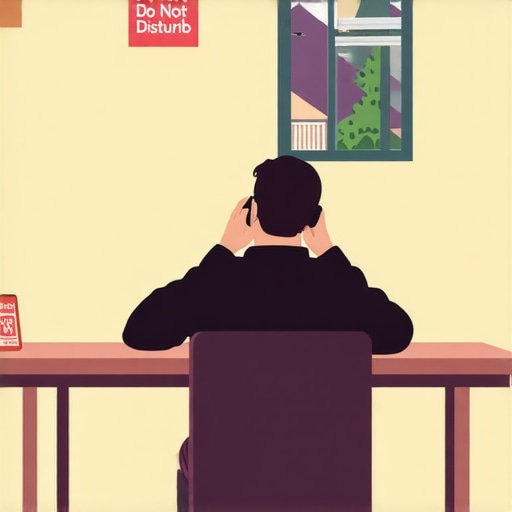
How to Legally Stop Debt Collectors from Contacting Your Job
I’ll never forget the cold sweat that broke out on my forehead when my office phone rang for the third time in an hour. It wasn’t a client. It wasn’t my boss. It was a debt collector named ‘Steve’ who had decided that my cubicle was the best place to discuss my past-due bills. I felt like a criminal in a room full of professionals. That moment of pure, unadulterated shame was my rock bottom. If you’ve ever jumped when the office phone rings, wondering if today is the day your personal financial mess goes public, I’ve been right where you are. I used to think that if I just ignored the calls, they’d eventually get the hint. Spoiler alert: they don’t. But here is the good news: I learned that you have significantly more power than they want you to believe. Today, I’m going to show you exactly how to shut that down—legally and permanently. We aren’t just talking about hiding; we’re talking about using the law to build a wall between your debt and your paycheck.
Your Desk Is Not a Collection Agency
Back when I was drowning in bills, I made the classic mistake of thinking I had to ‘play nice’ to keep them from calling my boss. I spent hours trying to use debt management tips to navigate financial challenges successfully while my heart was racing at 100 miles per hour. I didn’t realize that by just talking to them without a strategy, I was potentially falling for 5 dirty tactics debt collectors use to restart the clock. You need to understand that your workplace is for your livelihood, not for their harassment. By learning credit counseling insights to avoid common pitfalls in debt management, you can reclaim your peace of mind. We are going to implement a boundary that keeps your professional reputation intact while you sort out the numbers. Have you ever had a collector call your workplace and felt that immediate pit in your stomach?
Will Telling Them to Stop Make Everything Worse?
This is the biggest fear I hear from people, and it is the exact same fear that kept me silent for months. I worried that if I told them to stop calling my work, they would just sue me immediately. However, the law is actually on your side here. According to the Federal Trade Commission, under the Fair Debt Collection Practices Act (FDCPA), debt collectors are generally prohibited from contacting you at your place of employment if they know or have reason to know your employer prohibits such communications. It is not a polite request you are making; it is a legal mandate they must follow. Before we dive into the specific scripts to use, you must know how to handle collections without admitting ownership of the debt, because saying the wrong thing during a workplace call can give them ammunition they don’t deserve. Let’s look at the actual steps to get them off your office line for good.
Shut Down the Workplace Calls Instantly
The first time I successfully stood up to a collector, my hands were shaking so hard I almost dropped the receiver. ‘Steve’ had called again, and I could feel my supervisor’s eyes on the back of my neck. Instead of apologizing, I used the magic phrase: ‘My employer does not permit me to receive these calls. Do not call me here again.’ He tried to pivot, asking when a better time would be, but I didn’t engage. I simply repeated the sentence and hung up. Under the FDCPA, once you inform them—even verbally—that your employer prohibits these calls, they are legally required to stop. It is like a digital restraining order for your desk phone. However, a verbal request is just the first layer of paint. To make it permanent, you need to follow up with a written notice. This is a core part of mastering debt management proven strategies for financial freedom because it stops the immediate bleeding of your professional reputation.
Create a Paper Trail That Collectors Fear
If you really want to sleep at night, you need a paper trail. Think of a ‘Cease and Desist’ letter as a physical wall between you and the harassment. When I finally sent mine via certified mail, the silence was deafening in the best way possible. You don’t need a lawyer to write this; you just need to state clearly that they are to stop contacting you at your place of employment. By using effective credit repair techniques for a fresh financial start, you start documenting every interaction. If they call again after receiving that letter, they aren’t just being annoying—they are breaking federal law, and you could potentially sue them for statutory damages. This shift in power is one of the biggest debt management secrets to tackle debt before it takes over. When they realize you know your rights, you stop being a ‘victim’ and start being a ‘litigation risk.’
Verify Every Penny Before You Negotiate
Once the phones go quiet, the real work begins. Never, ever start a payment plan just because the calls stopped. You must first learn how to verify debt without getting sued. I once discovered that a collector was trying to charge me $1,200 for a medical bill that had already been covered by my insurance. If I had just paid to make them go away, I would have set my finances back months. This is why you should never pay a collection agency before getting this letter of validation. Demand to see the original contract and a breakdown of every fee. It’s like checking the receipt at a restaurant; you wouldn’t pay for a steak you didn’t eat, so don’t pay for ‘zombie debt’ that isn’t yours. While you are cleaning this up, you should also look into how to repair credit fast with essential tips for better scores so that when the debt is finally settled or removed, your score is ready to bounce back.Most people think that ‘cleaning up’ their credit is a simple matter of paying off every negative item. However, there is a nuance that even some ‘pros’ miss: the age of the debt matters more than the balance. Everyone says you should settle every collection immediately, but in my experience, settling a six-year-old debt can sometimes do more harm than good for your immediate score. This happens because most lenders still use FICO 8, which doesn’t ignore paid collections. When you make a payment on a ‘zombie’ account, you risk updating the ‘date of last activity,’ which can make an old mistake look like a brand-new default to the scoring algorithm. This is one of the top credit repair myths busted by experts in 2025. You have to decide if the peace of mind of being debt-free is worth a potential 20-point dip while you’re in the middle of a mortgage application. 
Stop Clicking the Easy Button
One of the biggest traps you will face is the ‘Easy Dispute’ button found on popular credit monitoring apps. It feels like progress, but it is often a setup. When you use those built-in tools, you are frequently opting into an automated system that limits the documentation you can provide. More importantly, you might unknowingly waive your right to re-dispute or appeal the findings under the Fair Credit Reporting Act. This is exactly why you should never use the easy dispute button on credit apps. If you want real results, you need a method that forces a human to look at your file. Learning the bureau tactic that forces a manual review without a lawyer is how you actually win against the big three bureaus.
Why Did My Score Drop After I Paid Off the Debt?
This is the question that haunts people who are trying to do the right thing. You send a check for $500, the account shows as ‘Paid,’ and your score falls off a cliff. Why? It usually comes down to ‘re-aging’ or the loss of credit mix diversity. If that was your only installment-style debt, closing it can hurt your score’s balance. According to a study by the Consumer Financial Protection Bureau (CFPB), automated systems often struggle to accurately reflect the nuanced history of settled accounts, leading to ‘suppressed’ scores for months after a payment is made. You might also find that the truth about debt management plans and your credit score is more complex than a simple ‘up or down’ movement.
The Hidden Cost of Moving Money Around
I often see people trying to ‘hack’ their way out of debt by opening three new cards to transfer balances. While there is a right way to manage this, many people just end up with more available credit that they eventually max out again. This is where credit counseling secrets for smarter debt management in 2025 come into play—it is about changing the behavior, not just the interest rate. Before you sign anything, make sure you have the one document you need before signing a credit counseling agreement. Have you ever fallen into this trap where you thought you were helping your score, only to see it drop? Let me know in the comments.If you are waiting for an app to fix your life, you are going to be waiting a long time. I realized early on that my most valuable tool was not a subscription; it was a simple accordion folder. Inside, I keep every single certified mail receipt and every response from the bureaus. This is the foundation of effective credit repair techniques for a fresh financial start. When you have physical proof that a bureau received your letter on a specific Tuesday, their 30-day clock becomes a legal ticking bomb that works in your favor.
Stop Trusting Apps and Start Using a Physical Paper Trail
Most people think they are being ‘tech-savvy’ by using online portals, but you are actually surrendering your rights. I personally use the method of verification letter every credit repair diyer needs because it forces the bureaus to reveal the actual human—or lack thereof—who verified the data. This is how you catch them in a lie. I also shifted my banking to a community institution because why your local credit union is better for debt consolidation is not just a theory; they look at the person, not just the FICO number. 
How Do I Keep My Score High Without Obsessing Over It?
Maintenance is where most people fail. They get the score up, then they go back to old habits. I use what I call the ’15/15 Rule.’ I make a payment 15 days before my statement closing date and another 15 days later. This is the 15-15 rule for paying off credit card balances effectively, and it ensures my utilization is always reported as low, even if I am using the cards daily. It is part of smart debt management practices for maintaining financial health. If you are not seeing progress, you might be ignoring the reason your high-interest debt isn’t moving despite payments, which is often just poor timing of your transfers.
What the New Wave of AI Scoring Means for Your Wallet
We are entering the era of FICO 10T. According to the official FICO technical briefs, this model uses ‘trended data,’ which means the bureaus are now looking at your behavior over the last 24 months, not just where you stand today. If you used to carry high balances but recently paid them off, the old models see a hero, but the new models might still see a risk. This is why you need the ultimate credit repair blueprint for 2025. In the near future, I predict that ‘alternative data’ like your utility bills and streaming subscriptions will be mandatory for a top-tier score. That is why your monthly rent should be on your credit report starting right now. Do not fall for the flashy ads; learn how to spot a credit repair scam before you pay a dime. Try this today: find your statement closing date on your last bill and make a payment three days before it hits. You will be shocked at the score jump next month.
Hard Truths About Debt the Collectors Pray You Never Learn
Reflecting on my own journey, the biggest ‘lightbulb moment’ was realizing that the shame I felt was their most effective weapon. Once I understood my rights, the fear evaporated. I learned that the system isn’t designed to be fair; it’s designed to be efficient, and you have to be the squeaky wheel to get your records corrected. Also, remember that a high credit score is a tool, not a trophy—don’t sacrifice your mental health just to see a number jump ten points overnight. Finally, I learned that the method of verification letter every credit repair diyer needs is more powerful than any automated dispute button because it forces a level of accountability that simple clicks cannot match.
My Personal Arsenal for Financial Recovery
I didn’t get out of the hole using fancy AI apps; I did it with a few key resources. First, I always recommend the Consumer Financial Protection Bureau (CFPB) Complaint Portal; it is the ultimate ‘big stick’ to use when a bureau ignores your valid disputes. Second, get a physical accordion folder. Digital files are convenient, but a stack of certified mail receipts is undeniable proof in a legal setting. Third, before you pay a single cent to a collector, make sure you know how to verify debt without getting sued. These tools shifted me from being a target to being a person in total control of their financial narrative.
Your Path to a Debt-Free Future Starts Today
The calls can stop, the scores can rise, and the weight on your shoulders can finally lift. It all starts with one small, documented step. By mastering credit building proven strategies for a strong financial future, you are not just fixing a number; you are building a permanent wall of protection around your livelihood. Keep implementing smart debt management practices for maintaining financial health and applying effective credit repair tips to boost your score today. You have the knowledge and the law on your side—now it is time to use them. Have you ever had a debt collector cross the line with your employer or family? Let me know your story in the comments below.