
The Phone Script That Can Drop Your Credit Card APR in 10 Minutes
I remember sitting at my kitchen table, staring at a statement with a 24.99% APR. I felt like I was running on a treadmill that was slowly speeding up while I was losing my breath. Every single month, more than half of my payment was swallowed by interest. It was a vicious cycle. But then, I learned that banks are surprisingly desperate to keep you as a customer. I picked up the phone, read a simple script, and chopped my rate by a massive 6%. Today, I want to share that exact script with you so you can stop bleeding cash to high interest rates. You can actually do this in under ten minutes, and it is easily one of the most effective smart debt management practices you can implement today. Let us get your interest rates down so your payments actually start shrinking your principal balance.
Stop Giving Banks Your Hard-Earned Money for No Reason
We tend to treat our credit card agreements like they are carved in stone. They are not. If you have been paying your bills on time, you hold far more leverage than you realize. According to a study by CreditCards.com, over 70% of credit card holders who asked for a lower interest rate actually got one. Yet, almost nobody asks. Why? Because we are intimidated by the automated phone trees and the fear of rejection. Early on in my journey, I made the massive mistake of assuming my bank would just automatically reward my loyalty with better rates. Spoilers: they did not. If you do not ask, the answer is always no. If you want to break out of the minimum payment cycle, you have to initiate the conversation.
Is it really possible to lower my APR with just a quick phone call?
It sounds too good to be true, but it is incredibly realistic. Credit card companies spend hundreds of dollars in marketing to acquire a single customer. They do not want to lose you to a competitor, especially if you have been working hard on building credit from scratch and keeping your account in good standing. Have you ever stared at your monthly statement and felt completely powerless against those soaring interest rates? Tell me your experience in the comments below. Let us talk about exactly what to say to the agent on the other end of the line so you can walk away with a lower rate.
Step Up and Pitch Your Case Like a Professional Negotiator
To get your credit card issuer to lower your rate, you must treat the call like a business meeting, not a confession. Think of it like a cell phone provider; if you threaten to cancel your service, they magically find a hidden discount. Credit card companies operate under the same pressure. Before you dial, grab a pen and paper. I remember the first time I tried this on my oldest active credit card. My palms were sweating, and my voice cracked slightly when the agent answered. I stumbled through my words, but despite my messy delivery, the bank still knocked 4% off my rate simply because I had the data to back up my request. Ready to make the call? Let us walk through the exact steps to ensure you win this conversation.
Know Your Numbers Before You Dial
Before making contact, you need to know exactly where you stand. Open your account portal and note your current APR, your payment history, and how long you have been a customer. If you have been focused on mastering credit building, your score has likely improved since you first opened the card. This is your leverage. Additionally, search for competitor offers. Find two or three credit cards offering lower introductory rates or lower ongoing APRs. Write these down. When you call, you are not begging; you are negotiating with alternative options in your hand.
Use This Exact Script to Guide the Conversation
When the customer service representative answers, do not ask to speak to a supervisor immediately. Start friendly. You can say: ‘Hi, I love using this card, but I have noticed my interest rate is quite high compared to other offers I am receiving. I want to keep using your card, but I need to get my APR lowered to match competitor rates.’ If they give you a standard corporate rejection, do not hang up. This is where you bring out your data. Mention your history of on-time payments, your improved credit profile, and the specific competitor offers you found. If they still refuse, politely ask to be transferred to the retention department. Retention agents have much higher authority to grant rate reductions because their entire job is to keep you from closing your account.
What to Do If the Bank Says No
Sometimes, even with the perfect script, the initial answer is a hard no. Do not let this discourage you. If they refuse to budge, ask them what specific criteria you need to meet to qualify for a rate reduction in the future. Often, they will tell you to call back in three to six months after maintaining a certain payment pattern. In the meantime, you can look into alternative debt management secrets to help you lower your interest costs. For instance, you can research the right way to use a balance transfer to move your high-interest balance to a temporary 0% APR card, which buys you time to pay down the principal without bleeding cash every single month.
The Deceptive Trap of Credit Repair Mytheology
Most consumers are told that credit repair is a simple, quick-fix process where you can dispute every negative mark and watch your score skyrocket instantly. While disputing genuine errors is highly recommended, falling for the top credit repair myths busted by experts in 2025 will quickly derail your financial progress. A common piece of advice is to hire a company to wipe away your entire negative history. The reality is that legally accurate negative items cannot be permanently erased, and attempting to spam credit bureaus with generic dispute letters often backfires. Experian, Equifax, and TransUnion use automated scanning systems that flag identical, bulk-submitted letters as frivolous. If you try to take a shortcut, you might find your disputes summarily rejected, forcing you right back to square one.
Why does my score sometimes drop after paying off a major balance?
It is incredibly frustrating when you work tirelessly to clear your debt, only to watch your score plummet. This happens because of a nuance in credit scoring algorithms. If you paid off and closed an account, you shortened your average age of accounts and reduced your available credit pool. In other cases, paying a collection agency can sometimes trigger a temporary drop depending on how the account status is updated. This is why you must understand why your credit score drops after a perfect payment history before making major strategic moves. Have you ever fallen into this trap where your score went down after you did everything right? Let me know in the comments below.
Stop Falling for the Easy Button on Your Credit App
One of the most dangerous modern mistakes is using the quick dispute buttons integrated directly into credit monitoring apps. These tools make disputing a collection or late payment look as simple as order tracking, but they usually strip you of your legal rights under the Fair Credit Reporting Act (FCRA). According to consumer advocacy studies, using these digital portals often forces you to waive your right to sue the bureau if they fail to properly investigate your claim. 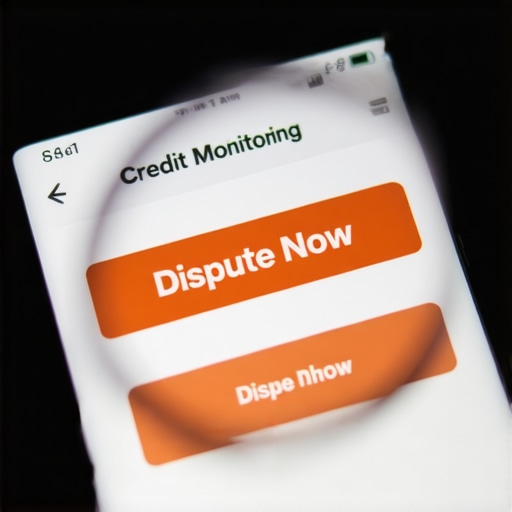 Always choose to send written, certified validation letters instead of clicking that convenient button. If you want to protect your financial health, you have to prioritize long-term safety over a five-minute convenience. By avoiding these advanced traps, you will keep your credit trajectory pointing upward.
Maintain Your Financial Trajectory with the Right Diagnostic Tools
Once you have bypassed the generic pitfalls of credit repair and successfully negotiated your interest rates down, your focus must shift from active damage control to automated maintenance. I spent years checking my reports manually, dreading the tedious process, until I designed a streamlined diagnostic system. To keep your credit health in top shape, you need accurate data feeds. I personally recommend using the official annual credit report portal to download your raw data, and then pairing it with a secure, read-only tracking system like pocketguard or YNAB. These tools allow you to closely monitor your debt payoff without sharing sensitive authorization details with aggressive marketing platforms. My personal favorite tool for daily use is a simple, customized spreadsheet where I track my credit utilization across all active lines. Keeping this sheet updated takes less than five minutes a month, but it completely removes the guesswork from smart debt management practices.
How do I maintain my credit score and debt-free progress over time?
Maintaining your score requires a shift from active building to passive monitoring. You must automate your minimum payments to ensure you never suffer a late payment penalty, while manually executing your accelerated payment strategies. I strongly recommend adopting the 15/15 rule for paying off credit card balances effectively. By splitting your monthly payment into two smaller payments every 15 days, you reduce your average daily balance, which directly lowers your reported utilization and keeps your score highly resilient against sudden changes. Additionally, you must perform a routine audit of your credit files. I recommend running the 3-step review for your annual credit report at least twice a year to verify that no erroneous public records or obsolete collection accounts have resurfaced.
The Future of Credit Scoring and Smart Automation
Looking ahead, the landscape of credit and debt management is shifting rapidly toward predictive machine learning. According to industry insights from the Fair Isaac Corporation (FICO) technical documentation on the FICO Score 10 T model, credit scoring is moving away from static snapshots and focusing intensely on historical trended data. This means that credit bureaus are now looking at your financial trajectory over a rolling 24-month period rather than just your current month’s utilization. If you struggle with inconsistent monthly payments, this shift could penalize you even if your overall debt remains stable. This trend makes mastering credit building hacks more critical than ever. To stay ahead of these algorithmic updates, you must build a consistent, highly predictable payment history that signals absolute stability to underwriting models.

If you want to protect your financial profile as these new systems roll out, you should avoid opening too many lines of credit simultaneously. Unnecessary inquiries will trigger red flags under the new trended data models, which interpret rapid credit acquisition as a sign of financial distress. Instead, focus on optimizing your existing lines. Try picking up your phone today and calling your credit card issuer to request a simple, soft-pull limit increase using the exact script for requesting a credit limit increase. This single action will instantly lower your overall utilization ratio, giving you a safe and robust cushion against the upcoming algorithmic shifts without adding any hard inquiries to your report.
When I finally got honest with myself about my balances, I realized that ignoring those high rates was costing me thousands of dollars in passive wealth. The banks are counting on your silence. By using the scripts and strategies we have discussed, you can shift the balance of power back to where it belongs: in your hands.
The Hardest Lessons I Learned on My Own Credit Journey
When I first started managing my own debt, I made nearly every mistake in the book. Here are the hard-won insights I wish someone had shared with me when I was struggling:
- Paying on time is only half the battle: I used to think a perfect payment record was a golden ticket. In reality, if you keep your balances high, your high utilization rate will still choke your score.
- Bureaus are not consumer advocates: Credit bureaus are private businesses that package your data for lenders. They do not exist to help you, which is why learning why your dispute letter got rejected by the credit bureau is critical to successfully defending your rights.
- Automated tools are designed for speed, not results: Clicking the quick dispute buttons on popular tracking apps is incredibly tempting. However, you should understand why you should never use the easy dispute button on credit apps because it often waives your right to a full investigation.
- Interest is a negotiable fee: I spent years believing the APR on my statement was permanent. Once I realized the bank would rather lower my rate than lose me to a competitor, my entire approach to debt changed.
My Essential Financial Toolkit for Masterful Debt Management
You do not need to hire expensive agencies to repair your credit or manage your debt. Instead, rely on these proven resources to do the heavy lifting yourself:
- MyFICO Forums: This is a goldmine of real-world consumer experiences. You can find active threads where people share exactly which phone numbers to call for credit limit increases and goodwill deletions.
- The AnnualCreditReport Portal: This is the only federal-mandated source for downloading your complete credit files for free. Use it alongside the 3-step review for your annual credit report to systematically clean up old errors.
- The 15/15 Payment Strategy: Instead of making one monthly payment, use the 15/15 rule for paying off credit card balances effectively. It is a completely free strategy that naturally lowers your reported credit utilization.
- Certified Mail Templates: When disputing errors, skip the online forms. Draft physical dispute letters and send them via certified mail to maintain a legal paper trail.
Take Back Control of Your Financial Future Today
Reclaiming your financial health does not happen overnight, but it does start with a single, decisive action. Whether you pick up the phone today to negotiate your APR down by 3% or sit down to draft a physical dispute letter to clean up your credit file, every small step builds momentum. You do not have to accept high interest rates as a permanent part of your life. By applying these smart debt management practices, you are laying the foundation for true, lasting wealth.
Have you ever tried calling your bank to ask for a lower interest rate, or did they give you a hard rejection? Let me know in the comments below, and let us talk through your next best move!