
The Specific Way to Get Your Utility History Reported
I stood in my kitchen three years ago, staring at a stack of paid-off electric and water bills, feeling like a total chump. I had been paying these faithfully for five years, yet my credit score was sitting as still as a parked car. It felt like I was shouting into a void where my financial responsibility just didn’t exist. If you’ve ever felt that sting of being a “perfect payer” without the rewards to show for it, you’re in the right place. Today, I’m going to show you the exact steps to stop being invisible to the bureaus and finally get those utility payments on your record.
Stop Letting Your On-Time Utility Payments Go to Waste
The biggest mistake I made early on was assuming that my local gas company cared about my credit health. I actually called them up once and asked them to “report my good behavior.” The customer service rep actually laughed. It turns out, most utility companies aren’t set up to report positive data; they only report when you default. That’s a one-way street I wasn’t interested in driving down anymore.
But here is the good news: the landscape has changed. You no longer have to wait for a bank to notice you. By leveraging specific reporting tools, you can bridge the gap between your bank account and your credit file. This is a core part of mastering credit building, especially if you’re tired of the slow-and-steady approach that takes decades. We aren’t just talking about a couple of points here; we’re talking about legitimizing your entire financial history.
Is this just another gimmick that won’t actually work?
I get the skepticism. I’ve seen enough “hacks” to last a lifetime. However, data from Experian shows that millions of consumers who use tools to track utility data see an immediate impact on their profiles. In fact, Experian reports that the average user sees an increase of 13 points to their FICO Score 8 almost instantly. While that might not sound like a lot, for someone trying to move from “fair” to “good,” those 13 points are the difference between a high interest rate and a manageable one. It’s often more effective than the real reason a credit builder loan might not be helping you as much as you think.
Have you ever checked your report and felt like your years of responsible living were being ignored? I certainly have. That’s why we’re going to dive into the specific services—both free and paid—that act as the middleman between your light bill and your FICO score. We will also look at the truth about rent reporting services because, let’s be honest, if you’re paying for the roof over your head, you deserve the credit for it. It is time to make your monthly expenses work for you instead of just draining your bank account.
Turn Your Bank Statements into Credit Power
Think of your credit report like a high school GPA. For years, the only things that counted toward your grade were the massive, high-stakes final exams—things like mortgages, car loans, and credit cards. Your ‘extra credit’—the on-time utility and cell phone payments you made every single month—was completely ignored. Using a reporting service is the equivalent of finally convincing the teacher to count your homework. It’s the fastest way to add positive data to a thin file without taking on new debt. This is a vital component of mastering credit building because it leverages your existing habits rather than forcing you to spend more money.
Connect Your Accounts Without the Headache
The first step in this process is creating a bridge between your financial institution and the credit bureau. Most people start with free tools provided directly by the bureaus. When I first tried this, I was incredibly skeptical about security. I remember sitting at my laptop, hovering my mouse over the ‘Connect’ button for ten minutes. I eventually bit the bullet, and here is the reality: these services use encrypted, read-only access. They aren’t ‘logging in’ as you; they are essentially taking a snapshot of your transaction history to verify that ‘City Water & Power’ received a payment from you on the 15th of every month. Before you start, make sure you know how to get your credit report for free without hidden fees so you can see your ‘before’ score clearly.
Hand-Pick the Bills That Actually Help You
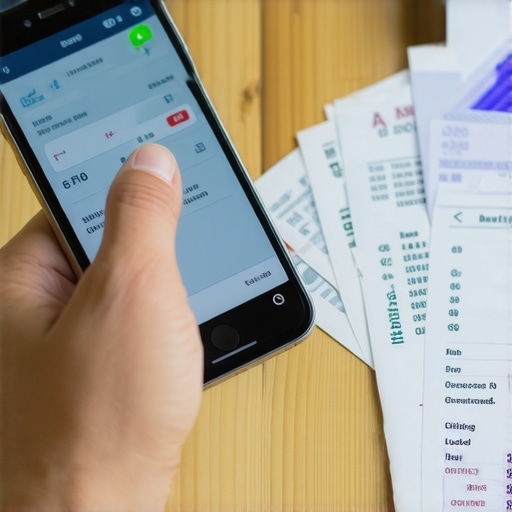
Not every transaction is a winner. The beauty of these reporting tools is that you get to play editor. When I linked my main checking account, the system pulled up everything: my electric bill, my water bill, my Netflix subscription, and even my trash pickup. However, it also caught a late payment from two years ago on a gym membership I’d forgotten to cancel. I simply unselected that one. You only want to report the bills with a flawless track record. This is why it’s one of the most effective credit repair tips to boost your score today; you are essentially filtering your history to show only your best moments. I’ve even seen cases where how a 5 dollar subscription can fix your credit mix instantly by proving you can handle recurring monthly obligations.
Navigate the Verification Maze Like a Pro
The technical side can be a bit messy. I once spent an entire afternoon frustrated because my gas bill wasn’t showing up in the ‘eligible’ list. It turns out, the name on my utility account was ‘J. Smith’ but my bank account and credit file said ‘Jonathan Smith.’ The system couldn’t verify the link. If you run into this, you may need to call your utility provider to update your profile name to match your legal ID. It sounds like a small detail, but it’s the difference between a 15-point jump and a ‘no data found’ error message. Getting these details right is as important as the trick to lowering your car payment without refinancing your loan—it’s all about working the system’s internal logic to your advantage. Once that link is established, the bureau will continue to monitor that payment every month, giving you a ‘thicker’ file and a more resilient score.
While adding your utility bills is a fantastic first step, there is a level of nuance most ‘experts’ completely gloss over. I used to think credit was a monolithic block—one score to rule them all. But here is the reality: your credit profile is more like a multifaceted gem, and different lenders look at different sides. If you are serious about this, you need to understand that simply ‘reporting more’ isn’t always the silver bullet. It is about understanding the mechanics of how that data is weighted. This is a key part of credit counseling insights to avoid common pitfalls in debt management that often get ignored in basic tutorials.
Why Settling Old Collections Doesn’t Always Raise Your Score
Everyone tells you that paying off your debts is the only way to fix your credit. In a moral sense, sure. But in the cold, hard world of FICO algorithms? It is more complicated. I’ve seen people scrape together their last thousand dollars to pay off a five-year-old collection account, only to see their score drop the next month. It feels like a slap in the face. The reason? On older scoring models, paying a collection updates the ‘Date of Last Activity,’ which can make an old, fading mistake look like a brand-new problem to the algorithm. Before you send a dime, you need to know why you should never pay a collection agency before getting this letter. Understanding the difference between a charge-off and a write-off on your report is also vital before you start negotiating settlements.
Which FICO Models Actually Care About Your Electric Bill?
Here is the advanced secret: not every credit score version treats your utility data the same. While Experian Boost and similar tools help your FICO Score 8—the one most commonly used for credit card decisions—many mortgage lenders still use older versions like FICO 2, 4, or 5. Those older models are ‘blind’ to utility reporting. According to research by the Consumer Financial Protection Bureau (CFPB), newer models like FICO 9 and VantageScore 3.0 are much more ‘utility-friendly,’ but the industry moves slow. If you are preparing for a home loan, don’t rely solely on your phone bill to get you there. You’ll need a more robust strategy, such as the ultimate credit repair blueprint for 2025, to ensure your profile is solid across all versions. Have you ever fallen into this trap of thinking one score fix covers everything? Let me know in the comments.
Don’t Reset the Clock on Your Old Debts
The most dangerous ‘oops’ factor I see involves the statute of limitations. In many states, a debt collector can only sue you for a certain number of years. However, if you make even a tiny ‘good faith’ payment or sometimes even just acknowledge the debt in writing, you can ‘restart the clock.’ This gives a zombie debt collector a fresh window to garnish your wages. It is one of the top credit repair myths busted by experts in 2025—the idea that any payment is a good payment. Instead, you should focus on how to negotiate a pay-for-delete deal with scrappy debt buyers to ensure that once the money leaves your hand, the negative mark actually disappears. You must also be aware of the hidden dangers of pay-for-delete agreements you should know, as some collectors will promise the world and deliver nothing once they have your cash.
Ultimately, credit building is about leverage. Whether you are building credit from scratch or trying to recover from a disaster, the goal is to make every dollar of your monthly expenses—from Netflix to your mortgage—work in your favor. If you’re feeling overwhelmed, remember that credit counseling secrets for smarter debt management in 2025 are all about precision, not just volume. Stop playing defense with your finances and start playing offense.
Once those initial points hit your report, the real challenge begins: not letting them slip away. I used to think of credit repair as a one-time project, like painting a room. You do the work, you step back, and you’re done. But after years of trial and error, I’ve realized it’s more like keeping a garden. If you stop weeding, the debt collectors and reporting errors will eventually crawl back in. This is why smart debt management practices for maintaining financial health are just as important as the initial boost. You need a system that ensures your hard-earned progress doesn’t evaporate because of one missed notification.
How do I maintain my credit score over the long haul?
Maintenance is all about automation and oversight. Personally, I use a combination of automated alerts and a ‘monthly audit’ where I spend fifteen minutes scanning my report for anomalies. I don’t rely on the flashy, colorful scores provided by banking apps because they often use different algorithms than what a lender sees. Instead, I focus on the best way to track monthly expenses without stress by using tools that categorize my spending in real-time. This prevents the ‘utilization creep’ that happens when you’re not looking. If you see your balances rising, you can pivot before the reporting date, which is the best time of month to pay your balance for a score boost.
The Technical Edge Most People Miss
If you want to play in the big leagues of credit, you have to understand the ‘Metro 2’ format. According to the Consumer Data Industry Association (CDIA), Metro 2 is the standard language used by all major bureaus to receive data. Why does this matter to you? Because small inconsistencies in how your name or address is formatted can cause your ‘utility boost’ to detach from your primary file. It’s the reason the step-by-step way to handle a wrong name on your credit report is so critical—if the data doesn’t match the Metro 2 requirements perfectly, the algorithm might ignore your positive payments entirely. I’ve found that using a dedicated password manager to store my exact address formatting (down to the ‘Apt’ vs ‘#’ sign) ensures consistency across every utility and credit provider I use.

As we look toward the next few years, I predict we will see a massive shift toward AI-driven credit scoring that looks at ‘lifestyle data’ far more than just loans. We are already seeing this with the inclusion of phone bills, but soon, your grocery spending habits or even your professional stability might play a role in your FICO score. This makes mastering credit building more about holistic financial health than just playing with a credit card. If you are just starting, follow the step-by-step guide to credit building for new borrowers to lay a foundation that can withstand these technological changes. My advice? Log into your Experian or TransUnion portal tonight and verify that your personal information is 100% consistent across every linked account. It’s a five-minute fix that protects your future borrowing power.
Lessons Learned from My Three-Year Credit Experiment
After years of tweaking my own profile, I realized that utility reporting is only as good as the data you feed it. First, never link an account where you’ve had a ‘hiccup’ in the last 24 months; the algorithm remembers the bad as clearly as the good. Second, I learned that name mismatches are the number one reason these tools fail, so double-check your utility bill against your ID. Third, don’t ignore the importance of smart debt management practices for maintaining financial health because a high score is useless if your debt-to-income ratio is out of whack. Finally, I discovered that effective credit repair tips to boost your score today often involve doing less, not more—like letting old, positive accounts age naturally while you focus on reporting new utility data.
The Minimalist Toolkit for Credit Success
I don’t believe in overcomplicating things. I rely on three main pillars: Experian Boost for the quick utility wins, a solid password manager to keep my address formatting identical across all bills, and the ultimate credit repair blueprint for 2025 for a long-term roadmap. I also highly recommend digging into credit counseling secrets for smarter debt management in 2025 to learn how to handle lenders who play hardball. These tools aren’t just about numbers; they are about giving you the peace of mind that comes with knowing exactly where you stand before you apply for a major loan.
Your Future Self Will Thank You for Starting Today
You’ve spent years paying for electricity, water, and internet without getting a single ounce of credit for it. It’s time to change that narrative. By following these steps and focusing on mastering credit building, you are taking back the power from the bureaus and making your everyday life count toward your financial freedom. Don’t wait for the perfect moment—start by checking one account tonight and seeing what a difference a few on-time payments can make. Have you ever tried to add a non-traditional bill to your credit report, and did it actually move the needle for you? Let me know your experience in the comments below!