
Why You Should Dispute the Same Error More Than Once
I remember sitting at my kitchen table, staring at a ‘Verified’ letter from a credit bureau while holding the very receipt that proved them wrong. It felt like shouting into a void. I had done everything right—I found the error, sent the letter, and waited thirty days—only to be told that my reality did not match their database. I almost threw the paper in the trash and accepted a life of mediocre interest rates. I made the classic mistake of thinking the bureaus were infallible, and I let that paid collection sit there for an extra year because I was too tired to argue. Today, I am going to show you why that first ‘No’ is usually just a hurdle, not a wall, and how you can actually win by being the squeakiest wheel in the room.
The Day I Realized the System is Built on Automation
Early in my journey, I believed that when a bureau verified a debt, a human being had actually picked up a phone or looked at a file. The truth is much more mechanical. Most disputes are processed through a system called e-OSCAR, which reduces your complex financial history into a two-digit code. When I first started looking into the most common credit report errors and the fixes, I realized that my evidence was likely never seen by a pair of human eyes. My biggest mistake was assuming the process was fair. It is not fair; it is efficient. If you have been struggling with how to dispute a debt you already paid, you have to understand that the system is designed to favor the status quo until you prove you are not going away. According to a study by the Federal Trade Commission, as many as one in five consumers have an error on at least one of their credit reports. If the bureaus fixed everything on the first try, those numbers would be much lower.
Is it actually worth fighting the same battle twice?
You might be thinking that sending another letter is just a waste of a stamp. I get it. The frustration is real. However, the law is on your side. The Fair Credit Reporting Act (FCRA) requires bureaus to conduct a reasonable investigation. Often, a second or third dispute—especially when you provide different angles or more specific documentation—forces a more thorough review than the first automated pass. Have you ever received a ‘verified’ response for an error you knew was wrong? Tell me about that frustration in the comments below—I have been there too, and it is the worst feeling.
Why You Cannot Take No for an Answer
When I finally decided to resubmit my dispute, I changed my strategy. Instead of just saying ‘this is wrong,’ I used the validation letter loophole that forces deletion of late payments and other inaccurate marks. I realized that persistence is a signal to the bureaus that you are serious. If you give up after one try, they win by default. Using effective credit repair tips to boost your score today means understanding that the dispute process is often a war of attrition. You are not just fighting an error; you are fighting a bureaucracy that values speed over accuracy. By the third time I sent my documentation, the account was finally deleted, and my score jumped forty points overnight. That was my lightbulb moment: the first dispute is just the opening move in a much longer game.
Build a Paper Fortress Before You Mail a Single Letter
The biggest mistake I made during my first round of disputes was being too vague. I thought the bureau would just “see” the error because it was obvious to me. It is better to think of the credit bureau like a very literal robot that only understands binary code. If you don’t provide a direct link between the error and the proof, the robot defaults to “verified.” When I finally cleared that $400 medical bill, I didn’t just send a letter; I sent a dated bank statement, a letter from the hospital’s billing department, and a copy of the original invoice with the “Paid” stamp clearly visible. I used effective credit repair techniques for a fresh financial start by treating my dispute like a legal deposition. If it isn’t in writing and highlighted, it doesn’t exist. My specific micro-victory happened when I realized my maiden name was still attached to an old account I had actually settled. By sending the marriage certificate alongside the settlement letter, I closed the logic gap that the automated system couldn’t bridge on its own. 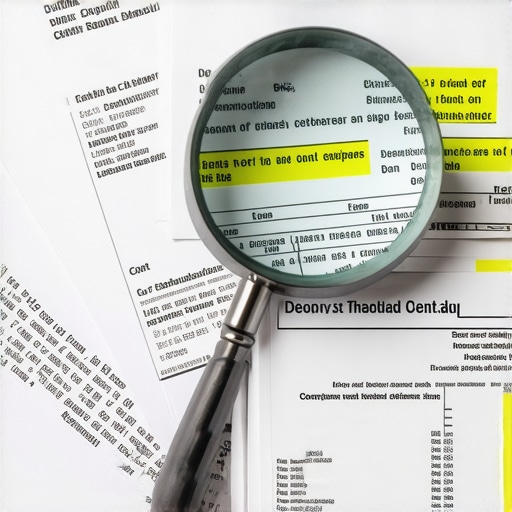
Force Them to Prove the Debt with a Validation Loophole
If the bureaus say the debt is yours but you know something is off, stop arguing about the amount and start arguing about the evidence. This is where you use the validation letter loophole that forces deletion of late payments and other inaccurate records. Think of it like this: if someone accuses you of stealing a car, they have to prove you were there. They can’t just say, “Well, we think you did it.” By law, collectors must provide specific proof of the debt if you ask for it correctly. I once had a collection agency fold in three days simply because they couldn’t produce the original signed contract. They had the balance right, but they didn’t have the paperwork to back it up. That lack of documentation is your golden ticket. You are essentially asking the collector to go into their dusty basement and find a specific needle in a haystack. Often, they won’t even try; they will just delete the entry because it is cheaper than doing the work.
How to Tackle the Giant Three Head-On
Every bureau has a different personality. Experian, for instance, can be particularly stubborn about address history. I found that knowing how to force a correction on your Experian report specifically requires a different tone than dealing with TransUnion. While you are fighting these battles, you cannot neglect the rest of your financial life. You need to maintain smart debt management practices for maintaining financial health so you don’t create new fires while trying to put out the old ones. I remember trying to dispute a late payment while simultaneously forgetting to pay my current water bill. It was like trying to bail water out of a boat while someone else was drilling a hole in the bottom. You have to be consistent across the board.
Add Positives While You Subtract Negatives
Repairing your credit isn’t just about deleting the bad stuff; it’s about overwhelming the report with good data. I started small. I realized I could be using your monthly Netflix subscription to build credit history through reporting services. It felt ridiculous at first—how could a $15 movie sub help my mortgage application? But that tiny, consistent “paid on time” mark acts as a stabilizer. It is the financial equivalent of eating your vegetables while you are also trying to lose weight. You need the nutrients of positive history to actually see a score increase. The goal is to make the negative marks look like ancient history compared to a mountain of new, perfect data points.
While adding positives is great, you have to be careful about how you handle the old negatives. There is a massive misconception that all debt repayment is created equal, but if you aren’t careful, you can actually do more harm than good. Everyone tells you that paying your debts is the ‘moral’ and ‘correct’ thing to do for your credit. But here is the cold, hard truth: the credit scoring math does not care about your intentions. I have seen people sink thousands into old collections only to see their score stay exactly the same—or worse, drop. This happens because of a nuance in the ‘Date of Last Activity’ (DOLA). When you make a payment on a six-year-old debt that was about to fall off your report, you might inadvertently ‘reactivate’ it in the eyes of some older scoring models, making it look like a recent failure rather than an old mistake.
Why paying off an old debt might actually tank your score
Most people assume that once a balance hits zero, the credit bureaus throw a party and your score skyrockets. It is a nice thought, but it is often wrong. In my experience, the biggest nuance that popular advice misses is the distinction between different FICO versions. According to FICO technical data, older versions like FICO 8—which is still the industry standard for many lenders—do not reward you for paying off a collection. It stays on your report as a ‘paid collection,’ which is still a negative mark. Only the newer FICO 9 and VantageScore 4.0 models ignore third-party collections with a zero balance. If your lender is still using the old math, that ‘paid’ status is just a cosmetic change that does nothing for your purchasing power. This is why why your credit score stalled after that big payment is such a common frustration. You have to know which model your lender uses before you start throwing cash at old problems.

Why did my credit score stall after I made that huge payment?
Another common ‘oops’ factor is the trap of the zombie debt. When you are contacted about a debt from years ago, your first instinct might be to pay it just to make the calls stop. But why you should never pay a collection agency via debit card becomes clear when you realize that a single payment can reset the statute of limitations. You could be turning a debt that was legally uncollectible into a fresh legal obligation. Before you send a dime, you need to use how to spot a fake pay-for-delete agreement before you sign anything. Without a written agreement that the agency will actually remove the entry from your report, you are essentially giving away your leverage for nothing. I have seen countless people fall for this, thinking they were doing the right thing, only to find themselves stuck with a ‘paid collection’ that haunts them for another seven years. Have you ever fallen into this trap? Let me know in the comments.
The danger of using consolidation as a quick fix
I often hear from people who want to take out a new loan to wipe the slate clean. They think they are solving the problem, but why consolidation loans are usually a band-aid for spending habits is a hard lesson to learn. If you don’t fix the underlying issue, you will just end up with a consolidated loan and maxed-out cards again in twelve months. Instead, looking into the truth about paying your debt via credit counseling can provide a more structured path that actually addresses the root cause. Real credit repair isn’t about moving numbers around on a spreadsheet; it’s about changing the way the bureaus perceive your reliability as a borrower. If you are struggling, remember that a ‘No’ from a bureau or a stalled score is just data. It is a sign that you need to change your tactics, not that you should give up. The system is a machine, and once you learn which levers to pull, you can make it work for you instead of against you.
Stop Watching the Score and Start Watching the Data
Once the letters are sent and the scores start to climb, the real challenge begins: not sliding back. I used to check my credit apps daily, which is the fastest way to drive yourself insane. Now, I treat my credit report like a garden that needs a monthly weed-pulling session rather than a 24-hour security watch. The most effective way I’ve found to keep things moving is by ignoring the ‘estimated’ scores and focusing on the raw data. Many people ask about the truth about credit repair software, and while some tools are great for organization, they can’t replace the discipline of a manual audit every thirty days.
I personally moved away from automated dashboards because they often lag. Instead, I use a dedicated ‘Statement Tracker.’ The secret isn’t just paying on time; it’s knowing your statement closing date—which is completely different from your due date. If you pay your balance three days before the statement closes, the bureau sees a low utilization before you even get your bill. I’ve found that the optimal day of the month to apply for new credit cards or simply manage your current ones revolves entirely around these reporting cycles. By micro-managing these dates, I kept my score stable even while moving house and changing jobs.
#IMAGE_PLACE_HOLDER_D#
The Industry is Moving Toward Hyper-Personalization
We are entering an era where ‘gaming’ the system for a quick jump is becoming harder. According to the technical documentation for the FICO® Score 10 T model, lenders are now prioritizing ‘trended data.’ This means they look at your behavior over a 24-month window. If you’ve been consistently carrying a balance and suddenly pay it off, the new models might still flag you as a ‘revolver’ rather than a ‘transactor.’ To stay ahead of this, you need smart debt management practices for maintaining financial health that show a long-term downward trend in debt, not just a one-time fix. I predict that within the next three years, your utility and rent payment history will be mandatory, not optional, for a competitive score. You can get a head start by learning how to get your monthly rent reported to bureaus for free right now.
How do I keep this momentum going without it becoming a second job?
Maintenance is about automation and protection. First, you must implement a security layer. I tell everyone that why you need a credit freeze right now isn’t just about identity theft—it’s about preventing ‘hard pulls’ you didn’t authorize while you are in a building phase. Second, use the ultimate credit repair blueprint for 2025 to set up alerts for any change in your report, not just score drops. I want you to try one advanced tip this week: find the ‘Statement Closing Date’ for your highest-limit card and set a calendar alert to pay it down to 2% exactly three days before that date. Watch what happens to your score in the next cycle; it’s the most satisfying ‘win’ you can get without sending a single letter.
The Hardest Financial Lessons I Learned While Staring at a Zero Balance
Reflecting on my journey, the biggest realization was that the credit bureaus are not your friend, but they are predictable. I learned that accuracy is more important than speed; rushing a dispute usually leads to a quicker rejection. I also discovered that the blunt truth about credit repair agencies and instant fixes is that there are no shortcuts to a permanent 800 score. My biggest lightbulb moment? Realizing that a ‘verified’ response doesn’t mean the debt is valid; it just means the automated system didn’t find a reason to delete it yet.
The Gear That Actually Moved the Needle for Me
I stopped relying on free apps and started focusing on real data. If you want to win, you need to see what lenders see. I recommend looking into the truth about finding your real FICO score vs free estimates because those free scores often hide the very errors you are trying to fix. My second must-have is a simple accordion folder. It sounds old-school, but keeping a physical copy of every letter and receipt turned my chaos into a ‘paper fortress.’ Finally, using the ultimate credit repair blueprint for 2025 gave me the structure I needed when I felt like giving up.
Your Financial Future Starts with the Next Envelope You Open
Reclaiming your credit score is one of the most empowering things you can do for your family. It’s not just about getting a lower interest rate on a car; it’s about the peace of mind that comes from knowing you aren’t being held back by a computer error. By mastering debt management proven strategies for financial freedom, you are taking back the steering wheel of your life. Don’t let a ‘No’ today stop you from the ‘Yes’ you deserve tomorrow. Have you ever felt like you were hitting a wall with a credit bureau dispute? Let me know in the comments below—I’d love to hear how you handled it.